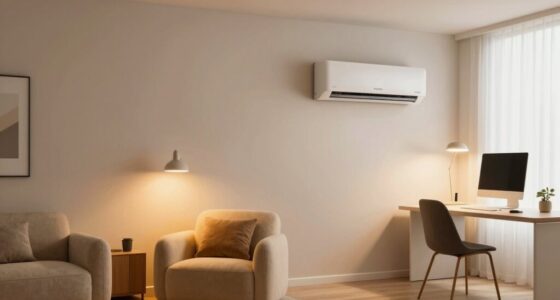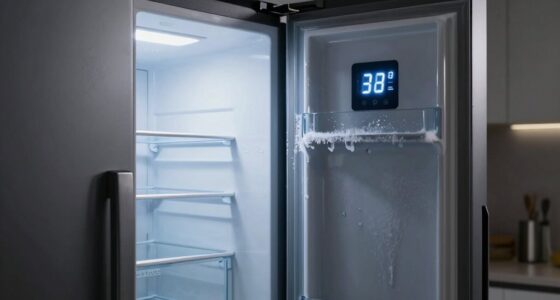
Start with your living room and kitchen, as they see the most daily activity and appliance use. Upgrading to energy-efficient appliances and smart controls in these areas offers the quickest savings and biggest impact on your energy bills. Improving lighting and temperature controls in these spaces also reduces unnecessary waste. Focusing on these key rooms first makes a noticeable difference—and if you keep exploring, you’ll discover even more ways to boost your home’s efficiency.

Turn the school run and nap time into listening time
- Thousands of audiobooks, podcasts and originals
- Listen on your phone, tablet or Echo — also offline
- Cancel anytime
Key Takeaways
- Focus on the living room first, as it hosts most daily activity and benefits from smart thermostats and LED lighting.
- Prioritize the kitchen, where high appliance usage makes upgrades to energy-efficient appliances most impactful.
- Target bedrooms for lighting and temperature control upgrades, reducing energy use during sleep and relaxation periods.
- Improve bathroom efficiency with low-flow fixtures and energy-efficient lighting to conserve water and power.
- Implement overall home strategies, like smart technology and appliance maintenance, across all rooms for maximum energy savings.
When aiming to boost your home’s appliance efficiency, focusing on specific rooms can lead to the most noteworthy gains. The first room you should target is your living room or main living area. This space often sees the most daily activity, making it a prime spot for improving energy use. Installing a smart thermostat allows you to better control your heating and cooling, guaranteeing you’re not wasting energy when no one’s around. With a smart thermostat, you can set schedules, adjust temperatures remotely, and even learn your preferences over time, reducing unnecessary energy consumption. Pairing this with energy-efficient lighting, like LED bulbs, helps cut down on electricity bills while maintaining a cozy environment. These lights use a fraction of the energy that incandescent bulbs do and last much longer, making them a smart investment.
Upgrade your living room with a smart thermostat and LED lighting for energy savings and cozy comfort.
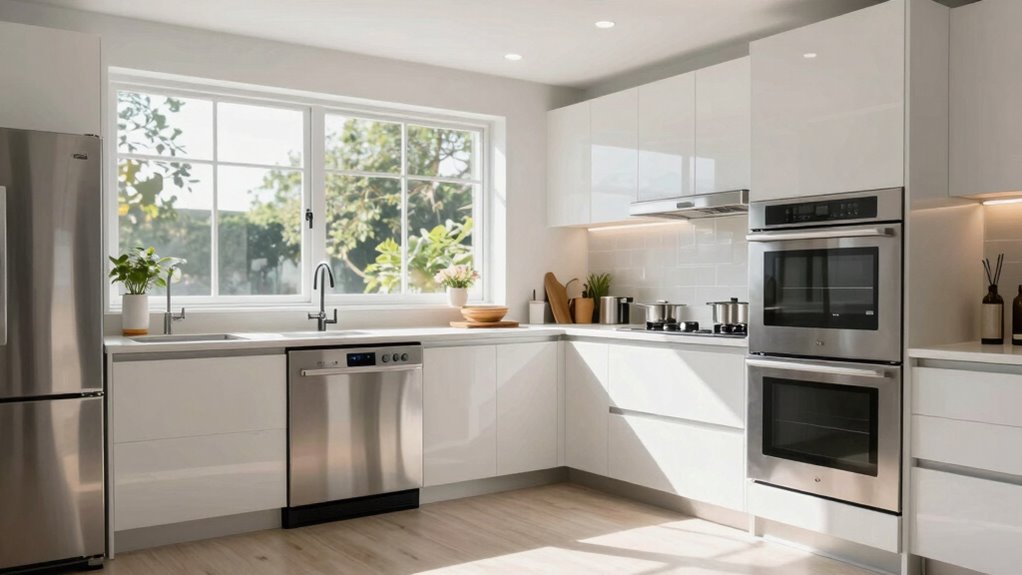
Next, focus on your kitchen. It’s a hub of activity, and appliances here tend to run frequently. Upgrading to energy-efficient appliances, such as refrigerators, dishwashers, and ovens, can markedly reduce your household’s energy footprint. When it comes to lighting, switch to energy-efficient lighting options that provide ample brightness without consuming excessive power. Installing motion sensors or timers can further optimize usage, turning off lights when they’re not needed. Additionally, consider using smart outlets or power strips so you can easily turn off multiple devices at once, preventing phantom energy drain. Incorporating energy-efficient appliances is an effective step toward reducing overall energy consumption in your home. Moreover, ensuring proper maintenance of these appliances can help maintain their efficiency over time. Regularly cleaning filters and ensuring vents are clear can also improve appliance performance and longevity. Using energy management strategies in your kitchen can further optimize your energy savings. Furthermore, adopting smart home technology can enhance your ability to monitor and control energy use more precisely.
Your bedroom is another area worth attention. Here, you can implement energy-efficient lighting to minimize unnecessary power use during nighttime or daytime hours. Using dimmable LED fixtures allows you to customize lighting levels, reducing waste when full brightness isn’t necessary. If you use space heaters or fans, make sure they are energy-efficient models and use timers or smart controls to avoid running them longer than needed. Adjust your thermostat settings at night to lower the temperature, conserving energy while keeping the room comfortably cool. Proper insulation can also help maintain a consistent temperature, reducing the need for extra heating or cooling.
Finally, don’t overlook your bathroom. Updating to energy-efficient lighting and installing low-flow fixtures can save water and energy. While appliances are minimal here, making sure your exhaust fan runs only when needed prevents unnecessary energy use. Consistently maintaining and upgrading these small appliances ensures your entire home operates efficiently. Paying attention to home energy management strategies in all rooms can further enhance your overall energy savings.
Products Worth Considering

Philips Hue Bridge Pro Smart Lighting Hub

Bose Smart Dolby Atmos Soundbar with Alexa, A.I. Dialogue Mode, and Bluetooth, Black

TCL 55-Inch F7D Series QLED 4K UHD Smart Fire TV (2026)
As an affiliate, we earn on qualifying purchases.
Frequently Asked Questions
How Do I Assess Which Appliances Are the Most Energy-Consuming?
To assess which appliances are the most energy-consuming, start with an energy audit using a smart meter or energy monitor. This helps you track individual appliance usage patterns and identify high-energy users. Pay attention to appliances that run frequently or stay on for long periods. By analyzing this data, you can prioritize those appliances for efficiency upgrades or behavioral changes, ultimately reducing your overall energy consumption.
Are There Specific Appliances That Offer the Highest Efficiency Improvements?
You might think only big appliances matter, but focusing on appliances with shorter lifespans during an energy audit can lead to bigger efficiency gains. High-usage items like refrigerators, water heaters, and washers often consume the most energy. Upgrading these can dramatically cut costs and improve efficiency. Even if they’re older, replacing appliances with newer, energy-efficient models offers the best return on investment, helping you save long-term.
How Often Should I Upgrade Appliances for Optimal Energy Savings?
You should upgrade appliances every 10 to 15 years, depending on their appliance lifespan and performance. Regular energy audits help identify outdated, inefficient appliances that could be costing you more in energy bills. By staying proactive and replacing appliances before they become too old or inefficient, you maximize energy savings and reduce your carbon footprint. Keep an eye on appliance age and efficiency ratings to determine the best time for an upgrade.
What Are Cost-Effective Ways to Upgrade Appliances in Each Room?
Think of upgrading appliances as tending to a garden; start with the most overgrown weeds first. To do this cost-effectively, focus on appliances with poor energy efficiency, like old refrigerators or washers, and perform regular appliance maintenance to boost performance. Use energy-saving tips like sealing leaks and adjusting settings. This approach maximizes savings while minimizing costs, making your home more efficient without breaking the bank.
Can Smart Home Technology Improve Overall Appliance Efficiency?
Yes, smart home technology can markedly improve your appliance efficiency. Voice control allows you to easily manage devices, reducing unnecessary energy use. Energy monitoring provides real-time insights into how much power your appliances consume, helping you identify inefficiencies. By integrating these features, you can optimize usage, cut costs, and enhance overall energy savings, making your home more sustainable and cost-effective.
Conclusion
Thinking strategically about which rooms to upgrade first can maximize your appliance efficiency gains. Many believe the kitchen is the best starting point because it houses the most energy-consuming devices. But is that truly the case? Research suggests that focusing on the laundry room might offer even greater savings, thanks to high-energy appliances like washers and dryers. So, don’t just assume—investigate your specific home needs and make informed choices for the biggest impact.