
TL;DR
Online interest is spiking in content promising to reveal what personal trainers say matters for developing young footballers, in the mold of players like Kylian Mbappé. The specific trigger for the surge is unconfirmed. Verified guidance for children’s athletic development emphasizes age-appropriate training and pediatric consultation.
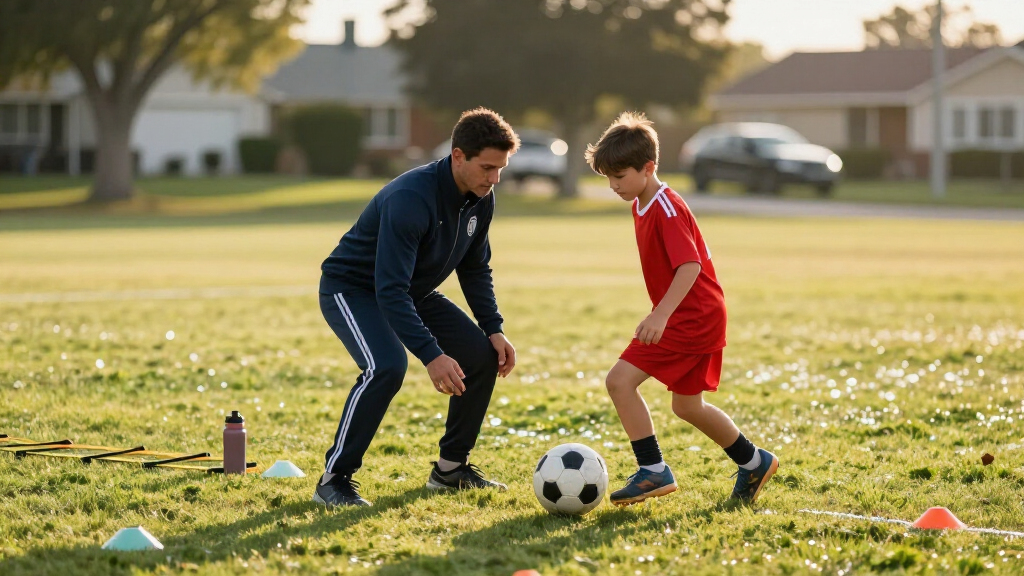
Online attention is surging around a single theme in youth sports parenting: whether a personal trainer can identify what actually matters in turning a child into an elite footballer in the mold of Kylian Mbappé. The interest signal — a parenting-channel item circulating via RSS framed as “a personal trainer reveals what actually matters” — is confirmed as a topic of growing readership. What that trainer specifically said, who the trainer is, and whether the claims reflect expert consensus are not verified.

Turn the school run and nap time into listening time
- Thousands of audiobooks, podcasts and originals
- Listen on your phone, tablet or Echo — also offline
- Cancel anytime
The confirmed facts are limited to the trend itself. A parenting-oriented article, distributed through an RSS feed, poses the question of whether parents can raise “the next Mbappé” and cites an unnamed personal trainer’s account of what genuinely drives athletic development in children. Reader and search interest in that theme has increased, according to the distribution metadata available. No named trainer, published study, or verifiable program is attached to the item.
What is long-established, independent of this article, is the surrounding landscape. Private coaching for young footballers is a mature industry in Europe and North America, and France’s national training system — which developed Mbappé through the famed academy at AS Bondy and later Clairefontaine — is widely documented as a model of structured youth development. Pediatric sports bodies, including the American Academy of Pediatrics, have long held positions on youth athletic training, emphasizing age-appropriate physical loads, varied movement over early specialization, and safeguards against overuse injury in growing children.
Claims that any particular training method, private coach, or early-specialization pathway reliably produces professional players are not supported by the verified material. Selection into elite academies is competitive and multidimensional, and the vast majority of enrolled youth players do not become professionals — a fact documented across football-development research.
Why Parents Are Paying Attention Now
The spike matters because it reflects an established pressure point in modern parenting: the commercialization of youth sports and the gap between parental ambition and evidence-based child development. Private training marketed with elite-player comparisons — Mbappé being among the most recognizable names in world football — can carry significant cost and time commitments for families, while outcomes remain highly uncertain.
For readers encountering such content, the practical relevance is discernment. Verified pediatric and sports-medicine guidance consistently cautions that intensive, specialized training for young children carries injury and burnout risks, and that enjoyment, general athletic movement, and free play are foundational before adolescence. Any trainer’s advice suggesting a shortcut to elite performance should be weighed against that consensus and, where health is involved, discussed with a pediatrician.
Products Worth Considering

Philips Hue Play HDMI Sync Box

Dyson Airstrait Styling Brush

Shark AI Ultra Robot Vacuum with Matrix Clean and Self-Empty Base
As an affiliate, we earn on qualifying purchases.
How Mbappé Became the Measuring Stick
Kylian Mbappé’s own development path is well documented and is frequently cited in youth-football discussions. He trained at AS Bondy near Paris, where his father coached, before entering the French national federation’s system at Clairefontaine and breaking through at AS Monaco as a teenager. His trajectory is often used — including, apparently, in the article now drawing attention — as shorthand for early talent identification plus structured academy coaching.
That framing has fueled a broader market: private academies, individual skills coaches, and paid development programs across Europe and beyond routinely market themselves against the benchmark of professional academies. Parenting media has increasingly covered this space as families weigh the costs and risks of early athletic investment.
The trigger for the interest spike is unconfirmed. It is not clear whether the circulating article is new, whether a specific named trainer gave the advice, or whether the guidance has any professional endorsement. The metadata available does not identify the publication’s author, the trainer’s credentials, or the age group the advice targets — a notable omission given that training advice for a 6-year-old and a 15-year-old should differ substantially.
It is also unknown whether the surge reflects broader news — such as a major transfer or international tournament involving Mbappé — or organic parenting-content interest. No specific claims from the article can be independently verified at this time.
Questions Parents Should Ask Before Paying
Families encountering trainer-led content like this can take verifiable steps: check any coach’s certification through recognized football federations, confirm that programs are age-appropriate per pediatric guidance, consult a pediatrician before intensive training regimens, and verify any products or programs against consumer-protection and, in the US, CPSC safety listings where equipment is involved. If the circulating article is later attributed to an identifiable expert or publication, its claims can then be assessed against published youth-development research. Until then, the interest itself — not the advice — is the confirmed story.
Key Questions
Is there a verified training method that produces players like Mbappé?
No. The verified material contains no such method. Mbappé’s documented path involved community club training, federation academies, and late-adolescence professional breakthrough — not a single identifiable program.
At what age is specialized football training considered appropriate?
Pediatric sports bodies generally recommend varied movement and free play in early childhood, with gradual specialization later. Parents should consult pediatric guidance and a pediatrician before intensive, sport-specific training for young children.
Who is the personal trainer cited in the article?
That is unconfirmed. The circulating item does not name the trainer or detail their credentials, so the advice cannot be independently evaluated.
Why is interest in this topic spiking now?
The specific trigger is unknown. Possible drivers include continued high visibility of Mbappé and general growth in parenting content about youth sports, but no verified cause has been established.
Source: rss