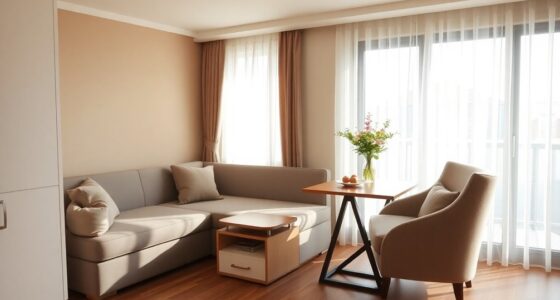

A “Golden Path” layout helps you create clear, natural routes that guide movement and prevent trips. You do this by arranging furniture, displays, and pathways to lead smoothly through the space, highlighting key features along the way. Good lighting and unobstructed sightlines reinforce the flow, making the environment feel safe and intuitive. Focusing on balance and functionality guarantees people move confidently without confusion. Keep exploring to discover how to perfect this safe, effortless design approach.
Key Takeaways
- Arrange pathways and furniture to naturally guide visitors along a clear, unobstructed route, minimizing trip hazards.
- Use lighting and visual cues to emphasize the main path, enhancing visibility and preventing confusion.
- Ensure sightlines remain unobstructed, allowing easy navigation and quick identification of key areas.
- Balance visual interest with functionality, avoiding clutter that could cause trips or obstacles.
- Design the layout with smooth transitions and strategic focal points to promote safe, effortless movement throughout the space.
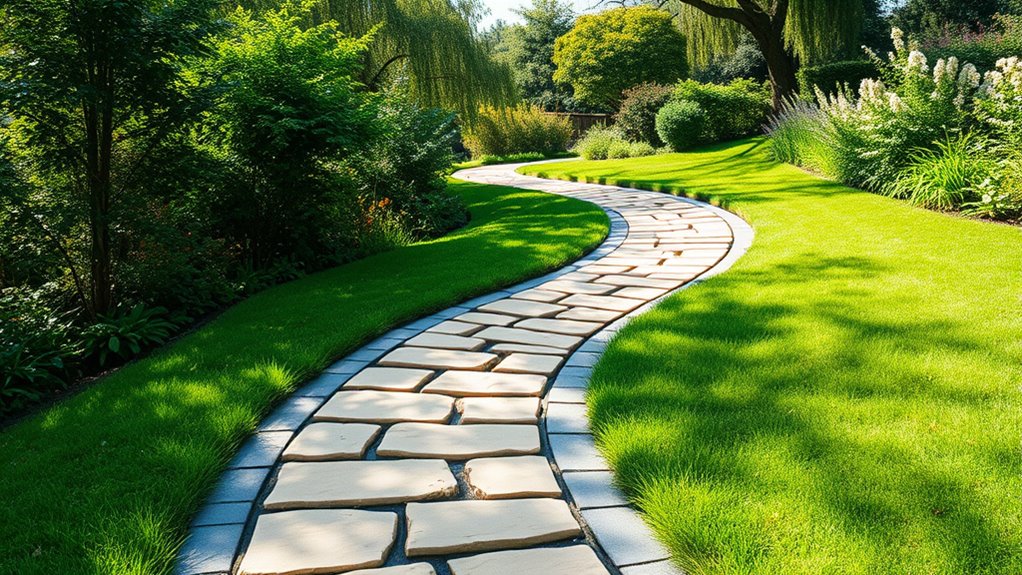
The “Golden Path” layout is a strategic design approach that guides your eye naturally through a space or presentation, emphasizing key elements while maintaining balance. When you use this layout, you create a clear route that directs people effortlessly from one point to another, reducing confusion and preventing trips or accidents. This design principle is rooted in the idea of establishing a visual and physical flow that feels intuitive, making navigation simple and safe.
Imagine walking into a room where furniture, displays, or pathways are arranged to lead you smoothly to your destination. You don’t have to think twice about where to go or dodge obstacles; the layout gently nudges you along the intended route. This is achieved by placing focal points, such as a prominent piece of art, a doorway, or a display table, at natural stopping points along the route. The eye is drawn along these elements, creating a seamless flow from one area to the next. By doing so, you minimize dead ends or confusing intersections that could cause you to backtrack or trip.
The key to the “Golden Path” layout lies in balancing visual interest with functional clarity. You want to highlight important features without cluttering the space or overwhelming the viewer. For example, in a retail store, products are arranged so customers’ attention naturally follows a path that leads them past high-margin items or new collections. In a home, furniture placement guides visitors through a living space without abrupt turns or obstructed pathways. Similarly, in presentations or exhibits, the layout should lead viewers from introductory information to more detailed content without abrupt shifts or confusing detours.
Lighting also plays an essential role in reinforcing the “Golden Path.” Proper illumination highlights the route and key features, subtly guiding people through the space. Clear sightlines are vital; make sure that furniture, displays, or structural elements don’t block views of the path. Keep pathways wide enough for comfortable movement, especially in high-traffic areas, and avoid placing obstructions in the main route. Think of the layout as a visual roadmap that subtly influences movement and focus, making the experience more engaging and safer. Additionally, understanding retail hours can help optimize the timing for creating effective layouts that match customer flow patterns.
Ultimately, the “Golden Path” layout isn’t just about aesthetics—it’s about functionality and safety. It helps you create environments where people feel comfortable, confident, and directed toward what matters most. When you implement this approach, you minimize hazards, improve flow, and enhance the overall experience for everyone. Whether in a retail space, a home, or a presentation, designing with the “Golden Path” in mind ensures your audience or visitors move smoothly and intentionally, preventing trips and encouraging exploration.
Frequently Asked Questions
How Does the “Golden Path” Layout Improve Safety?
The “Golden Path” layout improves safety by guiding you along clear, unobstructed routes, minimizing the risk of trips and falls. You can easily follow designated pathways, reducing confusion and avoiding hazards. This structured design guarantees that you’re less likely to encounter obstacles or get lost, keeping you safe as you navigate through the space. By providing predictable, well-marked routes, it enhances overall safety for everyone.
Can the “Golden Path” Layout Be Adapted for Small Spaces?
A chain is only as strong as its weakest link, so yes, you can adapt the “golden path” layout for small spaces. You simply need to prioritize the main pathways, keeping them clear of clutter and furniture. Use compact, multifunctional furniture to maximize space, and create a natural flow that guides movement. This way, even in tight quarters, you maintain safe, unobstructed routes that prevent trips and make the space feel more open.
What Materials Are Best for Creating Clear Routes?
You should use non-slip, durable materials like rubber or textured vinyl for creating clear routes. These materials guarantee safety and visibility, helping you easily follow the designated path. Avoid smooth or slick surfaces that could cause slips. Incorporate contrasting colors or patterns to make the routes stand out. Regularly maintain and clean these materials to keep the pathways clear and safe, reducing the risk of trips and falls.
How Long Does It Typically Take to Implement This Layout?
Implementing this layout typically takes anywhere from a few days to several weeks, depending on the size of the area and your resources. You’ll start by planning and marking routes, then move on to clearing obstacles, installing signage, and testing the paths. Throughout, you’ll need to coordinate with teams, gather materials, and adjust as needed. Patience and attention to detail make certain your routes are clear, safe, and effective.
Are There Specific Design Principles to Consider Besides Clear Routes?
You should focus on simplicity, ensuring the layout is intuitive and easy to navigate. Use visual cues like color coding and signage to guide users seamlessly. Maintain consistency in design elements to reduce confusion, and prioritize accessibility by considering diverse needs. Incorporate ample space for movement and avoid clutter, making sure the routes are logical and direct. These principles help create an effective, user-friendly environment that minimizes trips and enhances safety.
Conclusion
By following the “Golden Path” layout, you ensure smooth, frustration-free journeys every time. Clear routes reduce confusion and save your time, making navigation effortless. Remarkably, studies show that cluttered layouts can increase travel time by up to 30%, highlighting the importance of these streamlined designs. So, next time you plan your space, remember that a well-designed “Golden Path” not only guides you efficiently but also minimizes stress and maximizes your experience.