
To get the best results from your portable air cleaner, you should plan its placement and use within your room. Position it centrally for better airflow and avoid tight spots or behind furniture, which can hinder its function. Organize your space to promote efficient circulation, especially in areas where you spend a lot of time. By combining proper placement, routine use, and room layout, you’ll enhance its effectiveness—keep going for more tips to maximize air quality.

Turn the school run and nap time into listening time
- Thousands of audiobooks, podcasts and originals
- Listen on your phone, tablet or Echo — also offline
- Cancel anytime
Key Takeaways
- Proper placement ensures optimal airflow and coverage, maximizing the device’s filtration efficiency.
- Organizing the room reduces obstructions, allowing better air circulation around the air cleaner.
- Targeting high-usage areas enhances air quality where people spend most time.
- Strategic positioning prevents airflow restrictions and promotes consistent indoor air purification.
- Integrating usage habits with room layout creates a more effective and healthier indoor environment.

Are you making the most of portable air cleaners in your space? If you want to improve air quality effectively, simply placing a device in a room isn’t enough. To maximize their benefits, you need a strategic approach that considers both the layout of your space and how you use it. Portable air cleaners work best when they’re integrated into a room strategy designed for ideal air circulation and filtration. By thinking about where to position your device and how your space is arranged, you can considerably boost air quality and guarantee cleaner air where you spend the most time.
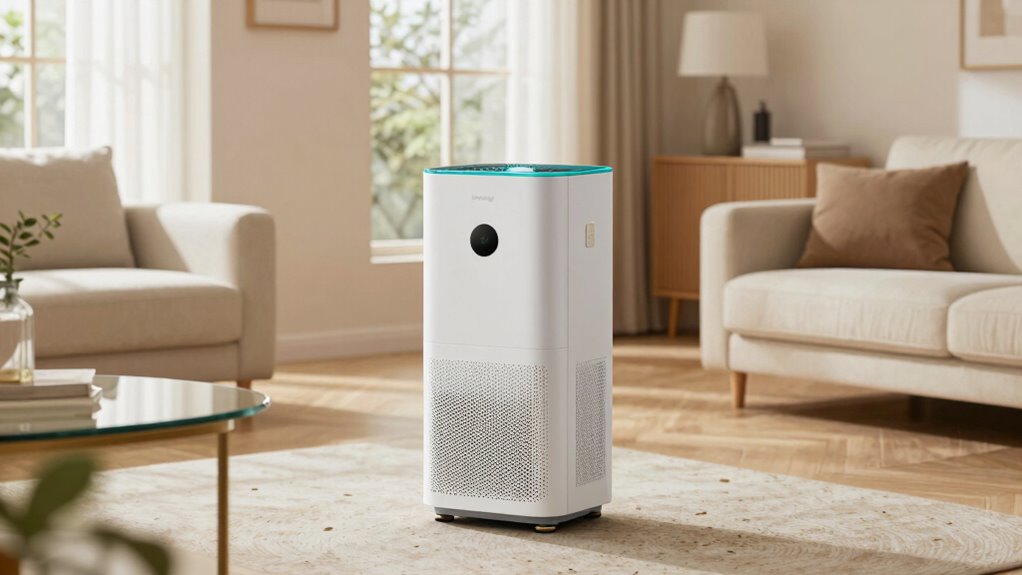
One key to success is understanding how space enhancement plays a role. Instead of randomly placing your air cleaner, position it in a central location within the room. This allows the device to circulate air efficiently, covering the entire space rather than just a small corner. Avoid placing it behind furniture or in tight spots where airflow is restricted, as this can reduce its effectiveness. When your space is organized to promote good airflow, the air cleaner can do its job better, filtering out dust, allergens, and pollutants more consistently. Proper air circulation is essential for ensuring the device’s optimal performance. Additionally, considering room layout can further optimize airflow and filtration.
Position your air cleaner centrally in the room for optimal airflow and filtration efficiency.
Another important factor is considering how you use the room. If you spend most of your time in a specific area, such as a living room or home office, focus your efforts there. Keep windows closed during peak pollution times or when outdoor air quality is poor, and turn on your air cleaner to maintain a steady flow of clean air. If you have multiple rooms, it’s more effective to use portable air cleaners in each of those spaces rather than relying on one device to cover a large area. This approach ensures consistent air quality and reduces the spread of airborne irritants. Additionally, understanding air quality levels in your environment can help you decide when extra filtration is necessary.
Additionally, integrating your air cleaner into your daily routine helps maintain a healthy environment. For example, turn it on during high-pollution periods, such as wildfire season or allergy season, and keep it running continuously in bedrooms or areas where you rest. Regularly checking and replacing filters also ensures your device is functioning at peak capacity. When combined with room strategy, these habits amplify the benefits of your air cleaner, creating a healthier indoor environment.
Products Worth Considering

LEVOIT Vital 200S-P Smart Air Purifier for Large Rooms, White

Levoit Eleva 300X Air Purifier with Sealed HEPA Filtration

Levoit Vital 100S-P Air Purifier with Washable Pre-Filter
As an affiliate, we earn on qualifying purchases.
Frequently Asked Questions
Can Portable Air Cleaners Improve Indoor Allergy Symptoms Effectively?
Yes, portable air cleaners can improve your indoor allergy symptoms effectively. They boost allergy relief by capturing airborne allergens like pollen, pet dander, and dust mites. To maximize air purifier efficiency, place the cleaner in a central location and keep doors and windows closed. Regular filter changes also help maintain peak performance. With the right setup, you’ll notice clearer air and fewer allergy symptoms over time.
How Often Should I Replace or Clean the Filters in My Air Cleaner?
You should clean or replace your air cleaner’s filters based on the manufacturer’s recommended replacement frequency, usually every 3 to 6 months. Regular filter maintenance guarantees peak performance and keeps indoor air quality high. If you notice reduced airflow or increased allergies, it’s a good idea to check the filters sooner. Keeping up with the replacement schedule helps your air cleaner work efficiently and effectively.
Are There Specific Room Sizes Ideal for Certain Air Cleaner Models?
Yes, specific room sizes suit certain air cleaners better. Choose an air cleaner with a suitable room size rating for ideal filtration efficiency. For larger rooms, opt for models with higher CADR (Clean Air Delivery Rate). Proper placement tips include placing the air cleaner near sources of pollution or centrally in the room. Ensuring the unit isn’t blocked by furniture helps maximize airflow and filtration performance, making the room healthier overall.
Do Portable Air Cleaners Eliminate All Types of Indoor Pollutants?
You might hope your portable air cleaner eliminates all indoor pollutants, but it doesn’t. While it improves air quality by targeting common pollutant types like dust, pollen, and pet dander, certain gases and ultrafine particles can slip through. Think of it as a strong shield against many pollutants, yet not a complete barrier. To maximize air quality, combine a portable cleaner with proper ventilation and source control.
Can Multiple Air Cleaners Be Used Together in a Large Space?
Yes, you can use multiple air cleaners together in a large space. To maximize their effectiveness, focus on airflow optimization and strategic device placement. Spread them out evenly to prevent dead zones and guarantee good circulation. Position each cleaner where airflow can reach all corners, avoiding obstructions. This approach helps improve overall air quality by efficiently covering the entire area, especially in sizable rooms or open-plan spaces.
Conclusion
To get the most out of your portable air cleaner, think of it as a vigilant lighthouse guiding your room’s air to safety. When you strategically place it—like positioning a compass—you’re steering pollutants away from your sanctuary. Remember, a well-planned room layout turns your air cleaner into a silent guardian, creating a gust of fresh air with every moment. With this approach, you’re not just cleaning air—you’re crafting a healthier haven to thrive in.