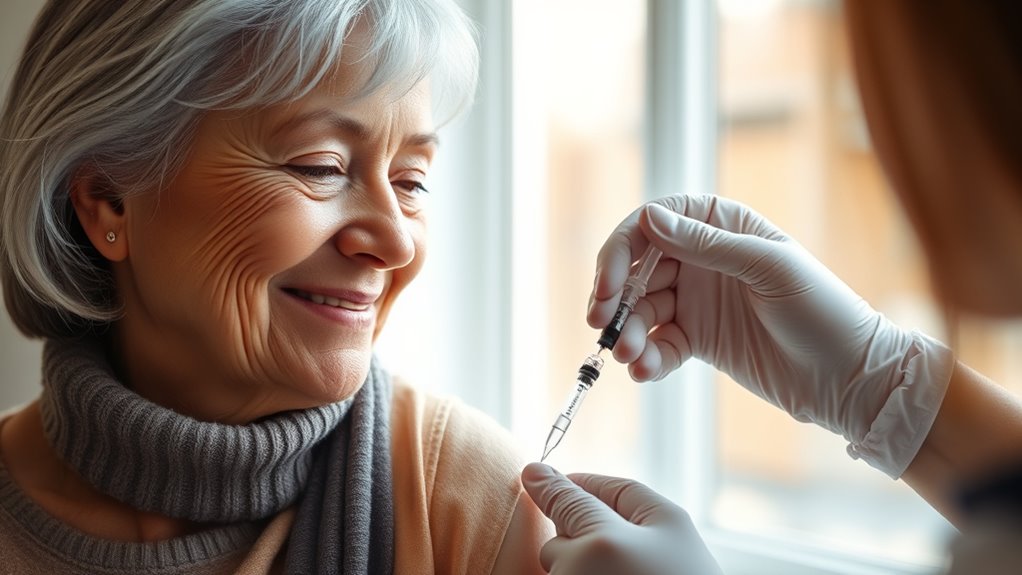

Staying current with vaccines is essential as you age because your immune system becomes weaker, making it harder to fight infections. Regular booster shots and annual vaccines, like the flu shot, help maintain strong immunity. Vaccines also protect loved ones and your community by reducing disease spread. Side effects are usually mild and temporary, with benefits far outweighing risks. Continuing this guidance will help you understand how to stay protected and make informed health choices.
Key Takeaways
- Regularly update vaccines like tetanus, flu, and shingles to maintain immunity as protection wanes over time.
- Discuss personalized vaccination plans with healthcare providers to address individual health needs and risks.
- Be aware that vaccine side effects are typically mild and outweighed by the benefits of disease prevention.
- Vaccination helps protect not only personal health but also vulnerable community members from contagious diseases.
- Staying current with recommended vaccines supports healthy aging and reduces risks of serious illnesses like pneumonia and meningitis.
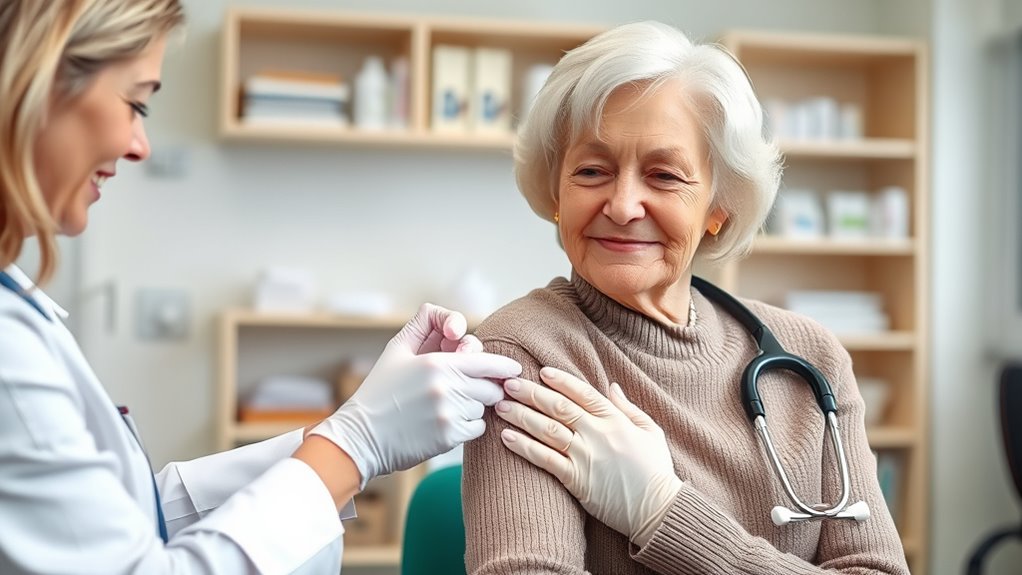
Are vaccines for seniors essential to staying healthy? Absolutely. As you age, your immune system naturally weakens, making it harder for your body to fight off infections. That’s why staying up-to-date with recommended vaccines is crucial. One key aspect to consider is the booster shot importance. Over time, the protection from some vaccines diminishes, so getting booster shots helps reinforce your immunity. For example, the tetanus and diphtheria vaccines require boosters every ten years, and the flu shot needs to be administered annually to provide optimal protection. These booster shots are vital because they ensure your immune response remains strong enough to fend off serious illnesses.
Staying current with vaccines and boosters is essential for seniors’ health and immunity.
You might worry about vaccine side effects, but it’s important to understand they are generally mild and temporary. Common side effects include soreness at the injection site, slight fatigue, or mild fever—nothing compared to the potential severity of the diseases these vaccines prevent. The benefits far outweigh the risks, especially when considering the increased vulnerability to infections as you age. Healthcare providers carefully weigh the benefits and potential side effects before recommending vaccines, so you can rest assured that they are safe and beneficial.
Keeping your vaccines current also helps protect those around you, especially vulnerable groups like infants or immunocompromised individuals. When you receive your vaccines, you contribute to community health, reducing the spread of contagious diseases. The Pneumococcal vaccine, for example, decreases your risk of pneumonia and meningitis, while the shingles vaccine reduces the chance of developing painful nerve conditions. These illnesses can be particularly severe in seniors, leading to hospitalizations or long-term complications. Understanding vaccine effectiveness can further empower you to make confident health decisions, knowing that these measures are scientifically proven to work.
It’s natural to have concerns about side effects or whether a vaccine is necessary, but staying informed is key. Discuss your health history and concerns with your healthcare provider to develop a personalized vaccination plan. They can explain the importance of booster shots and help you understand what to expect after vaccination. Additionally, understanding the effectiveness of vaccines can help you make more informed decisions about your health. Staying updated with vaccine guidelines ensures that you are protected against emerging strains and new health threats. Incorporating cybersecurity insights can also be useful in safeguarding your personal health information associated with vaccination records. Remember, staying current with vaccines not only protects your health but also gives you peace of mind, knowing you’re taking active steps to maintain your well-being as you age.
Frequently Asked Questions
Are There Any New Vaccines Recommended for Seniors Post-2023?
You might wonder if there are new vaccines recommended for seniors after 2023. Staying current with booster shots and vaccine schedules is essential. Healthcare providers may update their guidelines as new data emerges, so it’s important to check with your doctor regularly. They can advise you on the latest vaccines, including any new options, and help you maintain best protection against illnesses, ensuring your health stays a priority.
How Often Should Seniors Get Vaccinated for Seasonal Influenza?
You should get your seasonal influenza vaccine every year, ideally before flu season begins, to guarantee maximum protection. Vaccine timing is vital, so plan your immunization according to local health recommendations. Following annual immunization schedules helps maintain your immunity, especially since flu strains change each year. By staying consistent with your flu shots, you reduce your risk of serious illness and help protect those around you.
What Are the Common Side Effects of Vaccines in Older Adults?
When you get vaccinated, you might experience mild reactions like soreness, redness, or swelling at the injection site. Some people also report fatigue or mild fever. These side effects are normal and show your immune response is working. Usually, they resolve quickly. Remember, serious side effects are rare. Overall, vaccines are safe and effective, helping you stay protected as you age.
Can Seniors Receive Vaccines if They Have Underlying Health Conditions?
Concerned about chronic illness and vaccine safety? Rest assured, you can still receive vaccines if you have underlying health conditions. Healthcare providers carefully consider your health history, tailoring recommendations to guarantee safe, suitable immunizations. They monitor closely for any adverse effects, making vaccination a crucial, valuable step in protecting yourself. Trust your medical team to guide you, ensuring you stay healthy and secure, even with chronic illnesses.
Are There Any Vaccines Specifically Designed for Age-Related Immune Decline?
You might wonder if there are age-specific vaccines for immune system decline. While most vaccines are broad, some are designed with seniors in mind to boost immunity effectively. These age-specific vaccines target immune system decline, helping your body fight off illnesses better. It’s important to consult your healthcare provider, who can recommend the best vaccines considering your age and health condition, ensuring you stay protected as you age.
Conclusion
Staying current with vaccines isn’t just important—it’s your ultimate shield against serious illnesses that can strike when you least expect it. By keeping up-to-date, you’re not only protecting yourself but also safeguarding your loved ones. Think of vaccines as your personal army, fiercely defending your health. Don’t wait for a cold or flu to knock on your door—take charge today and stay one step ahead in the fight for your well-being!