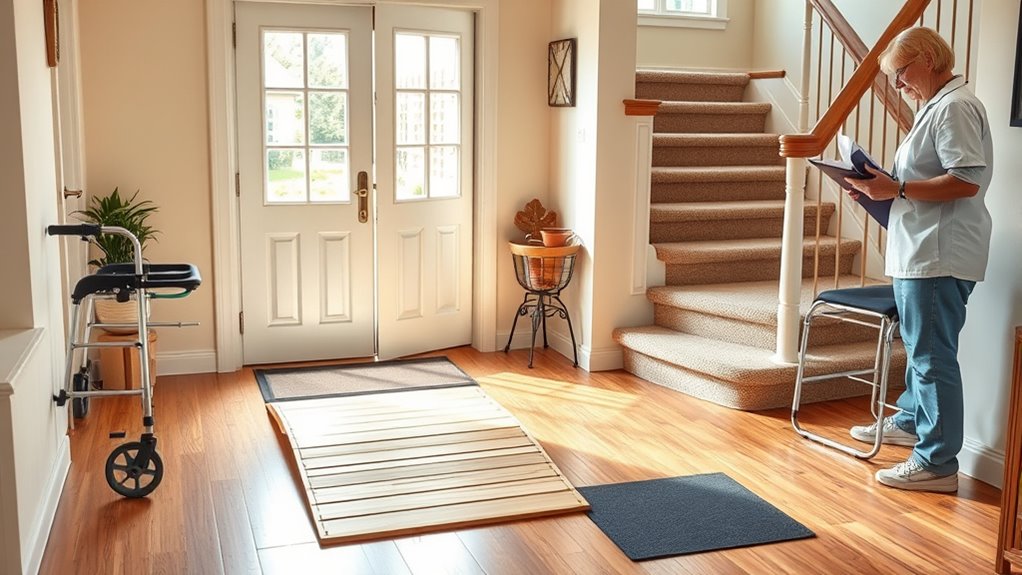

To conduct a home accessibility audit, start by inspecting stairs for sturdy handrails, non-slip treads, and good lighting. Check door handles, replacing round knobs with lever-style handles, and guarantee thresholds are low or threshold-free. Examine lighting throughout your home, especially in stairwells and hallways, to prevent missteps. Regularly maintain all safety features to keep your home secure. Keep exploring to discover more practical tips for making your home safer and more accessible.
Key Takeaways
- Inspect stairs for even, non-slip treads, sturdy handrails, and clear pathways to prevent falls.
- Ensure adequate, glare-free lighting on stairwells and common areas for improved visibility.
- Replace round door knobs with lever handles for easier operation and enhanced safety.
- Install low-threshold or threshold-free doorways to facilitate wheelchair and walker access.
- Regularly maintain and check safety features like handrails, lighting, and door hardware to prevent hazards.
Have you ever considered how accessible your home truly is? Conducting a home accessibility audit can reveal hidden hazards that might be risking your safety or limiting your independence. One of the first areas to focus on is staircase safety. Stairs are common trouble spots, especially if they lack proper handrails or have uneven steps. You want to ensure that handrails are sturdy, continuous along the entire length of the staircase, and positioned at a height that’s easy to grasp. If your staircase has a railing on only one side or none at all, installing additional handrails can considerably reduce the risk of falls. Also, check that the treads are even, non-slip, and free of clutter. Adding anti-slip strips or mats can improve traction, especially if someone in your household has mobility issues or balance concerns. Proper lighting is equally important—make sure stairwells are well-lit to prevent missteps during nighttime or low-visibility conditions.
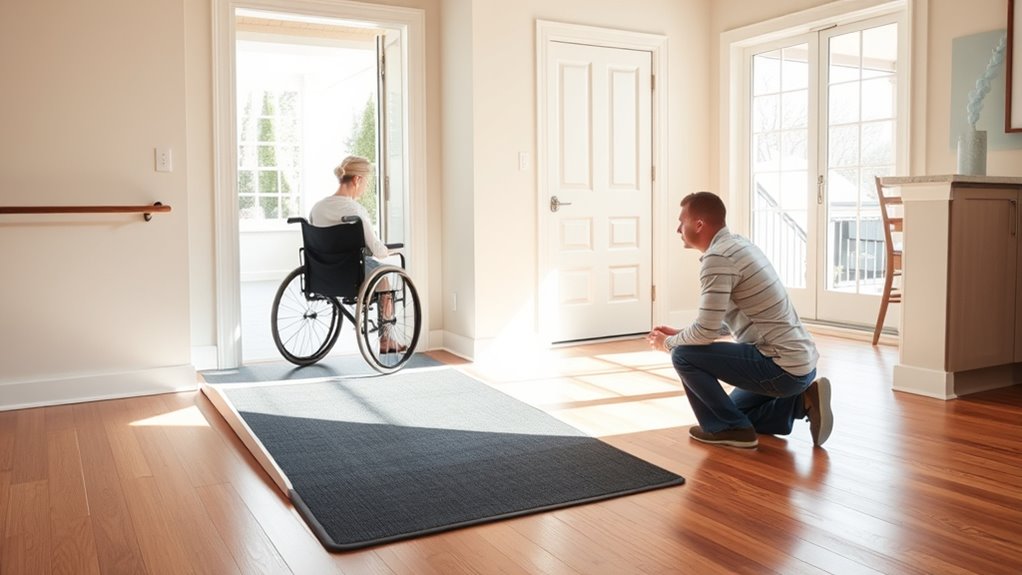
Moving on to door handle modifications, these are often overlooked but can make a big difference in home safety and accessibility. Standard door handles can be difficult to grasp for anyone with arthritis, limited dexterity, or during emergencies when quick access is needed. Replacing traditional round knobs with lever-style handles can make opening doors easier and faster. Lever handles require less grip strength and can be operated with an elbow or forearm if needed, which is especially helpful for those with limited hand mobility. When considering door modifications, also evaluate the threshold height and door swing radius. Installing low-threshold or threshold-free entries can prevent trips and falls, making it easier to use mobility aids like wheelchairs or walkers. Ensure that doors open fully and smoothly, without sticking or resistance. Adding auto-close or soft-close mechanisms can further enhance safety, especially in households with children or elderly residents. Regularly inspecting and maintaining home safety features such as handrails, lighting, and door hardware is crucial for ongoing accessibility and hazard prevention.
Ultimately, addressing staircase safety and door handle modifications are straightforward steps that drastically improve your home’s accessibility. These modifications not only reduce hazards but also promote independence and confidence in moving around your space. When properly implemented, they can help create a safer environment for everyone, regardless of mobility level. Regularly inspecting these areas and making necessary adjustments can prevent accidents and foster a safer environment for everyone. Remember, a home that’s easier to navigate isn’t just more comfortable—it’s a proactive way to support mobility and well-being. Taking these small but impactful measures ensures that your home remains a safe haven, adaptable to your changing needs over time.
Frequently Asked Questions
How Often Should I Conduct a Home Accessibility Audit?
You should conduct a home safety audit at least once a year, especially if you or a loved one face mobility challenges. Regular inspections help spot hazards that could cause falls or injuries. If you notice any changes in mobility or health, do it more often. Staying proactive guarantees your home remains safe and accessible, reducing risks and improving overall comfort for everyone living there.
Are There Professional Services for Home Accessibility Assessments?
Yes, there are professional services for home accessibility assessments. You can seek a professional assessment from experts who specialize in evaluating your home’s safety and accessibility. They provide expert consultation to identify hazards and recommend fixes, ensuring your home meets your needs. Hiring these services helps you get tailored solutions and peace of mind, knowing that a trained professional has thoroughly evaluated your space and suggested practical improvements.
What Budget Should I Allocate for Home Modifications?
Think of your budget as the foundation of your home’s transformation. You should start by estimating costs for modifications, considering factors like ramps, grab bars, or widened doorways. Conduct a thorough cost estimation and explore funding sources such as grants, insurance, or personal savings. Allocating a flexible budget guarantees you can address unexpected needs without stress, making your home safer and more accessible for everyone.
Can I Perform an Accessibility Audit on My Own?
You can definitely perform a DIY assessment of your home’s accessibility. Start with a safety checklist to spot hazards like loose railings or cluttered walkways. Use online resources and guides to help you identify common accessibility issues. While a DIY approach is great for initial insights, consider consulting professionals for a thorough review, especially if you find hazards that require expert solutions or modifications.
Which Areas of the Home Are Most Critical to Assess?
You might think you need a professional, but you can start with essential areas like entryway safety and bathroom accessibility. These spots are most crucial because they impact daily safety and independence. Check for secure ramps, non-slip mats, grab bars, and clear pathways. Addressing these areas first helps prevent accidents and creates a safer home environment. Don’t wait—your quick assessment can make a big difference in safety today.
Conclusion
Now that you’ve completed your home accessibility audit, you’ve uncovered hazards so dangerous they could cause chaos in your daily life! Fixing these issues isn’t just a good idea—it’s the key to turning your home into an unstoppable fortress of safety. With every step you take to improve accessibility, you’re building an invincible sanctuary where accidents tremble and comfort reigns supreme. Don’t wait—transform your home into the safest, most accessible haven the world has ever seen!