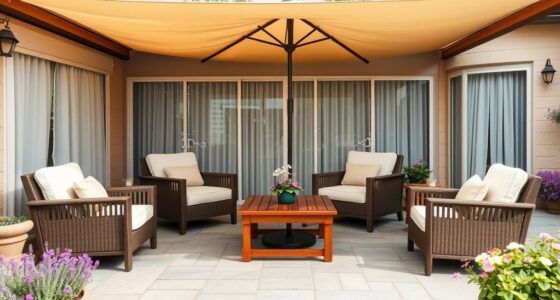
To cool your home without darkening it, consider outdoor shade solutions like adjustable pergolas with tilting louvers, which let you control sunlight and shade levels. Fabric canopies and retractable awnings provide flexible coverage that blocks heat while still allowing some natural light in. Planting deciduous trees adds seasonal shade without darkening indoor spaces. Exploring these options further can help you create a comfortable outdoor environment that stays bright and cool.
Key Takeaways
- Use adjustable pergolas with tiltable louvers to control sunlight and heat without blocking natural light.
- Install shade sails or fabric canopies that diffuse sunlight, reducing heat while maintaining brightness.
- Opt for retractable awnings with sensors to provide shade only when needed, allowing full sunlight when desired.
- Incorporate deciduous trees for seasonal shading, cooling outdoor spaces without darkening indoor areas.
- Combine multiple solutions strategically to balance outdoor cooling and indoor brightness effectively.
When the sun’s rays become overwhelming, having effective shade solutions can make all the difference in creating a comfortable outdoor space. You want protection from the heat without sacrificing the natural light that keeps your area lively and inviting. The key is selecting options that provide relief from direct sunlight while still allowing sunlight to filter through gently. One excellent choice is pergolas with adjustable louvers. These give you control over how much light and shade you want at any given moment. When the sun is intense, you can tilt the louvers to block out the harshest rays. As the day cools, you can open them up to let in more sunlight, maintaining a bright yet comfortable atmosphere.
Adjustable louvers on pergolas let you control sunlight and shade for a comfortable outdoor space.
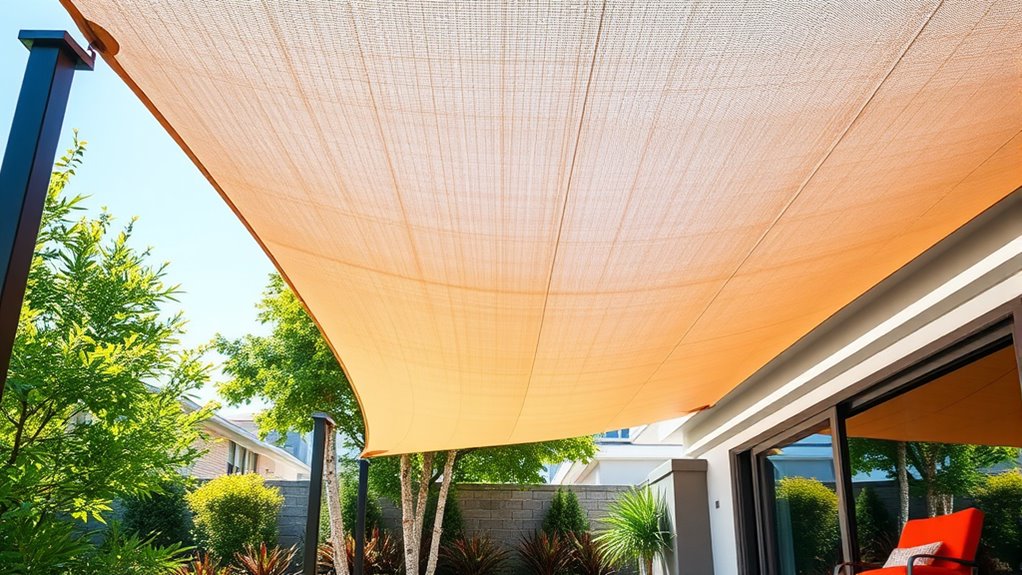
Another effective solution is using shade sails or fabric canopies. These are versatile, stylish, and easy to install. Unlike traditional umbrellas or awnings that can block too much light, shade sails are designed to diffuse sunlight. They create a dappled effect that reduces heat without darkening the space entirely. You can position them strategically to cover seating areas or pathways, ensuring you get the shade where you need it most. Their open design allows sunlight to pass through in a softer, more dispersed manner, keeping your outdoor space bright and airy.
For a more permanent option, consider installing retractable awnings. When extended, they provide ample shade, but when retracted, they allow the sun to pour in. Modern retractable awnings often feature sensors that automatically adjust based on the sun’s position or weather conditions, giving you convenience and energy efficiency. They’re perfect if you want flexibility—shade when it’s hot and sun when you’re in the mood for a boost of warmth or daylight.
You can also explore the use of trees and tall plants as natural shade providers. Planting deciduous trees offers seasonal benefits; they shade your space during hot summer months and allow sunlight through in winter when they shed their leaves. This natural approach not only cools your outdoor areas but also enhances the aesthetic appeal of your yard. Plus, they don’t darken your home because their shade is generally targeted and filtered by the branches, allowing light to still reach your windows indirectly.
In all cases, the goal is to strike a balance—shielding yourself from excessive heat while maintaining brightness and openness. By choosing adaptable, well-designed solutions, you’ll enjoy a cooler outdoor space without sacrificing the natural light that makes your home feel welcoming and vibrant. Additionally, understanding the cost of different shade options can help you plan and select the most effective and budget-friendly solutions for your needs.

Stroller Organizer with Cup Holder, Non-Slip Stroller Caddy Baby Essentials
- Large Capacity Storage: Holds bottles, diapers, toys, snacks
- Ideal Baby Shower Gift: Perfect for new moms and dads
- Universal Compatibility: Fits Uppababy, Baby Jogger, more
As an affiliate, we earn on qualifying purchases.
Frequently Asked Questions
How Do Light-Colored Shades Reflect Heat Effectively?
Light-colored shades reflect heat effectively because their reflective surfaces bounce sunlight away instead of absorbing it. When you choose shades with light hues, you reduce heat gain inside your home, helping keep it cooler. These shades also allow natural light to filter through while minimizing glare. By using light-colored shades, you enjoy a more comfortable space without sacrificing brightness, all while lowering your cooling costs and energy use.
Are There Any Maintenance Requirements for Reflective Shade Materials?
Reflective shade materials typically require minimal maintenance, making them a practical choice for your home. You should clean them occasionally with a gentle soap and water to remove dust and debris, ensuring they maintain their reflective properties. Avoid harsh chemicals or abrasive tools that could damage the surface. By doing this, you’ll keep your shades effective and looking great, all while enjoying their cooling benefits without extra fuss.
Can These Shades Be Installed on Existing Windows Easily?
Yes, these shades can be installed on existing windows easily. You just need to measure your windows accurately and choose the right size. Most shades come with straightforward installation instructions and hardware, so you can do it yourself or hire a professional if you prefer. The lightweight design makes handling simple, and the mounting options are flexible, ensuring a snug fit without needing major modifications.
Do Reflective Shades Impact Natural Light Quality Inside?
Reflective shades can improve your home’s comfort without sacrificing natural light. They bounce heat away and reduce glare, so you’ll still enjoy bright, inviting spaces. While they slightly tint the light, they don’t darken your rooms markedly. You’ll notice a more balanced brightness, making your home feel airy and open. Embrace these shades to enjoy natural illumination while keeping your space cool and energy-efficient—sometimes, the best solutions are the simplest.
Are There Eco-Friendly Options for Non-Darkening Shade Solutions?
Yes, there are eco-friendly options for non-darkening shades. You can choose solar screens or bamboo blinds, both made from sustainable materials that reflect heat without blocking natural light. These options help keep your home cool while reducing energy consumption. Additionally, using light-colored fabrics or reflective coatings on shades can enhance their efficiency, giving you an environmentally friendly way to stay comfortable without darkening your living space.
Conclusion
Choosing the right shade solutions is like planting a gentle breeze in your home’s garden—they cool without stealing the sunlight. With these options, you’ll create a sanctuary where warmth and light dance in harmony, not battle. Think of your shades as a whispering guardian, shielding you from the harshness while keeping your space bright and inviting. Embrace these solutions and let your home breathe freely, basking in comfort without ever losing its luminous soul.