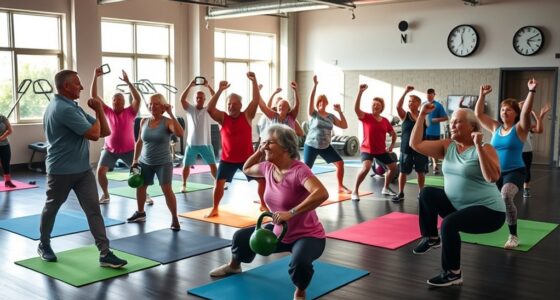

To reach 150 minutes of exercise weekly, start small with 10-15 minute sessions and gradually increase the duration and intensity over time. Incorporate both aerobic activities like walking or cycling and strength exercises such as bodyweight squats or push-ups. Spread your workouts throughout the week and listen to your body to prevent injury. As you progress, you’ll find it easier to build consistency — and more tips await to help you succeed.
Key Takeaways
- Start with 10-15 minute sessions and gradually increase duration weekly to reach 150 minutes.
- Incorporate both aerobic activities and strength training for comprehensive health benefits.
- Spread exercise throughout the week, aiming for consistent daily or every-other-day sessions.
- Track progress and celebrate milestones to stay motivated and maintain routine.
- Prioritize rest and listen to your body to prevent injury and support sustainable growth.

If you’re aiming to improve your health, gradually building up to 150 minutes of moderate exercise each week can make a significant difference. This goal isn’t just about hitting a number; it’s about creating a sustainable routine that enhances your overall well-being. When you commit to this, you’re supporting your cardiovascular health, which is essential for reducing the risk of heart disease and stroke. Incorporating a mix of aerobic activities and strength training ensures that you’re addressing different aspects of fitness, leading to better endurance, muscle tone, and metabolic health.
Starting small makes the process less overwhelming. If you’re new to exercise, begin with 10 or 15-minute sessions and gradually increase your duration. Walking briskly, cycling, swimming, or even dancing count as moderate activities. These activities raise your heart rate enough to improve your cardiovascular health without exhausting you. As you become more comfortable, aim for longer sessions, building up to 30 minutes per day, five times a week. Consistency is key, and spreading out your activity helps you stay motivated without feeling burnt out.
Start with 10-15 minute workouts and gradually increase your activity to stay motivated and avoid burnout.
Strength training is an essential part of reaching your fitness goals. It not only increases muscle mass but also supports your cardiovascular health by improving your overall metabolic rate and blood circulation. Incorporate exercises like bodyweight squats, push-ups, or resistance band workouts two to three times a week. You don’t need gym equipment to get started; bodyweight exercises are effective and accessible. Over time, adding more resistance or repetitions will help you build strength and endurance, making daily activities easier and reducing injury risk.
Balancing aerobic exercise with strength training maximizes your health benefits. As your stamina improves, you may find yourself able to handle longer sessions or more intense workouts. This progression is natural and beneficial; it keeps your body adapting and growing stronger. Remember, listening to your body is crucial—rest days are just as important as workout days to allow recovery and prevent injury. Additionally, understanding the importance of healthy habits can support your exercise routine and overall wellness.
Tracking your progress can provide motivation and help you stay committed. Use a simple journal or an app to log your activity. Celebrate small milestones, like completing a full week of workouts or increasing your walking distance. The key is to make exercise a regular part of your lifestyle, not a chore. Building up gradually allows your body to adapt comfortably, making it easier to stick with your routine over the long term. With patience and consistency, those 150 minutes will become a natural, rewarding part of your weekly schedule.
Frequently Asked Questions
Can I Split My Exercise Into Shorter Sessions Throughout the Day?
Yes, you can split your exercise into shorter sessions throughout the day. Exercise session flexibility allows you to fit your daily workout routines into busy schedules, making it easier to stay consistent. Multiple shorter workouts can add up to your weekly goal, guaranteeing you stay active without feeling overwhelmed. Just make sure each session is active enough to boost your fitness and helps you reach that 150-minute target.
What Are Some Beginner-Friendly Exercises to Start With?
Imagine discovering how easy it is to start your fitness journey. For beginners, simple exercises like brisk walking, bodyweight squats, or gentle yoga are perfect. You don’t need fancy exercise equipment—just your motivation. Incorporate these into quick workout routines, gradually increasing duration. These beginner-friendly moves make exercise enjoyable, helping you build confidence and consistency as you work toward your goals.
How Do I Stay Motivated to Exercise Consistently?
To stay motivated, try different motivation techniques like setting small, achievable goals and rewarding yourself. Keep your exercise routines varied and enjoyable to prevent boredom. Find a workout buddy or join a class for accountability. Remind yourself of the benefits, like increased energy and better mood. Tracking your progress can boost your motivation, helping you stay committed to reaching your weekly exercise goals consistently.
Are There Any Risks Associated With Increasing Exercise Gradually?
Increasing exercise gradually is generally safe, as it promotes exercise safety and injury prevention. However, you should watch for signs of overexertion like pain or dizziness. To avoid risks, listen to your body, incorporate rest days, and stretch properly. Slowly ramping up your activity helps your muscles and joints adapt, reducing the chance of injury. If you have health concerns, consult a professional before making significant changes.
How Does Exercise Impact Mental Health and Stress Levels?
Feeling overwhelmed? Exercise acts as a gentle balm for your mood, releasing feel-good hormones that lift your spirits. It also helps lower stress levels by activating your body’s natural stress reduction techniques. Regular activity can boost mental clarity, fight anxiety, and bring a sense of calm. So, making time for even small workouts can markedly improve how you feel emotionally, helping you manage stress more effectively each day.
Conclusion
As you steadily weave these 150 minutes into your week, you’re planting seeds of energy that will bloom over time. Each movement is a brushstroke on the canvas of your health, transforming effort into resilience. Remember, this journey isn’t just about ticking boxes—it’s about sculpting a stronger, more vibrant you. Keep pushing forward, for every step taken adds a new chapter to your story of wellness, turning small wins into a symphony of vitality.