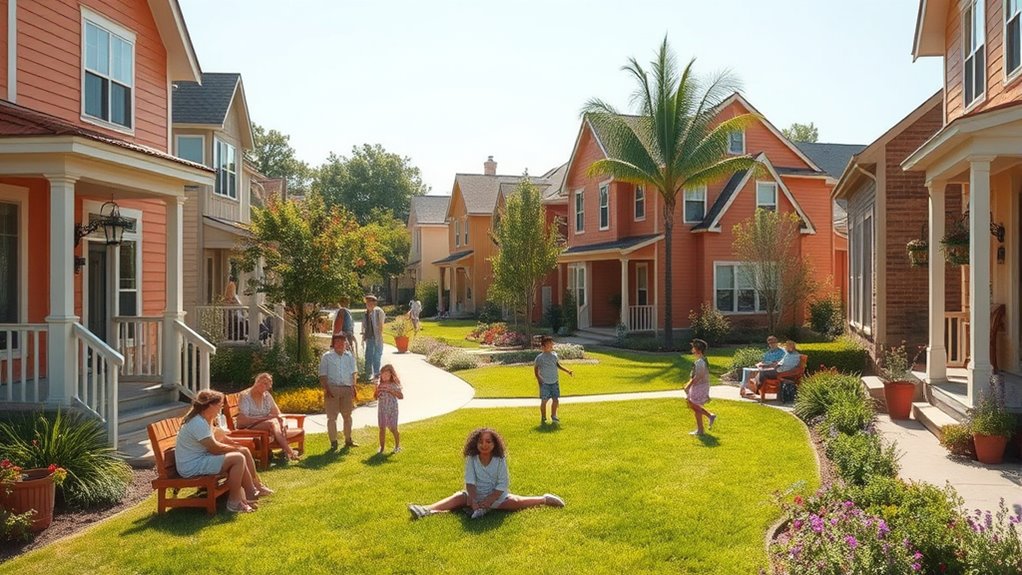

To design homes that foster connection with the community, focus on creating open layouts that encourage movement and social interaction. Incorporate seamless indoor-outdoor spaces with large windows and accessible patios or gardens to invite outdoor gatherings. Use inviting common areas and natural light to promote sharing and conversation. Thoughtful design elements help build a welcoming atmosphere, strengthening bonds within your home and neighborhood. Keep exploring to discover how these design principles can transform your space into a community hub.
Key Takeaways
- Incorporate open floor plans and minimal walls to promote seamless movement and interaction within the home.
- Design indoor spaces that flow naturally into outdoor areas to encourage communal outdoor activities.
- Use large windows, glass doors, and natural light to create a welcoming, connected atmosphere.
- Prioritize outdoor communal spaces like patios and gardens that facilitate social gatherings.
- Ensure consistent design elements and inviting layouts that foster a sense of community and belonging.
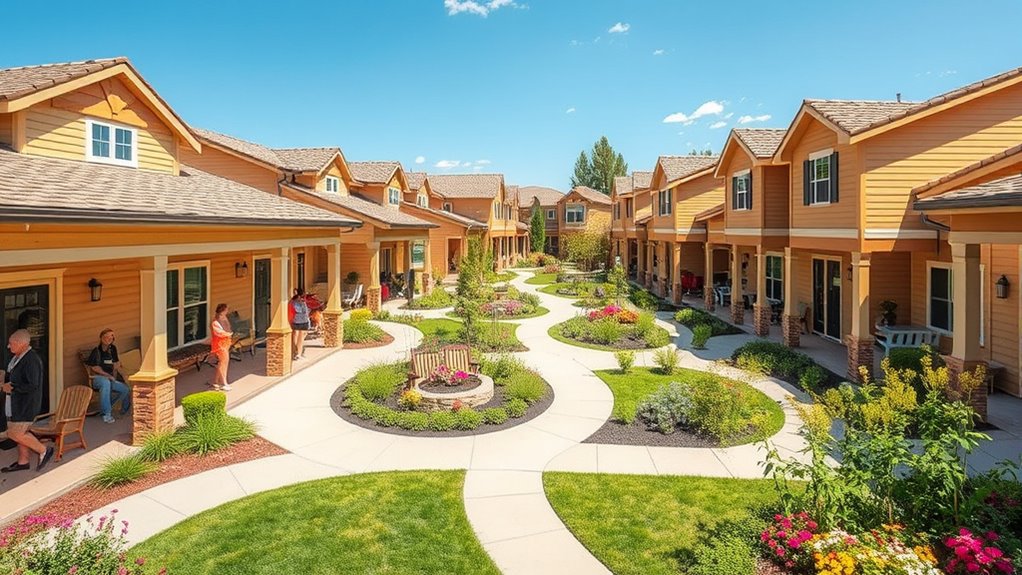
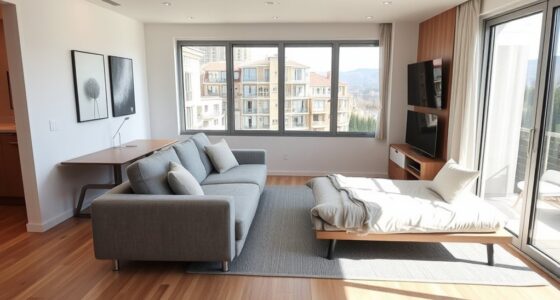
Creating a home that fosters connection begins with intentional design choices. When you prioritize interior openness, you create a space that encourages interaction rather than barriers. Open floor plans, with fewer walls dividing rooms, allow for seamless movement and conversation throughout your home. This layout invites family members and guests to gather comfortably, making it easier to share moments and build relationships. By choosing to keep common areas spacious and interconnected, you eliminate the feeling of isolation, promoting a sense of community within your walls. Incorporating vintage decor and rustic accents further enhances the cozy, inviting atmosphere that encourages gathering and shared experiences. Outdoor integration is another essential element in designing a home that nurtures connection. When your indoor spaces flow effortlessly into outdoor areas, you extend your living environment beyond the walls, creating an inviting space for socializing and relaxation. Large sliding doors, folding glass walls, or expansive windows can blur the line between inside and outside, making it easy to enjoy fresh air and natural surroundings. This connection encourages spontaneous gatherings, outdoor dinners, or simply relaxing in nature, all of which strengthen your bonds with family and community. Think about how your living spaces can be arranged to maximize this outdoor integration. Position common areas like the kitchen, dining room, or living room so they open directly onto patios, decks, or gardens. Incorporate outdoor seating and communal spaces that invite people to linger and engage. Not only does this promote a sense of togetherness, but it also makes your home more inviting to neighbors and friends, fostering local connections. In designing for interior openness and outdoor integration, consider how natural light plays a role. Large windows and glass doors not only enhance the feeling of spaciousness but also connect your interior environment with the natural world outside. The visual flow between these spaces creates a calming, welcoming atmosphere that encourages shared experiences. Additionally, pay attention to details like consistent flooring, color schemes, and design elements that unify indoor and outdoor areas. This coherence makes transitions smooth and inviting, reinforcing the idea that your home is a hub for community and connection. By thoughtfully combining open interior layouts with outdoor integration, you create a welcoming environment that actively promotes interaction, shared experiences, and a stronger sense of belonging within your community.
Frequently Asked Questions
How Can Homeowners Encourage Neighbor Interactions Naturally?
You can encourage neighbor interactions naturally by designing your front porch to be inviting, with comfortable seating and good lighting, making it a welcoming spot for conversations. Creating shared outdoor spaces like community gardens or picnic areas also fosters spontaneous interactions. These features invite neighbors to linger and connect, helping build a sense of community effortlessly. Your thoughtful design choices can turn everyday moments into opportunities for meaningful connections.
What Are the Best Materials for Fostering Community Engagement?
You should choose materials that create inviting shared spaces and communal zones, like natural wood, brick, or stone, which foster warmth and comfort. These materials encourage neighbors to gather and interact naturally. Incorporate durable, weather-resistant options to keep these areas inviting year-round. Using inviting textures and colors also helps make shared spaces feel welcoming, encouraging community engagement and making your home a hub for connection.
How Does Landscaping Influence Social Interactions?
Landscaping can really open the door to more social interactions. When your front yard has good visibility, it invites neighbors to stop by and chat. Incorporating garden privacy barriers strikes a balance, giving you private moments while still encouraging community engagement. A well-designed landscape acts like a social magnet, making your space welcoming and fostering connections that grow naturally, proving that a little thought in landscaping goes a long way.
Are There Specific Architectural Features That Promote Inclusivity?
You should include shared public spaces and accessible entrances in your design to promote inclusivity. Shared spaces encourage residents to gather, socialize, and build community bonds, while accessible entrances guarantee everyone, regardless of mobility, can easily access their homes. These features foster a welcoming environment, making residents feel connected and valued, ultimately creating a more inclusive neighborhood where diversity thrives and social interactions flourish.
How Can Technology Enhance Community Connection Within Homes?
Think of your home as a digital town square, where technology acts as the heartbeat connecting everyone. With smart home integration, you can effortlessly communicate and share resources, while digital neighborhood platforms foster real-time interactions. These tools turn your living space into a hub of connection, making it easier to build relationships, coordinate activities, and feel part of a vibrant community—all from the comfort of your home.
Conclusion
By designing homes that foster community, you create more than just a living space—you build a sense of belonging. Some might think it’s hard to make genuine connections, but simple features like shared gardens or open layouts encourage interaction effortlessly. When your home promotes connection, you’ll find neighbors becoming friends and your community thriving. So, don’t hesitate—embrace thoughtful design that brings people together, making your home a true hub of connection and warmth.