
To install threshold ramps, first measure the height difference and choose a suitable material like aluminum or composite for durability and safety. Make certain the ramp has a gentle slope, around 1:12, for easier access, and secure it tightly to your doorway or floor to prevent shifting. Check for slip-resistant surfaces and smooth progressions to avoid tripping. For detailed steps and tips on creating a safe, permanent installation, keep exploring the process further.
Key Takeaways
- Measure the threshold height and width to select an appropriately sized ramp that provides a gentle 1:12 slope.
- Choose durable, weather-resistant materials like aluminum or composite for outdoor installations to ensure safety and longevity.
- Securely fasten the ramp to the threshold and flooring using proper anchors or adhesive to prevent shifting during use.
- Ensure smooth transitions and beveled edges at the top and bottom of the ramp to minimize tripping hazards.
- Regularly inspect the installation for stability, damage, and slip resistance, especially in outdoor environments.
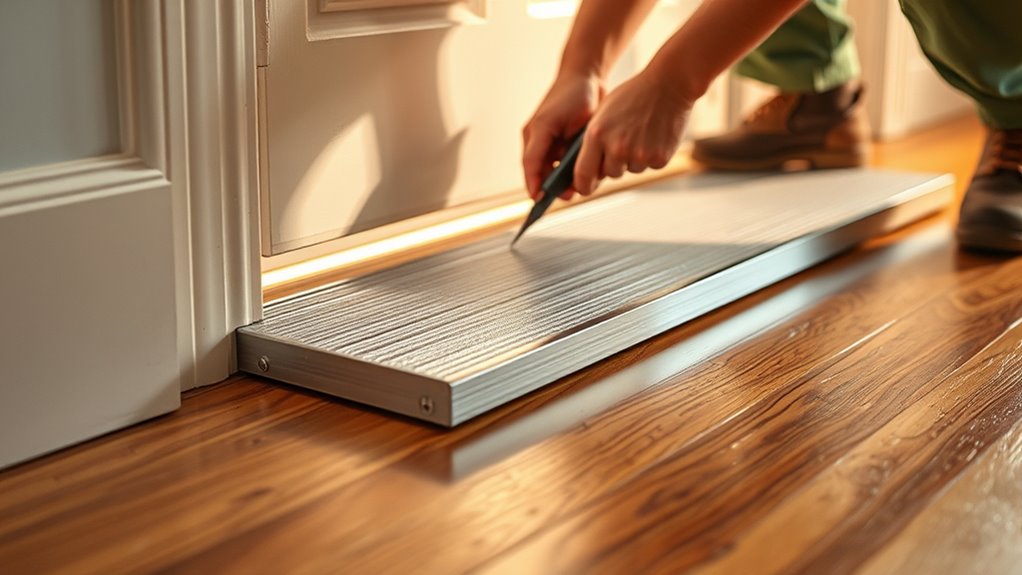
Installing threshold ramps can markedly improve accessibility by providing a smooth passage over door thresholds and small steps. When tackling this project, one of your first decisions involves choosing the right ramp materials. The material you select impacts durability, cost, aesthetics, and safety. Common options include aluminum, rubber, wood, and composite materials. Aluminum ramps are lightweight, rust-resistant, and sturdy, making them suitable for outdoor use and frequent access. Rubber ramps offer flexibility, slip resistance, and ease of installation but may not be as durable over long periods. Wood ramps can be customized easily and blend well with home interiors, but they require regular maintenance to prevent rot or warping. Composite materials combine the benefits of durability and low maintenance, often providing excellent slip resistance. Your choice should depend on the specific environment and user needs, guaranteeing the ramp can withstand daily use without compromising safety.
Safety considerations are paramount when installing threshold ramps. You want to guarantee that the ramp is stable, slip-resistant, and properly secured to prevent accidents. Check that the ramp’s surface provides good traction, especially in wet or icy conditions, to prevent slips and falls. If you’re installing outdoors, make sure the ramp material offers weather resistance and that the installation anchors hold firmly in the ground or flooring. For indoor ramps, secure them tightly to the existing flooring or threshold to avoid shifting during use. It’s also essential to contemplate the slope of the ramp; a gentle incline—ideally 1:12—reduces strain and makes navigation easier. Be mindful of edges and transitions; rounded or beveled edges help prevent tripping hazards. Additionally, if the ramp spans a doorway, ensure it doesn’t obstruct the door’s operation or create a pinch point that could cause injury.
You should also think about weight capacity, especially if users will bear significant weight or if mobility devices like wheelchairs or scooters will navigate the ramp. Confirm that the materials and installation methods can support the intended load safely. Keep in mind that proper installation isn’t just about the ramp itself but also about creating a safe, accessible environment around it. This includes ensuring clear pathways, proper lighting, and smooth transitions to the ramp surface. Regularly inspecting the ramp for wear, damage, or loose fittings helps maintain safety over time. When you prioritize choosing the right ramp materials and adhere to safety considerations, you not only improve accessibility but also create a safer environment, reducing the risk of accidents and making everyday movement easier and more confident.
Frequently Asked Questions
What Is the Maximum Weight Capacity of Threshold Ramps?
The maximum weight capacity of threshold ramps varies depending on the material and design, but generally, they support between 600 to 1,000 pounds. You should verify the specific product details for material durability, as heavier-duty ramps made from steel or reinforced materials tend to have higher weight capacities. Always confirm the ramp you select can safely handle the weight of your wheelchair or mobility device to ensure safety and stability.
Can Threshold Ramps Be Used Outdoors in All Weather Conditions?
You can absolutely use threshold ramps outdoors in harsh weather, even if it feels like battling a storm of the century! Their weather resistance and material durability are built to withstand rain, snow, and scorching sun. These ramps won’t warp, crack, or fade, making them perfect for outdoor use. So, rest assured, your threshold ramp will hold strong and keep your mobility smooth, no matter how wild the weather gets.
Are There Different Types of Threshold Ramps for Various Door Sizes?
Yes, there are different types of threshold ramps for various door sizes. You should consider your doorway width to choose the right fit, making sure the ramp isn’t too narrow or wide. Material options like aluminum, rubber, or wood allow you to select based on durability and outdoor use. Measure your doorway accurately, and select a ramp designed specifically for that size to ensure safe, seamless access.
How Do I Maintain and Clean Threshold Ramps Regularly?
Think of your threshold ramp as a trusted companion that needs care. To keep it in top shape, follow a regular maintenance schedule, inspecting for damage or wear. Use cleaning tips like mild soap and water to remove dirt and debris, ensuring smooth changeovers. Avoid harsh chemicals that could damage the surface. Regular cleaning and maintenance not only prolongs its life but also keeps it safe and functional for everyone.
Do Threshold Ramps Comply With ADA Accessibility Standards?
Yes, threshold ramps often comply with ADA accessibility standards if you choose the right ramp materials and guarantee proper installation. ADA compliance requires specific dimensions, slip-resistant surfaces, and sturdy construction. When selecting materials like aluminum or rubber, verify they meet ADA guidelines for durability and safety. Regular maintenance and inspections help keep your ramps compliant, ensuring safe, accessible entryways for all users.
Conclusion
Now that you’ve installed your threshold ramp, you’re practically transforming your space into a fortress of accessibility. With this simple upgrade, you’re making life easier for everyone, turning obstacles into mere shadows of the past. Imagine the endless freedom and independence you’ll gain—it’s like opening a door to a whole new world. Keep up the great work, because your efforts are truly a game-changer, revolutionizing comfort and safety in your home!