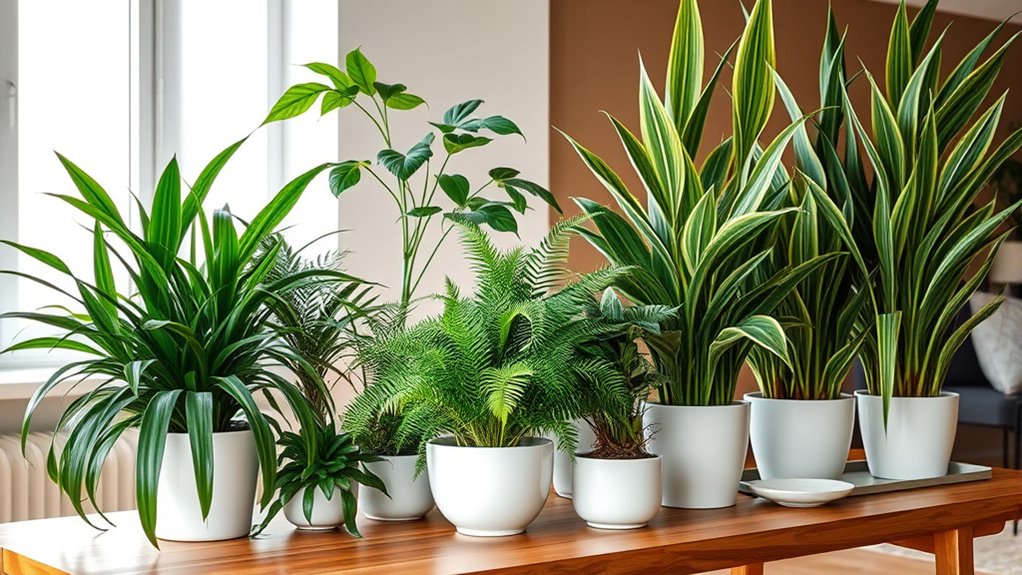

Incorporating indoor plants can profoundly improve your air quality by absorbing pollutants like formaldehyde, benzene, and trichloroethylene. Choose plants suited to your space and lighting conditions, such as pothos for low light or peace lilies for brighter spots. Proper care—including watering, pruning, and maintenance—ensures they stay healthy and effective. Position your plants strategically where they’ll thrive and be easy to care for, revealing the full benefits of cleaner, fresher indoor air. Keep exploring to learn more about maximizing your plant’s potential.

Turn the school run and nap time into listening time
- Thousands of audiobooks, podcasts and originals
- Listen on your phone, tablet or Echo — also offline
- Cancel anytime
Key Takeaways
- Select indoor plants like pothos or snake plants that thrive in your lighting conditions.
- Position plants in high-traffic areas to maximize air purification benefits.
- Maintain proper watering, pruning, and pest control to keep plants healthy and effective.
- Combine different species to target various indoor pollutants simultaneously.
- Regularly clean leaves and monitor plant health to sustain optimal air-cleaning performance.

Improving indoor air quality doesn’t have to rely solely on filters and ventilation systems; incorporating plants into your space offers a natural and effective solution. Plants can absorb pollutants like formaldehyde, benzene, and trichloroethylene, helping you breathe easier and creating a healthier environment. However, the key to maximizing their benefits lies in careful plant selection and proper maintenance tips. Choosing the right plants depends on your space, lighting, and level of care you’re willing to provide. Low-light options like pothos or snake plants thrive in less illuminated areas, while peace lilies and spider plants prefer brighter, indirect sunlight. Research each plant’s specific needs before buying to ensure they’ll survive and perform well in your environment.
Once you’ve selected suitable plants, maintaining them properly is essential. Regular watering is essential, but overwatering can lead to root rot, so always check soil moisture before watering. Allow the top inch of soil to dry out between waterings, and use pots with drainage holes to prevent water from pooling. Dust can settle on plant leaves, blocking their ability to absorb pollutants and photosynthesize. Gently wipe or rinse the leaves periodically to keep them clean and functioning effectively. Proper humidity levels also matter; many air-purifying plants prefer moderate humidity, so consider misting them or using a humidifier if your indoor air tends to be dry. Proper maintenance ensures that your plants remain healthy and continue to improve your indoor air quality over time.
Pruning is another key maintenance tip. Removing dead or yellowing leaves encourages healthy growth and prevents disease. Fertilize your plants during the growing season with a balanced, water-soluble fertilizer to support their health without overfeeding. Also, keep an eye out for pests like spider mites or aphids, which can compromise plant health and reduce their air-purifying abilities. Regular inspection and prompt treatment keep your plants thriving and effective.
Positioning your plants strategically enhances their air-cleaning capabilities. Place them near common areas, such as living rooms or offices, where you spend the most time. Avoid placing plants in drafty spots or near heating and cooling vents, which can stress them out. Combining different species can optimize air purification, as various plants target different pollutants and adapt to different conditions. Remember, consistency is key—regular maintenance ensures that your plants remain healthy and continue to improve your indoor air quality over time. With thoughtful plant selection and attentive care, you create a greener, cleaner, and more revitalizing living or working space.
Products Worth Considering

Levoit Vital 200S-P Smart Air Purifier for Large Rooms

Levoit Core 600S-P Smart Air Purifier for Large Rooms

Philips Hue Large Smart Light Tube, Black – White and Color Ambiance LED Color-Changing Light – 1 Pack
As an affiliate, we earn on qualifying purchases.
Frequently Asked Questions
Which Indoor Plants Are Most Effective for Removing Specific Pollutants?
You should select plants like the snake plant and pothos for their pollutant removal capabilities. Snake plants are effective at filtering formaldehyde and nitrogen oxides, while pothos helps eliminate benzene and xylene. When choosing plants, consider their specific pollutant removal abilities and your indoor environment. Proper plant selection ensures you’re targeting the right pollutants, improving your air quality naturally and effectively.
How Often Should I Water My Air-Purifying Plants?
Watering your air-purifying plants is like giving them a drink after a long day—they thrive on consistent care. You should typically water them when the top inch of soil feels dry, which usually means every 1-2 weeks. Maintain a regular watering schedule to guarantee proper plant hydration, but avoid overwatering. Adjust based on your home’s humidity and the specific needs of each plant to keep them healthy and effective at purifying the air.
Can Plants Improve Air Quality in Large Commercial Spaces?
Yes, plants can improve air quality in large commercial spaces. By carefully selecting the right plants for your environment, you optimize air purification. Focus on plant selection that thrives indoors and suits your space’s conditions, and incorporate space optimization strategies to maximize coverage. Proper placement and maintenance will enhance air quality, making the environment healthier and more inviting for employees and visitors alike.
Are There Any Plants Safe for Homes With Pets?
You wonder if your home’s plants are safe for your pets, and the answer is yes—some are pet safe, but you must be cautious. Toxic vs. non-toxic plants can make all the difference. Look for pet safe plants like spider plants, Boston ferns, or areca palms. Don’t risk it with toxic varieties, because what seems harmless might hide dangers. Protect your pets by choosing the right, non-toxic options.
How Do I Care for Plants to Maximize Their Air-Cleaning Benefits?
To maximize your plants’ air-cleaning benefits, focus on plant placement in well-lit areas and avoid drafts. Water them appropriately, keeping soil moist but not soggy, and fertilize periodically to promote healthy growth. Regularly check soil maintenance by removing dead leaves and repotting when necessary. Proper care guarantees your plants thrive, boosting air quality and creating a healthier home environment.
Conclusion
By adding a few plants to your space, you’re not just improving air quality—you’re transforming your entire environment into a sanctuary so pure, it’s practically like breathing in the fresh air of a mountain summit every moment. These green wonders have the power to turn your home into a health haven, making pollution vanish as if it were a distant nightmare. Embrace plants now, and watch your surroundings become an unstoppable fortress of clean, crisp air!