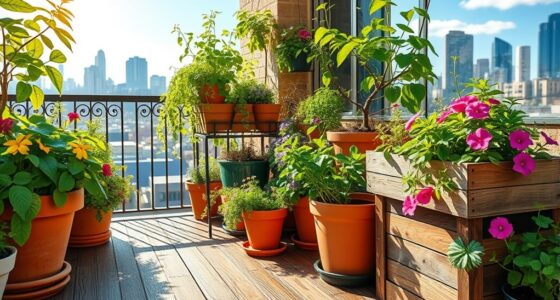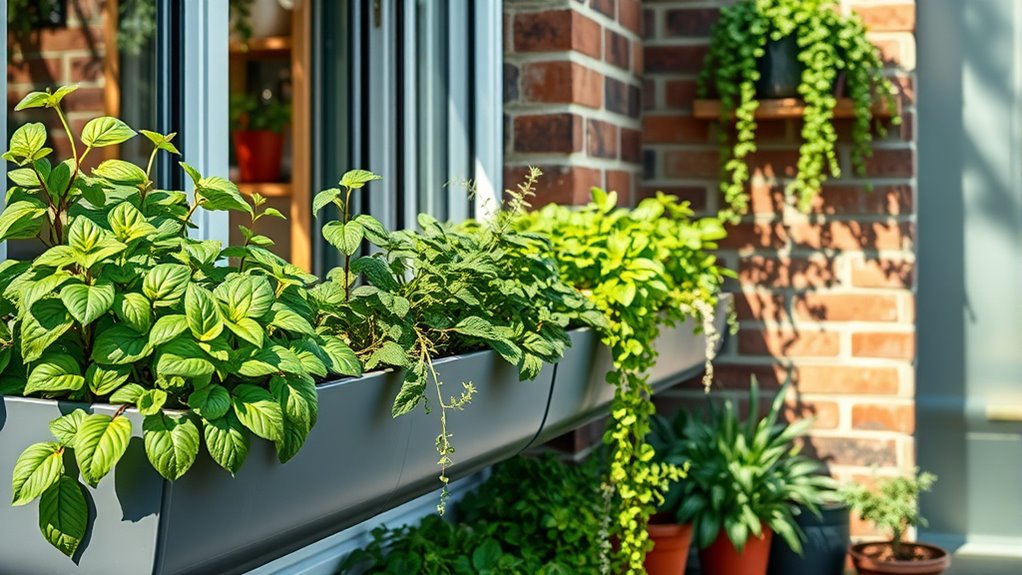

Vertical herb gardens are perfect for maximizing small balcony spaces, allowing you to grow fresh herbs without taking up much room. By using vertical surfaces and companion planting strategies, you can create a lush, low-maintenance garden that attracts beneficial insects and boosts plant health. Proper watering techniques and sunlight placement keep your herbs thriving. If you want to discover more tips, there’s plenty to explore to help you create a thriving balcony oasis.
Key Takeaways
- Maximize limited balcony space by utilizing vertical surfaces for herb planting.
- Choose compatible herbs like basil with tomatoes or mint with lettuce for healthier growth.
- Use drip irrigation or self-watering planters to ensure consistent watering across all tiers.
- Position the garden where herbs receive at least six hours of direct sunlight daily.
- Regular pruning and maintenance keep herbs healthy, productive, and easy to manage in a vertical setup.
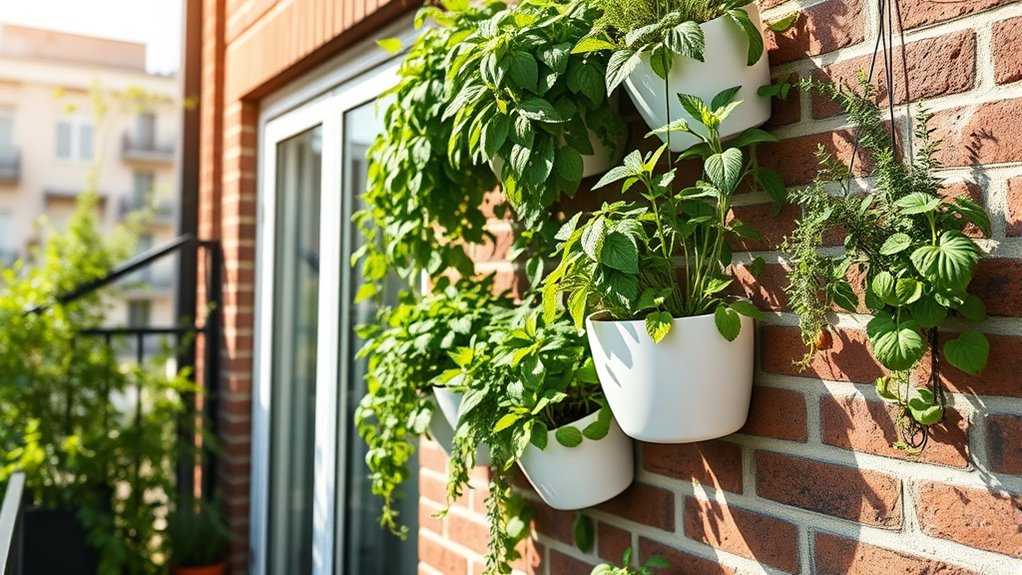
Have you ever considered transforming your small space into a thriving herb garden? If you have a balcony, you’re in a perfect spot to create a vertical herb garden that maximizes every inch. Vertical gardens are excellent for small spaces because they make use of vertical surfaces, freeing up valuable floor space while adding lush greenery and fresh herbs to your environment. To succeed, you’ll want to focus on effective companion planting and proper watering techniques, which are key to healthy, productive herbs.
Turn your balcony into a lush vertical herb garden with smart planting and watering techniques.
When planning your vertical herb garden, think about companion planting. This method involves pairing herbs that grow well together, enhancing each other’s flavor and growth while also deterring pests. For example, basil and tomatoes are a classic combo, but you can also mix herbs like chives with carrots or mint with lettuce. Companion planting not only boosts your herbs’ health but also reduces the need for chemical interventions, making your garden more sustainable. As you arrange your herbs vertically, keep in mind which plants benefit each other, and group them accordingly. This approach ensures that your herbs thrive and that your garden remains manageable and low-maintenance.
Watering techniques are equally important when growing herbs vertically. Since water drains more quickly through vertical setups, you need to be diligent to prevent your herbs from drying out. Use drip irrigation systems or self-watering planters to provide consistent moisture without overwatering. When watering manually, do so gently and thoroughly, ensuring each plant’s roots receive enough water without waterlogging the soil. Mulching your containers can also help retain moisture and regulate soil temperature. Remember, herbs generally prefer well-drained soil and moderate watering, so check your plants regularly to see if they need water. Adjust your watering schedule based on weather conditions—hot, windy days may require more frequent watering, while cooler days might need less. Keep an eye on your herbs’ leaves; wilting or yellowing can indicate overwatering or underwatering.
Positioning your vertical garden is essential too. Place your herbs where they’ll get ample sunlight—most herbs love at least six hours of direct sun daily. Ensure your watering system reaches all levels evenly, especially if you’re using multiple tiers or containers. Regular maintenance, like pruning and harvesting, encourages new growth and keeps your herbs healthy and productive. With the right companion planting and attentive watering techniques, your balcony will become a lush, thriving herb garden in no time. Not only will you enjoy fresh herbs at your fingertips, but you’ll also create a vibrant, beautiful space that makes your balcony feel like a green oasis.
As an affiliate, we earn on qualifying purchases.
Frequently Asked Questions
What Is the Best Sunlight Exposure for Balcony Herb Gardens?
You should aim for at least 4-6 hours of direct sunlight daily for your balcony herb garden. Most herbs thrive with this sunlight duration, though some, like mint or parsley, have higher shade tolerance and can handle less sun. Observe your space’s sunlight patterns and adjust placements accordingly, ensuring your herbs get enough light to grow healthy and flavorful. Remember, consistent sunlight exposure is key to a thriving vertical herb garden.
How Often Should I Water My Vertical Herb Garden?
Imagine your garden as a thirsty traveler seeking oasis. You should water your vertical herb garden when the soil moisture feels dry to the touch, usually every 2-3 days. Keep an eye on the watering schedule and monitor soil moisture regularly, especially during hot weather. Consistent watering guarantees healthy growth, prevents wilting, and keeps your herbs vibrant and flavorful. Adjust frequency based on plant needs and weather conditions.
Can I Grow Root Vegetables in a Vertical Garden?
You can grow root vegetables in a vertical garden if the soil depth provides enough root space. Choose varieties like radishes or carrots that don’t need deep soil. Make certain each container has adequate depth—at least 8-12 inches—to support healthy root development. Regular watering and proper drainage are essential. With the right soil depth and sufficient root space, your vertical garden can successfully produce tasty root vegetables.
Which Herbs Require the Least Maintenance?
Think of low maintenance herbs as the steady, reliable friends of your garden. They require minimal fuss and still reward you with fresh flavors. Easy care herbs like basil, mint, and thyme thrive with basic watering and occasional pruning. You won’t need to chase after them constantly; just give them some sunlight and a bit of love. These herbs are perfect for busy days and beginner gardeners alike.
Are There Any Pests Specific to Balcony Herb Gardens?
Yes, balcony herb gardens can attract pests like aphids or whiteflies. To prevent these, practice pest prevention by regularly inspecting your herbs and keeping the area clean. Use organic pest control methods such as neem oil or insecticidal soap to target pests without harming beneficial insects. Staying vigilant and maintaining healthy plants helps keep pests at bay, ensuring your herb garden thrives with minimal issues.
Conclusion
A vertical herb garden transforms your balcony into a lush oasis, making gardening feel as effortless as breathing. With space-saving design and fresh herbs at your fingertips, you’ll enjoy the beauty and aroma every day. Just like a well-tuned symphony, your garden will thrive, filling your outdoor space with life and flavor. So, go ahead and start planting—your balcony is ready to bloom into a vibrant herb haven.