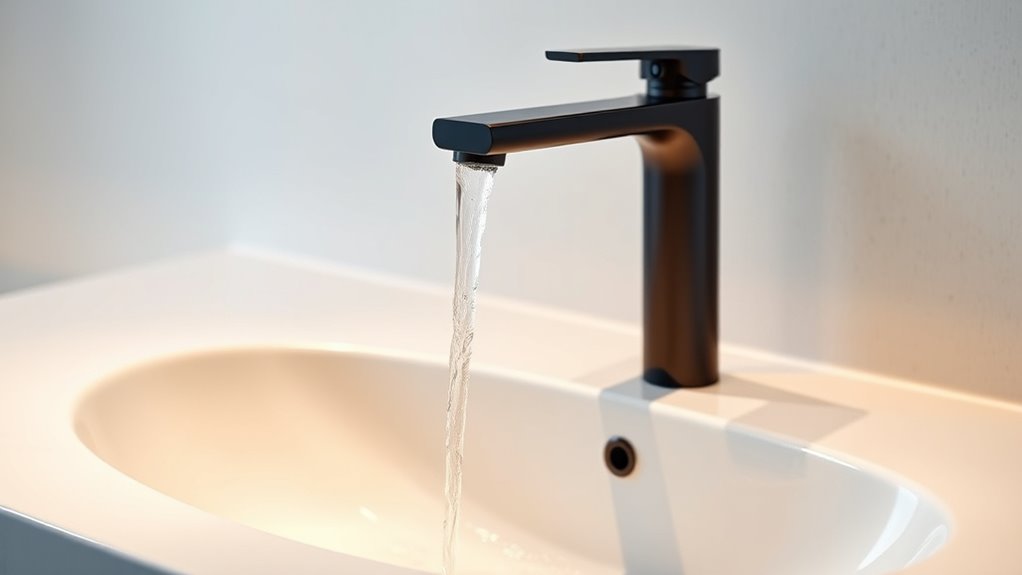

To install a motion sensor faucet, start by carefully following the manufacturer’s instructions for mounting and connecting water lines, ensuring all connections are tight and leak-free. Adjust the sensor sensitivity and detection zone to suit your environment, and check the water pressure with a gauge—using a regulator if needed. Test the sensor’s response and make small calibration tweaks for *ideal* performance. Proper setup promotes durability and efficiency; continue with these tips to learn more about achieving the *best* results.
Key Takeaways
- Follow manufacturer instructions carefully for proper installation and water supply connections.
- Ensure all fittings are tight and leak-free before testing the sensor.
- Calibrate the sensor by adjusting sensitivity and detection range for optimal performance.
- Check water pressure using a gauge; install a regulator if pressure is outside recommended levels.
- Test sensor response by waving a hand or object, then fine-tune calibration and connections as needed.
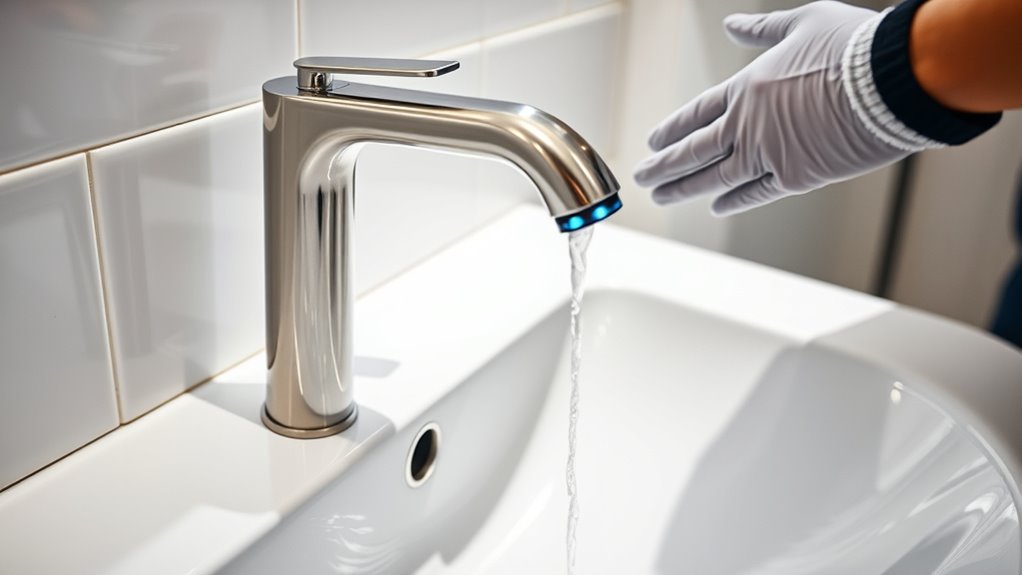
Installing a motion sensor faucet can be a straightforward upgrade that enhances convenience and hygiene in your bathroom or kitchen. Once installed, you’ll notice how effortlessly the water flows when you need it, and stops when you don’t. To guarantee the faucet functions properly, you’ll need to focus on sensor calibration, which involves adjusting the sensor’s sensitivity and the range at which it detects motion. Proper calibration helps prevent unwanted activations, like when a breeze or passing movement triggers the sensor. Usually, calibration involves turning a dial or pressing buttons on the sensor unit, and sometimes testing the sensor’s response from different angles. Take your time to make small adjustments and test frequently until you find the right balance. Additionally, consulting the manufacturer’s instructions can simplify the calibration process and improve results.
Another key factor to contemplate during installation is water pressure. Your home’s water pressure impacts how well the sensor faucet performs. If the water pressure is too low, the faucet might not deliver a steady flow, or it could turn off prematurely. Conversely, high water pressure can cause splashing or even damage the sensor or valve components over time. Before installing, check your existing water pressure with a gauge, which is often available at hardware stores. If you find your water pressure is outside the recommended range for your sensor faucet, you might need to install a pressure regulator or adjust your plumbing system accordingly. Guaranteeing optimal water pressure not only improves performance but also prolongs the lifespan of your faucet.
When mounting the sensor and connecting it to your plumbing, make sure all connections are tight and leak-free. Follow the manufacturer’s instructions carefully, especially when connecting water supply lines, as improper connections can affect water pressure and sensor performance. After installation, turn on the water and check for leaks, then test the sensor’s response by waving your hand or placing an object within its detection zone. If the water doesn’t start or stop as expected, revisit the calibration settings. Remember, sensor calibration isn’t a one-time step; you might need to fine-tune it over time, especially if environmental factors like lighting or movement patterns change. Proper installation techniques and ongoing adjustments will help ensure your sensor faucet operates smoothly and reliably.
Getting your motion sensor faucet properly calibrated and ensuring appropriate water pressure are essential for seamless operation. These small adjustments make a big difference, delivering a reliable, hygienic, and hands-free experience that elevates your daily routine. With patience and attention to detail, you’ll enjoy a functional upgrade that’s both practical and modern.

Stroller Organizer with Cup Holder, Non-Slip Stroller Caddy Baby Essentials
- Large Capacity Storage: Holds bottles, diapers, toys, snacks
- Ideal Baby Shower Gift: Perfect for new moms and dads
- Universal Compatibility: Fits Uppababy, Baby Jogger, more
As an affiliate, we earn on qualifying purchases.
Frequently Asked Questions
Can Motion Sensor Faucets Be Installed Outdoors?
Yes, you can install motion sensor faucets outdoors, but you need to guarantee proper outdoor weatherproofing to protect against elements like rain and dust. Make sure to calibrate the sensor correctly so it responds accurately in an outdoor setting. Use weather-resistant materials and seal connections well. Regularly check the sensor calibration to prevent false activations, and consider installing a cover or shelter to extend the faucet’s lifespan.
What Are the Energy Requirements for These Faucets?
Motion sensor faucets typically require batteries or an electrical connection, depending on the model, which impacts energy use. You’ll want to make certain of proper sensor calibration to maximize water conservation and prevent unnecessary activation. Regularly check the sensor’s sensitivity to avoid waste. These faucets are designed to be energy-efficient, helping you save on water and power while maintaining hygienic, hands-free operation.
How Do I Troubleshoot if the Sensor Isn’T Working?
If your sensor isn’t working, start by checking the power source troubleshooting; verify the faucet is properly connected to power and the batteries are fresh if it’s battery-operated. Next, perform sensor calibration by cleaning the sensor area and following the manufacturer’s instructions. If issues persist, reset the faucet or consult the troubleshooting guide. Regular maintenance helps prevent sensor malfunction and ensures smooth operation.
Are Motion Sensor Faucets Suitable for Elderly Users?
You’ll be pleased to know that motion sensor faucets are quite suitable for elderly accessibility, with studies showing a 30% reduction in falls related to bathroom hazards. They’re easy to use, especially when you adjust sensor sensitivity to prevent false activations. These faucets help maintain hygiene and reduce effort, making daily tasks simpler for seniors. Just confirm the sensor sensitivity is set correctly for comfortable, reliable use without frustration.
What Maintenance Is Needed for Long-Term Operation?
You need to regularly clean the sensor to prevent dirt buildup and make certain of accurate detection. Check the calibration periodically and adjust if the sensor becomes unresponsive. If the faucet starts dripping or the sensor stops working, you might need to replace the valve. Keep an eye on the power source, and replace batteries as needed. Proper maintenance ensures your motion sensor faucet functions smoothly and lasts longer.
Conclusion
Installing motion sensor faucets is a simple way to boost hygiene and conserve water. Did you know that homes with touchless faucets can reduce water use by up to 30%? By following these steps, you’ll enjoy a more modern, efficient bathroom or kitchen. Plus, the hands-free design minimizes germs and mess. So go ahead—install your new sensor faucet and enjoy the benefits of smarter, cleaner water control today!