
To design homes with adequate lighting, focus on maximizing natural light through large windows, glass doors, and skylights, positioning your furniture to avoid blocking sunlight. Incorporate layered artificial lighting—ambient, task, and accent—to guarantee a well-balanced environment. Use lighting controls like dimmers and automated systems to adjust brightness and save energy. Thoughtful placement and control create a bright, inviting, and functional space, with many more tips awaiting to help you perfect your home’s lighting.
Key Takeaways
- Incorporate large windows, glass doors, and skylights to maximize natural sunlight entry.
- Strategically position and orient rooms to optimize sunlight exposure throughout the day.
- Use layered lighting: natural light during the day, complemented by ambient, task, and accent lighting.
- Install adjustable controls like dimmers and automated systems to enhance flexibility and energy efficiency.
- Arrange furniture and decor to prevent obstruction of light sources, ensuring a bright, inviting space.
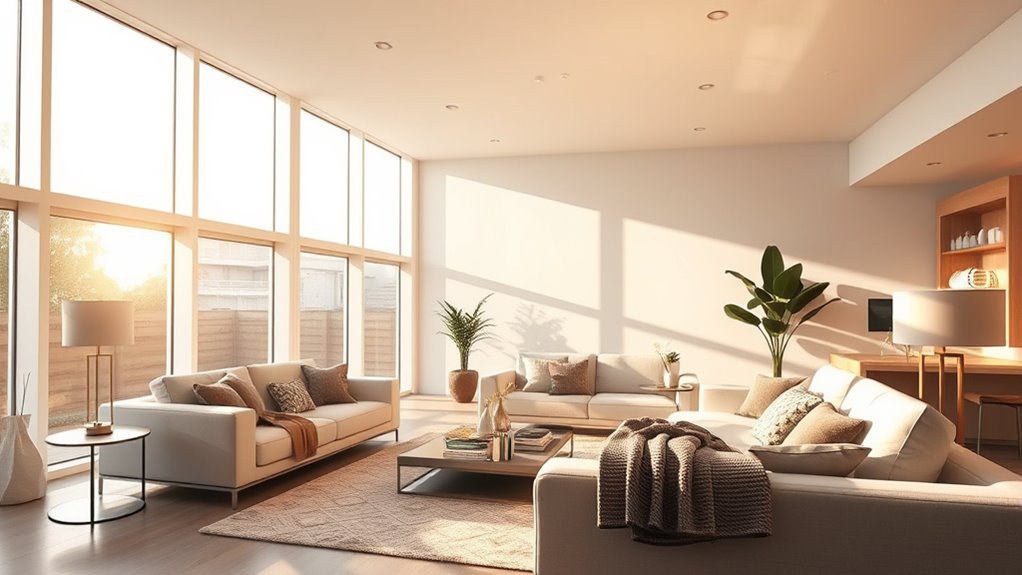
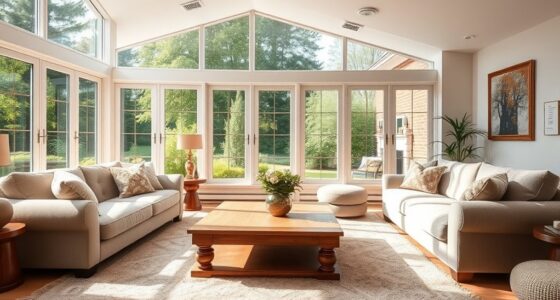
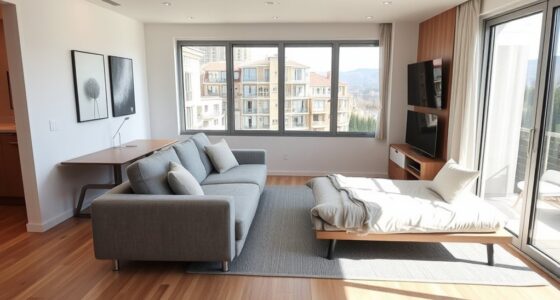
Good lighting is essential for creating a comfortable and functional home, but designing spaces that are well-lit can be challenging. One of the most effective ways to achieve this is by maximizing natural light. When you open up your rooms to more sunlight, you not only reduce energy costs but also create a warm, inviting atmosphere. To do this, consider installing large windows or glass doors that allow sunlight to flood in during the day. Position furniture and decor thoughtfully to avoid blocking these light sources, ensuring the space feels bright and airy. Skylights can also be a game-changer, especially in rooms that don’t have exterior walls. They bring in direct sunlight from above, making even small spaces feel more open. natural light is a key element in creating an inviting environment, and thoughtful window placement can significantly enhance your home’s ambiance.
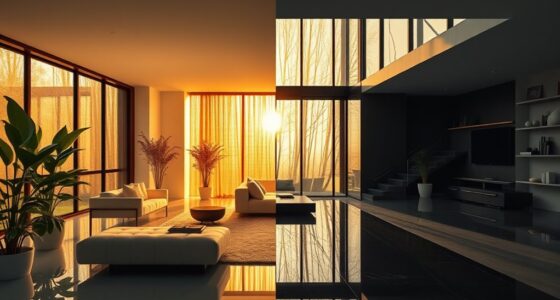
However, relying solely on natural light isn’t enough, because the sun’s position changes throughout the day and seasons. That’s where lighting controls come into play. With the right switches, dimmers, and automated systems, you can adjust the intensity of your lighting to suit your needs. For example, dimmer switches let you soften or brighten a room instantly, perfect for relaxing evenings or lively gatherings. Automated lighting systems can be programmed to turn on or off based on the time of day or occupancy, helping you save energy while maintaining the perfect ambiance. These controls give you flexibility, ensuring your home is always well-lit without wasting electricity.
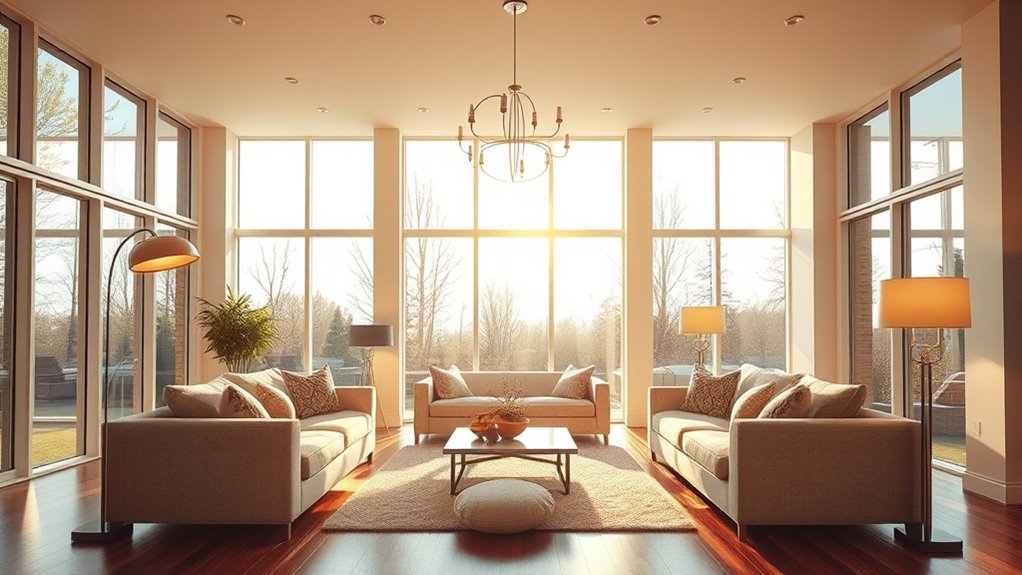
When designing your home’s lighting, think about layering different sources. Natural light is your primary source during the day, but you’ll also want ambient, task, and accent lighting to fill in the gaps. Ambient lighting, such as ceiling fixtures or recessed lights, provides overall illumination. Task lighting, like reading lamps or under-cabinet lights, helps with specific activities. Accent lighting highlights artwork or architectural features, adding depth and personality to your space. Incorporating lighting controls across these layers allows you to fine-tune the environment effortlessly.

MIULEE 100% Blackout Linen Curtains for Bedroom 52×84 Inches Natural Beige
- Size and Material: Includes 2 beige blackout panels, 52×84 inches
- Easy to Hang: 8 grommets per panel for simple installation
- Blackout Function: Blocks 100% light for complete darkness
As an affiliate, we earn on qualifying purchases.
As an affiliate, we earn on qualifying purchases.
Frequently Asked Questions
How Can I Reduce Glare in My Home Lighting?
To reduce glare in your home lighting, start by using window coverings like blinds or curtains to control sunlight. Install glare diffusers on your light fixtures to soften harsh light. Adjust the placement of lamps and avoid directing bright lights straight into screens or eyes. Using dimmers also helps, giving you control over light levels. These steps create a comfortable, glare-free environment that’s easier on your eyes and improves overall lighting quality.
What Are the Best Energy-Efficient Lighting Options?
Choosing clever, cost-effective lighting, you can’t go wrong with LEDs. They’re energy-efficient, long-lasting, and versatile. Incorporate smart sensors to automate lighting, saving energy when rooms are empty. Adjust color temperature to match your mood—warm for cozy evenings, cool for task lighting. These modern marvels maximize energy efficiency, minimize waste, and create a comfortable, cost-conscious environment tailored to your lifestyle.
How Do I Balance Natural and Artificial Light Effectively?
To balance natural and artificial light effectively, focus on window placement to maximize daylight while minimizing glare. Use light layering—combine ambient, task, and accent lighting—to create a flexible, well-lit space. Keep windows unobstructed, add sheer curtains for diffused light, and incorporate dimmable fixtures to adjust brightness as needed. This approach guarantees your home feels bright, inviting, and energy-efficient at all times.
What Lighting Controls Are Recommended for Different Rooms?
Think of your lighting as a symphony, where controls like dimming switches and smart lighting act as conductors. In living rooms, use dimming switches for cozy evenings. Kitchens benefit from smart lighting for bright, adjustable task lighting. Bedrooms thrive with dimmers for relaxation, while bathrooms may need motion sensors or timers. These controls help create the perfect ambiance, making your space adaptable and comfortable at all times.
How Does Lighting Impact Mood and Productivity at Home?
Lighting psychology plays a vital role in shaping your mood and productivity at home. Bright, natural light can boost your mood and energy levels, helping you feel more alert and motivated. Soft, warm lighting creates a calming atmosphere, ideal for relaxation. Proper lighting enhances mood and productivity, so you should choose fixtures and controls that adapt to your needs throughout the day. This way, your home supports your well-being and efficiency.
Conclusion
Good lighting transforms your home, making it more inviting and functional. Did you know that proper lighting can boost productivity by up to 25%? By thoughtfully choosing fixtures and maximizing natural light, you create a space that feels warm and energizing. Remember, well-lit rooms not only enhance your mood but also improve safety. So, invest in good lighting design—you’ll enjoy a brighter, more comfortable home every day.