To improve your balance, consider joining exercise classes focused on stability, coordination, and muscle strengthening. These classes often include resistance training, bodyweight movements, and equipment to target muscles that weaken with age. They also emphasize proper posture, alignment, and proprioception to help you make quick adjustments and prevent falls. Staying consistent and engaging in social activities can boost your motivation. Keep exploring to discover how these classes can support your independence and safety.
Key Takeaways
- Balance exercise classes focus on stability, coordination, and proprioception to prevent falls and enhance daily mobility.
- Incorporate resistance and bodyweight exercises targeting core, hips, and legs to improve muscle support and stability.
- Emphasize proper posture and body alignment to develop awareness and quick adjustment skills for uneven surfaces.
- Include strength training to bolster muscles that weaken with age, supporting better balance and joint support.
- Offer social interaction and consistency to motivate participants and ensure sustained progress in balance and confidence.
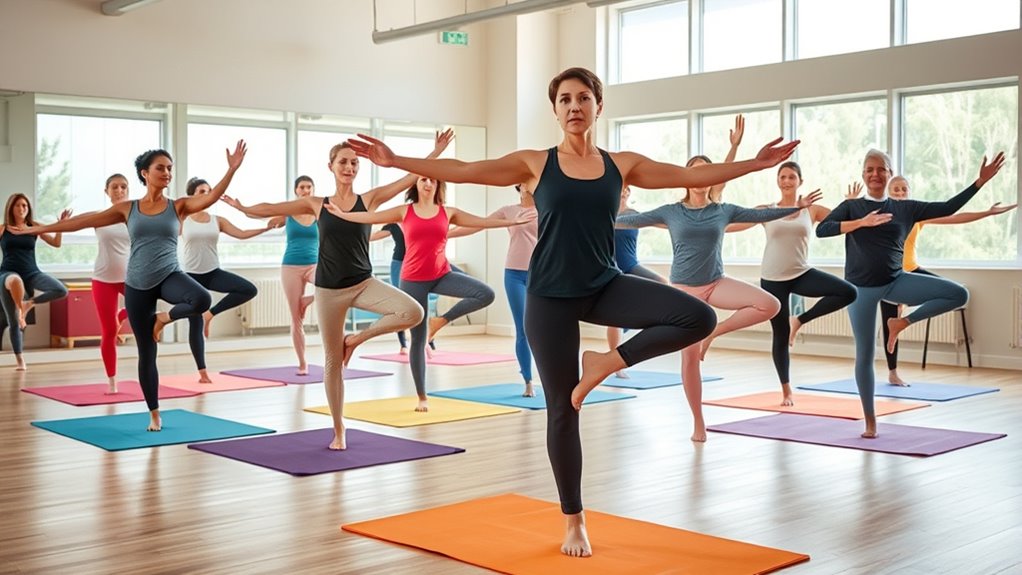
Maintaining good balance is fundamental for everyday activities and preventing falls, especially as you age. When your balance improves, you’re less likely to stumble or lose stability during daily tasks like walking, reaching, or standing up. Participating in exercise classes designed to enhance balance can make a significant difference in your safety and overall mobility. These classes often focus on fall prevention, which is critical for reducing injuries and maintaining independence. They incorporate exercises that challenge your stability and coordination, helping your body adapt to different movements and unexpected shifts.
Good balance is essential for daily activities and fall prevention as you age.
One of the key benefits of these classes is muscle strengthening. Stronger muscles, particularly in your legs, hips, and core, provide better support for your joints and improve your ability to maintain equilibrium. Many balance-focused exercises involve resistance training, bodyweight movements, or the use of equipment like balance boards and stability balls. These activities target muscles that might weaken with age or inactivity, making your entire body more resilient. As your muscles grow stronger, you’ll notice that everyday tasks become easier and less risky, whether you’re climbing stairs, bending to tie your shoes, or standing for extended periods.
In addition to muscle strengthening, these classes often emphasize proper posture and alignment, which are essential for good balance. You learn to engage the right muscles at the right times, reducing the likelihood of falls caused by poor coordination or instability. Many programs also include exercises that improve proprioception—the sense of where your body is in space—which is crucial for quick adjustments during movement. When your proprioceptive skills improve, you react faster to uneven surfaces or sudden changes, further enhancing your fall prevention efforts.
Participating regularly in balance exercise classes also offers social benefits. You get the chance to connect with others who share similar goals, which can boost your motivation and commitment. Consistency is key; the more you practice these exercises, the more your balance and muscle strength will improve. Over time, you’ll feel more confident moving around and less worried about falling, which encourages you to stay active and engaged in daily life.
Furthermore, incorporating strength training into your routine can significantly accelerate your progress in maintaining stability and preventing falls. Ultimately, these classes help you develop a holistic approach to fall prevention. By focusing on muscle strengthening, coordination, and stability, you reduce your risk of injury and maintain your independence longer. The combination of targeted exercises, proper technique, and regular participation ensures that you’re actively working toward a safer, more balanced life. So, if you’re looking to improve your stability and protect yourself from falls, joining a balance-focused exercise class could be a smart, empowering step forward.
Frequently Asked Questions
Can Balance Exercises Be Done at Home Without Equipment?
Yes, you can do balance exercises at home without equipment. A home workout with bodyweight exercises like single-leg stands, heel-to-toe walks, and yoga poses helps improve your stability. You just need a little space and focus on slow, controlled movements. Incorporate these exercises regularly to boost your balance and coordination without any special gear, making it easy and convenient to stay active at home.
How Often Should I Attend Balance Classes for Best Results?
Think of your balance as a delicate dance that needs regular practice. To see the best results, attend balance classes two to three times a week. Consistency is key, so follow these frequency recommendations and stick to a routine. To maximize progress, arrive on time, stay engaged, and ask your instructor for personalized tips. This way, you’ll keep your balance skills sharp and steady over time.
Are Balance Classes Suitable for Seniors With Mobility Issues?
Yes, balance classes are suitable for seniors with mobility issues. These classes focus on fall prevention and mobility enhancement, helping you build strength and confidence safely. Your instructor can modify exercises to match your ability level, ensuring you get the benefits without risking injury. Regular participation can markedly reduce fall risk, improve your overall stability, and support your independence. Always consult your healthcare provider before starting new exercise routines.
How Long Does It Take to See Improvement in Balance?
You can usually see improvements in balance within a few weeks of consistent balance training. The progress timeline varies depending on your starting point and dedication, but most people notice better stability and coordination after about 4 to 6 weeks. To maximize results, stay committed to your exercise classes, practice regularly, and listen to your body’s cues. Consistent effort will lead to noticeable gains in your overall balance.
Do Balance Exercises Help Prevent Falls in Older Adults?
Yes, balance exercises help prevent falls in older adults by improving fall prevention and mobility enhancement. When you regularly practice these exercises, you strengthen stabilizing muscles, boost coordination, and increase confidence in your movements. This reduces your risk of falling, especially on uneven surfaces or when quick adjustments are needed. Incorporate balance-focused activities into your routine to stay safer, more stable, and maintain independence longer as you age.
Conclusion
Incorporating these exercise classes into your routine is like planting seeds for better stability and confidence. Just as a sturdy tree sways with the wind but remains rooted, you’ll develop resilience and balance with consistent effort. These classes not only strengthen your muscles but also boost your confidence, helping you stay steady on your feet. So, take the step today—your future self will thank you for the balance and agility you build now.