
To prepare for floods and severe weather, assemble an emergency kit with non-perishable food, water, a flashlight, and a first-aid kit, and create a family communication plan with a safe meeting spot and out-of-town contact. Keep maps and evacuation routes accessible, and stay informed by signing up for alerts and monitoring local news. Regularly review and update your plans, so you’re ready to respond quickly and stay safe when disasters strike—learn more to stay fully prepared.
Key Takeaways
- Assemble an emergency kit with essentials like non-perishable food, water, flashlight, and important documents.
- Develop and practice a family communication plan, including a safe meeting spot and out-of-town contact.
- Identify local evacuation routes and nearby shelters; store maps in accessible locations.
- Sign up for emergency alerts and monitor weather updates to stay informed of severe weather developments.
- Secure your home and possessions, and prepare an evacuation plan tailored for floods and storms.

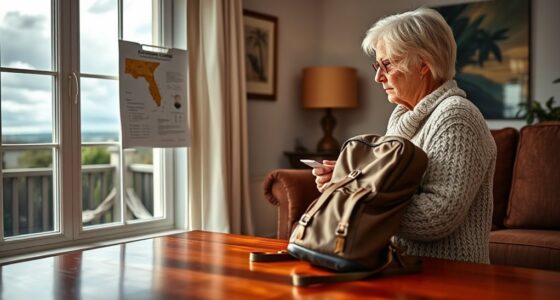
Severe weather and flooding can strike with little warning, but you can reduce their impact by preparing in advance. One of the most essential steps is assembling an emergency kit. This kit should include essentials like non-perishable food, bottled water, a flashlight, batteries, a first-aid kit, medications, and important documents stored in a waterproof container. Having these supplies ready means you’ll be able to sustain yourself and your family through power outages or if you need to evacuate quickly. Make sure everyone in your household knows where the kit is kept and that it’s easily accessible at all times.
Beyond just packing supplies, establishing a family communication plan is fundamental. During a flood or severe storm, normal communication channels might be disrupted. Decide on a safe meeting spot outside your home and ensure every family member knows how to get there. Designate an out-of-town contact person who can serve as a central point of communication if local lines are down. Keep multiple forms of contact information—cell phones, email addresses, and emergency contacts—handy and updated regularly. Practice your plan so everyone feels confident in knowing what to do if disaster strikes. This helps prevent panic and confusion when time is limited.
You should also consider creating a written emergency plan that includes specific steps for different scenarios. Determine your evacuation routes and identify nearby shelters. Keep maps in your emergency kit or in a readily accessible place. Make sure your plan accounts for all family members, including pets, and includes instructions for securing your home before evacuating. Regularly review and update your plan, especially when circumstances change, such as new family members or changes in your neighborhood. Additionally, understanding the importance of contrast ratio in projectors can help you choose the right equipment to ensure clear visibility in emergency situations if you need visual alerts or instructions.
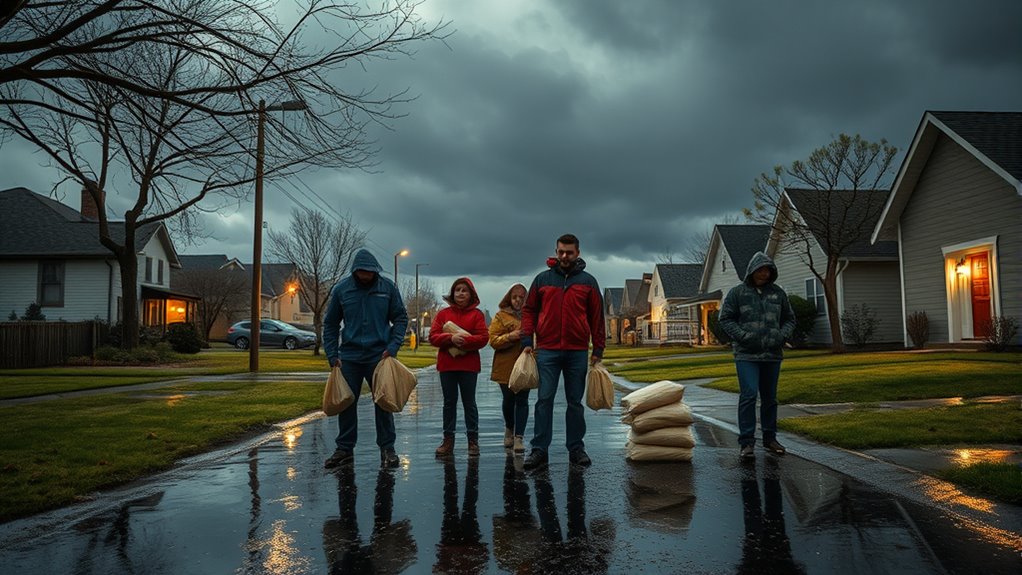
In addition to planning, stay informed about weather alerts in your area. Sign up for emergency notifications and monitor local news sources. Knowing about severe weather early gives you time to prepare and react accordingly. When a storm approaches, have your emergency kit ready and ensure your family communication plan is in place. This way, you can act swiftly, reducing your risk and ensuring everyone’s safety.
Preparing for floods and severe weather isn’t just about having supplies; it’s about creating a detailed plan that keeps your family connected and ready to respond. By taking these steps now, you minimize the chaos and increase your chances of staying safe when disaster strikes unexpectedly.
Frequently Asked Questions
How Can I Tell if My Home Is at Risk of Flooding?
You can tell if your home is at risk of flooding by checking floodplain maps for your area and evaluating your property’s elevation. If your home is located within a designated floodplain or at a low elevation compared to nearby water sources, you’re more vulnerable. Contact local authorities or visit online resources to review flood risk zones, and consider investing in an elevation survey for precise information about your property’s flood risk.
What Should I Include in an Emergency Flood Kit?
Oh, because nothing says “fun weekend” like assembling a flood emergency kit, right? You should include essential emergency supplies like bottled water, non-perishable food, a flashlight, batteries, a first aid kit, and important documents. Don’t forget waterproof clothing and sturdy shoes for flood safety. Keep a whistle and a battery-powered radio handy. Being prepared guarantees you stay safe and dry when water levels rise unexpectedly.
How Do I Protect My Pets During Severe Weather?
During severe weather, you should prioritize pet safety tips by keeping their identification, leashes, and a pet emergency kit ready for pet evacuation. Never leave pets behind; instead, bring them with you to a safe location. Make sure their shelter is secure, and have food, water, and medications on hand. Staying calm helps pets stay calmer too, making it easier to protect them during unpredictable weather.
Are There Financial Assistance Programs for Flood Damage?
Yes, there are financial assistance programs for flood damage. While flood insurance helps cover repair costs, you can also apply for federal or state financial aid programs designed for disaster recovery. These programs aim to alleviate your financial burden, providing grants or loans to rebuild your home. Don’t wait—check with FEMA or your local agencies to access the support you need, and confirm your flood insurance is up to date for added protection.
What Are the Best Ways to Stay Informed During a Storm?
You should rely on weather alert systems to stay informed during a storm, as they provide timely warnings via phone alerts, radio, or TV. Additionally, follow social media updates from local authorities and weather agencies for real-time information. Always keep your devices charged, and consider having a weather radio on hand. These methods help you stay aware of changing conditions and respond quickly to protect yourself and your loved ones.
Conclusion
Now that you’re ready for floods and severe weather, remember to stay informed and keep your emergency kit stocked. Think of your preparations as a trusty steed, always ready to carry you through the storm. Don’t forget to secure loose objects and have a plan for your loved ones. By staying vigilant and prepared, you can weather any tempest—just like the brave sailors of old facing the wrath of Neptune. Stay safe and stay prepared!