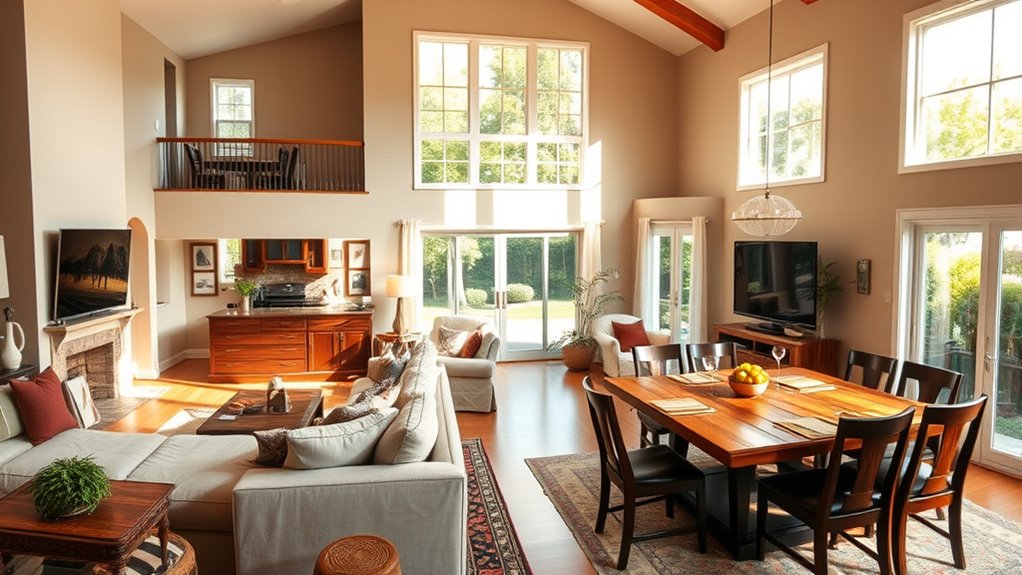

When designing homes for multiple generations, focus on creating private spaces like separate entrances, soundproof rooms, and outdoor retreats to guarantee everyone has their own privacy. Incorporate flexible layouts with multi-purpose rooms and movable partitions to adapt as needs change. Balance shared areas such as open-concept living and quiet corners for privacy. Thoughtful planning promotes harmony and comfort for all. Keep exploring to discover how to make your multi-generational home both functional and welcoming.

Turn the school run and nap time into listening time
- Thousands of audiobooks, podcasts and originals
- Listen on your phone, tablet or Echo — also offline
- Cancel anytime
Key Takeaways
- Incorporate separate living spaces like basement suites or cottages for privacy and independence.
- Use soundproof doors, separate entrances, and private outdoor areas to enhance privacy.
- Design flexible, multi-purpose rooms with movable partitions to adapt to changing family needs.
- Balance shared and private spaces with open-concept layouts and designated quiet zones.
- Apply overall principles that blend harmony, privacy solutions, and adaptable layouts to support multi-generational living.
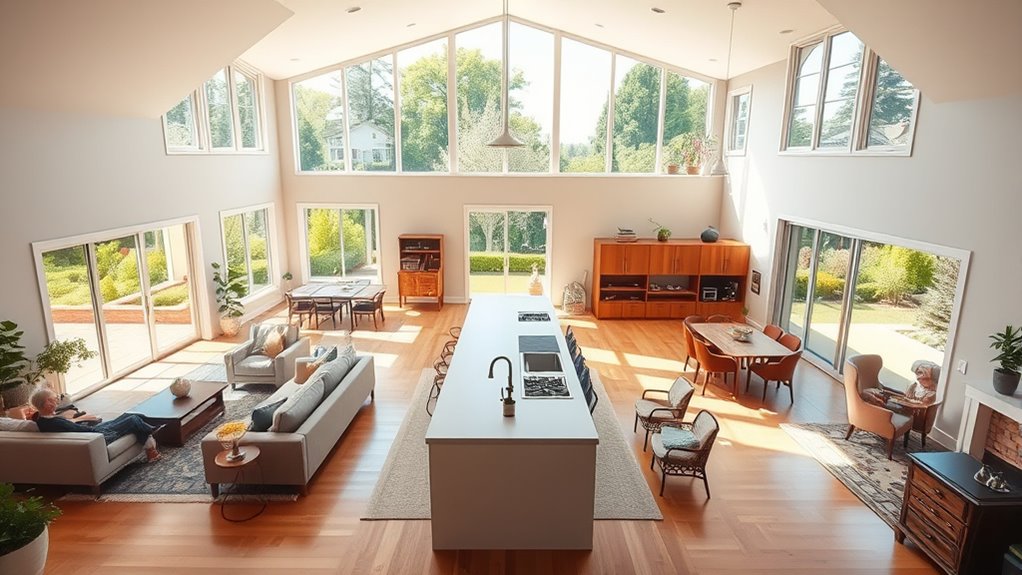
As families grow and change, designing homes that accommodate multiple generations becomes increasingly important. You want a space that fosters connection but also respects individual needs, especially when it comes to intergenerational living. Achieving this balance requires thoughtful planning and a focus on privacy solutions. When you design with multiple generations in mind, you’re creating a home that nurtures relationships while giving each person their own sanctuary. This means designing separate living areas, such as a basement suite, an in-law apartment, or a standalone cottage, which allows family members to live comfortably without feeling crowded or intruded upon.
Design homes with separate living spaces to ensure comfort and privacy for all generations.
Privacy solutions are key to making intergenerational living successful. You might consider including soundproof doors, separate entrances, or private outdoor spaces to help family members maintain their independence. Installing individual climate controls in different zones of the house can also give everyone a sense of autonomy over their environment. When planning these spaces, think about the layout carefully. Position bedrooms and bathrooms to maximize privacy, perhaps by placing them on opposite ends of the house or in separate wings. This helps prevent noise and disturbances, ensuring everyone has a peaceful retreat when needed.
Another effective privacy solution involves flexible room configurations. Multi-purpose rooms that can serve as guest bedrooms, study areas, or quiet zones give you the flexibility to adapt as your family’s needs evolve. You might also incorporate sliding doors or movable partitions, which can open up spaces for social gatherings or close off areas for privacy. These features make your home versatile, accommodating different generations comfortably. Additionally, incorporating smart home technology can enhance security and convenience for all family members.
It’s also essential to consider shared spaces, like kitchens and living rooms, which should promote interaction without feeling overwhelming. Open-concept designs can foster family bonding, but you should also include quiet corners or nooks for individuals to unwind. Creating designated zones for different activities helps balance social engagement with privacy. Additionally, incorporating ample storage solutions prevents clutter, which can add to feelings of chaos or lack of personal space.
Ultimately, designing a home for multiple generations hinges on your ability to blend shared living with personal privacy. By thoughtfully integrating privacy solutions and flexible layouts, you give your family the tools to thrive together yet maintain individual comfort. This approach not only enhances daily life but also prepares your home to adapt as your family continues to grow and change over time. Understanding multi-generational living and its unique needs can help you create a harmonious and functional home environment.
As an affiliate, we earn on qualifying purchases.
Frequently Asked Questions
What Are the Legal Considerations for Multi-Generational Living?
You need to take into account legal frameworks and property rights when planning multi-generational living. Check local zoning laws to ensure your plans comply, as some areas have restrictions on multi-family setups. Clarify property rights among family members to prevent disputes, and update legal documents like titles or deeds if necessary. Consulting a real estate attorney helps you understand your rights and obligations, ensuring your setup is legally sound and avoids future conflicts.
How Can Privacy Be Maximized in Shared Spaces?
Privacy in shared spaces isn’t just important—it’s essential for a harmonious household. You can maximize privacy optimization by clearly defining shared space boundaries with physical partitions, soundproofing, and designated private zones. Use strategic placement of furniture, doors, and curtains to create visual and acoustic barriers. Establish household rules that respect each person’s need for solitude, ensuring everyone feels secure and respected in their personal sanctuary.
What Are Cost-Effective Ways to Retrofit Existing Homes?
To retrofit your existing home affordably, focus on affordable upgrades like installing space-saving furniture or adding temporary walls for privacy. Use space optimization techniques, such as reorganizing layouts to maximize natural light and create distinct zones for different activities. Consider DIY projects for minor improvements, and prioritize upgrades that improve comfort and functionality without breaking the bank. These strategies help you adapt your home efficiently and cost-effectively for multi-generational living.
How Do Zoning Laws Affect Multi-Generational Home Designs?
They say “know the rules before you play,” and zoning laws influence your home design profoundly. Zoning restrictions can limit building modifications or additions for multi-generational living. Neighborhood covenants may impose aesthetic or usage rules, affecting how you adapt your home. To navigate these, check local ordinances and consult with authorities. Understanding these laws helps you create a functional, compliant space that truly meets your family’s needs.
What Are the Best Technologies for Intergenerational Communication?
You should consider smart home technology with voice control, as it effectively enhances intergenerational communication. Voice-activated assistants like Alexa or Google Home allow family members of all ages to easily connect, share updates, and coordinate activities. These devices foster immediate, hands-free communication, making it simple for everyone to stay in touch, whether they’re in different rooms or floors. Embracing smart home tech creates a more connected, inclusive environment for all generations.
Conclusion
So, after all this talk about multi-generational homes, you might think creating the perfect space is a breeze. Yet, here you are, juggling privacy, shared spaces, and a never-ending flow of opinions. Ironically, designing a home that satisfies everyone often feels like trying to herd cats. But in the end, it’s those small compromises and shared laughs that truly make it a home for generations to come. Sometimes, chaos is just love in disguise.
Fall Picks
fall essentials
As an affiliate, we earn on qualifying purchases.