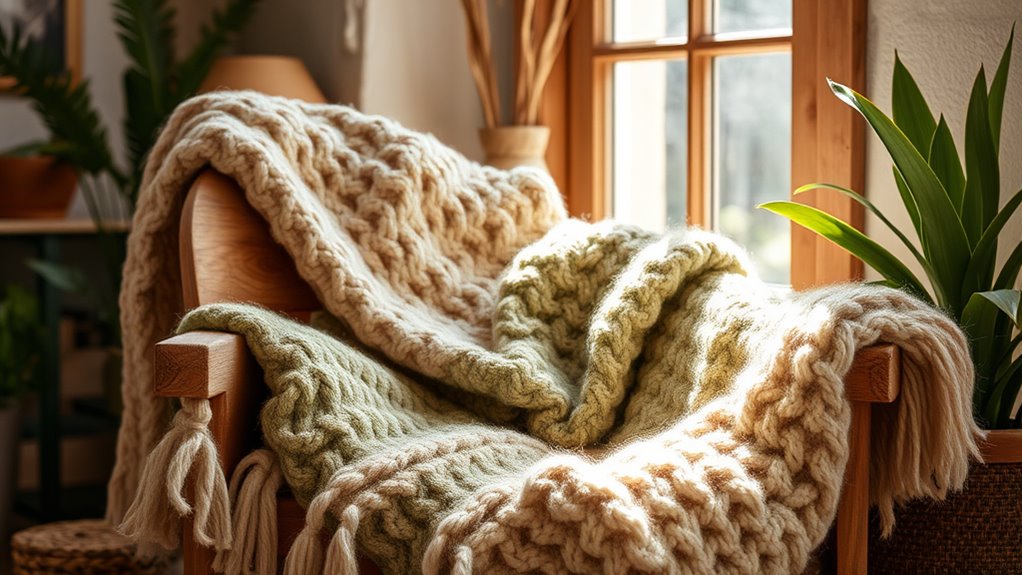

When choosing cozy natural textiles, focus on fibers responsibly grown and processed with eco-friendly methods, like organic cotton or ethically raised wool. Look for certifications such as GOTS or OEKO-TEX, which guarantee environmental and social standards are met. Opt for durable materials like hemp or linen that age well, reducing waste. Natural dyes and ethical production add to their sustainability. Keep exploring to find out more about how to select textiles that are both comfy and eco-conscious.
Key Takeaways
- Prioritize fibers from organic, responsibly managed sources like organic cotton, hemp, or ethically raised wool.
- Choose textiles certified by standards such as GOTS or OEKO-TEX to ensure ecological and social responsibility.
- Opt for durable, high-quality fibers that age well and reduce the need for frequent replacement.
- Select textiles dyed with natural or low-impact dyes to minimize environmental pollution.
- Consider the entire lifecycle, ensuring production practices are ethical and the textiles are built to last.
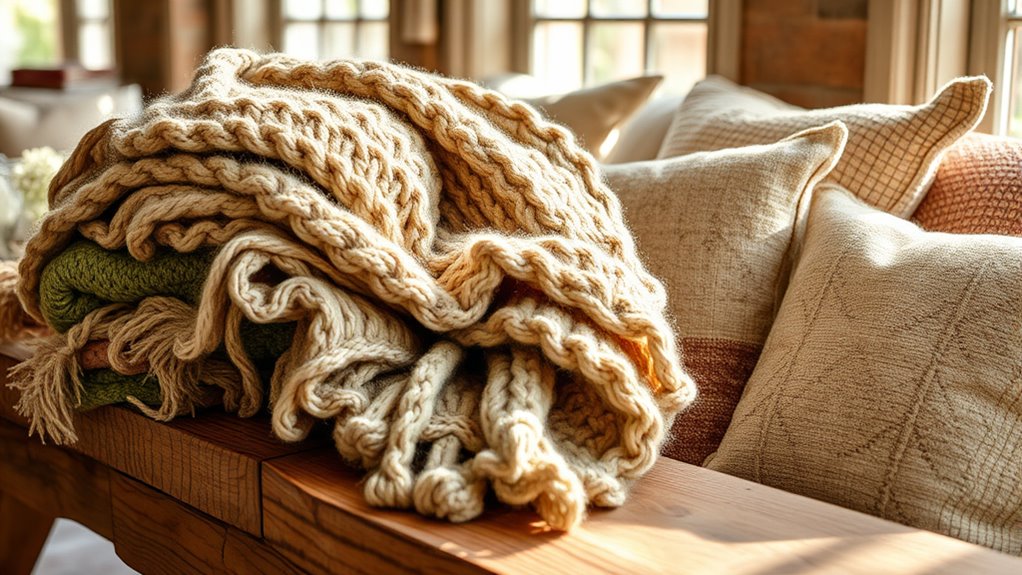
When choosing cozy natural textiles, prioritizing comfort and sustainability is key. The foundation of any quality textile begins with fiber sourcing—how the fibers are grown, harvested, and processed. You want to look for materials that come from responsible sources, ensuring that the fibers are obtained with minimal environmental impact. For instance, organic cotton is grown without synthetic pesticides or fertilizers, reducing chemical runoff and soil degradation. Similarly, wool from ethically raised sheep not only offers warmth but also supports animal welfare and sustainable grazing practices. By paying attention to fiber sourcing, you can make sure that the textiles you choose contribute positively to the environment and the communities involved in their production.
Textile sustainability extends beyond just the fibers themselves. It encompasses the entire lifecycle of the fabric—from cultivation or raising to manufacturing, dyeing, and eventual disposal. When selecting cozy natural textiles, it’s important to contemplate how environmentally friendly the production processes are. Look for certifications like GOTS (Global Organic Textile Standard) or OEKO-TEX, which verify that the textiles meet strict ecological and social criteria. These standards ensure that hazardous chemicals are minimized, water usage is regulated, and fair labor practices are maintained. Choosing textiles with such certifications helps you support brands committed to reducing their ecological footprint.
Choose textiles with eco-certifications like GOTS or OEKO-TEX for sustainable, ethically produced home essentials.
Furthermore, the durability of the textile plays a significant role in its sustainability. High-quality natural fibers, such as hemp or linen, tend to be more durable and age gracefully, meaning you won’t need to replace them as often. This durability reduces waste and the demand for frequent manufacturing, which is better for the planet. When you opt for textiles made from responsibly sourced fibers and produced through sustainable methods, you’re investing in products that last longer and retain their cozy feel over time.
In addition, contemplate how the textiles are dyed. Natural or low-impact dyes are gentler on the environment and safer for your home. These dyes often require less water and produce fewer pollutants, aligning with the principles of textile sustainability. You’ll find that choosing textiles with a transparent supply chain and eco-conscious manufacturing processes ensures that your cozy home accessories are not only comfortable but also ethically produced.
Another consideration is the environmental impact of dyeing processes, which can significantly influence the overall sustainability of the textiles you select. Ultimately, selecting cozy natural textiles that emphasize fiber sourcing and textile sustainability lets you enjoy comfort while making a positive impact. It’s about making mindful choices—favoring materials that are responsibly grown, carefully processed, and built to last. This approach guarantees that your home remains warm and inviting, all while supporting a healthier planet and a more sustainable future.

Stroller Organizer with Cup Holder, Non-Slip Stroller Caddy Baby Essentials
- Large Capacity Storage: Holds bottles, diapers, toys, snacks
- Ideal Baby Shower Gift: Perfect for new moms and dads
- Universal Compatibility: Fits Uppababy, Baby Jogger, more
As an affiliate, we earn on qualifying purchases.
Frequently Asked Questions
How Do Natural Textiles Compare in Durability to Synthetic Fabrics?
Natural textiles generally have shorter fiber longevity than synthetic fabrics, which means they might wear out faster over time. However, they often excel in fabric maintenance, being easier to care for and more breathable. You’ll find that natural fibers like cotton, wool, and linen can be durable if properly cared for, but synthetic fabrics tend to withstand more frequent washing and daily wear without losing their integrity.
Are Natural Textiles Suitable for Outdoor Use and Weather Resistance?
Natural textiles can withstand outdoor weathering if properly treated; about 60% of untreated fabrics degrade within a year. You should consider natural textile treatments like waterproofing and UV protection to boost weather resistance. While they aren’t as inherently durable as synthetics, these treatments make natural fibers suitable for outdoor use, allowing you to enjoy cozy, eco-friendly textiles that hold up against the elements with proper care.
What Are the Best Natural Fibers for Allergy-Sensitive Individuals?
If you have fiber sensitivities or allergy concerns, choose natural fibers with hypoallergenic properties like organic cotton, silk, or bamboo. These fibers are less likely to trigger allergic reactions and are gentle on sensitive skin. You should also look for textiles that are free from dyes and chemicals, which can worsen allergies. By opting for these fibers, you create a cozy, allergy-friendly environment that minimizes irritation and promotes comfort.
How Eco-Friendly Are the Production Processes of Natural Textiles?
You might be surprised how eco-friendly natural textiles can be. Their production often involves sustainable farming practices that reduce environmental impact. Plus, eco-conscious manufacturing minimizes waste and energy use, making these textiles a greener choice. While some processes are more sustainable than others, many brands prioritize eco-friendly methods, so you can feel good about your choices. Keep an eye out for certifications that guarantee environmentally responsible production—every little bit helps!
Can Natural Textiles Be Easily Dyed or Customized in Color?
Yes, natural textiles can be easily dyed and customized in color. You can use various dyeing techniques like eco-friendly plant-based dyes or traditional methods to achieve vibrant hues. These textiles accept dyes well, making color customization straightforward. By experimenting with different dyeing techniques, you can personalize your textiles to match your style or decor, ensuring a unique, cozy, and natural feel in every piece.
Conclusion
Choosing cozy natural textiles is like wrapping yourself in a warm, gentle hug from nature. They not only add comfort and style to your space but also support sustainable living. When you opt for these textiles, you’re making a choice that’s as nourishing for your home as it is for the planet. So, go ahead—let natural fibers be the soft, reassuring heartbeat of your cozy sanctuary, turning everyday moments into a comforting embrace.