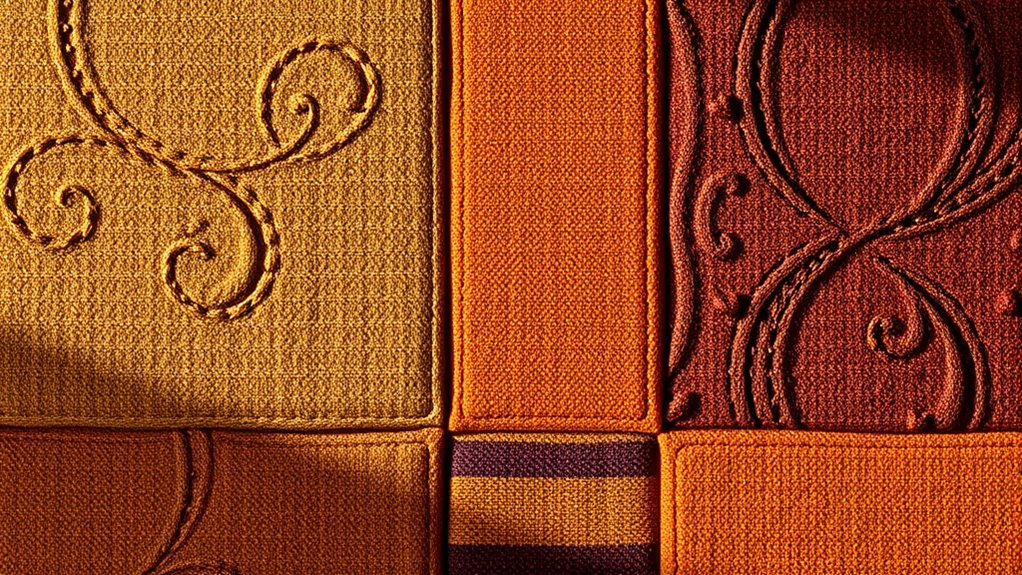

To select warm, textured wall coverings, focus on natural materials like jute, sisal, or hemp for earthy tones and tactile richness. Consider finishes like grasscloth or fabric-backed wallpapers that add visual interest and hide imperfections. Match these with your decor style, whether rustic, bohemian, or modern, and use warm lighting to enhance the cozy vibe. Want to create a welcoming, layered space? Keep exploring for more tips and ideas.
Key Takeaways
- Choose natural fiber materials like jute, sisal, or hemp for authentic texture and eco-friendly benefits.
- Opt for textured finishes such as grasscloth, linen, or fabric-backed wallpaper to add tactile interest.
- Consider the room’s style and lighting to ensure the warm, textured coverings complement existing decor.
- Use earthy tones and layered textures to create a cozy, inviting atmosphere.
- Mask wall imperfections and add visual depth by selecting high-quality, textured wall coverings.
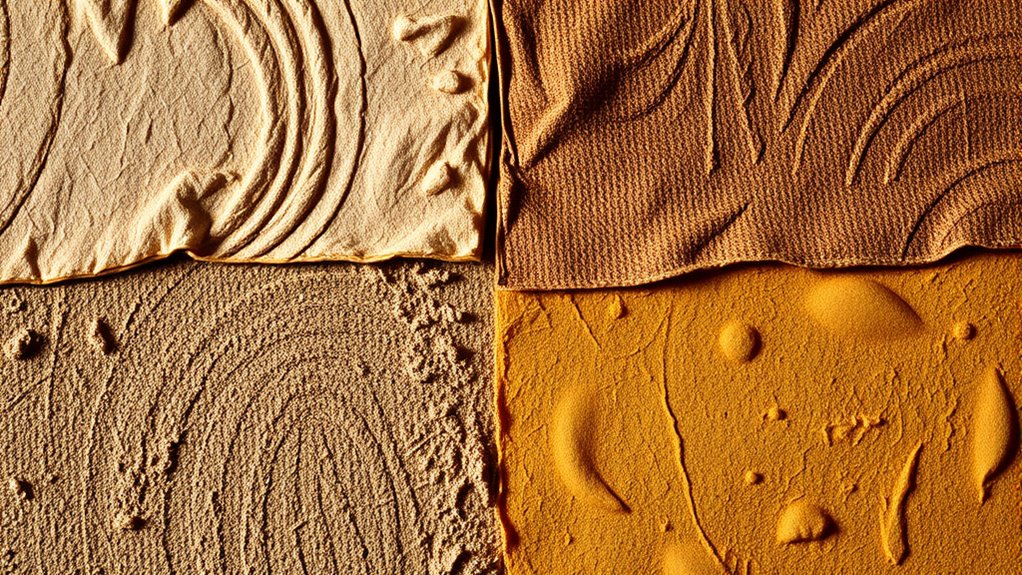
When choosing wall coverings, opting for warm, textured materials can instantly create a cozy and inviting atmosphere in any room. Natural fiber options are an excellent way to achieve this effect. Materials like jute, sisal, hemp, and coir bring rich textures and earthy tones that add depth and warmth to your space. These fibers are not only sustainable but also highly tactile—inviting you to touch and feel their coarse yet natural surface. Incorporating natural fiber options into your walls can make a room feel grounded and comforting, especially when paired with soft furnishings and warm lighting. They work particularly well in living rooms, bedrooms, or cozy reading nooks where comfort is key. Their organic appeal also complements rustic, bohemian, or eco-friendly design styles, making it easier to craft a cohesive aesthetic.
Tactile wall finishes go beyond visual appeal; they stimulate your senses and create a more immersive environment. Textured wall coverings such as grasscloth, linen, or fabric-backed wallpapers add a tangible element that enhances the overall ambiance. These finishes often feature subtle variations in color and pattern, which catch the light differently throughout the day, adding visual interest. When applied correctly, tactile wall finishes can mask imperfections on the wall surface, providing a smooth yet textured appearance that’s both stylish and practical. Plus, many of these finishes come with eco-friendly and low-VOC options, making them a healthy choice for your home.
Choosing warm, textured wall coverings is about more than just aesthetics—it’s about creating a space that feels lived-in and welcoming. The tactile nature of these finishes invites touch, making your walls a sensory experience rather than just a visual one. Whether you opt for natural fiber options or other textured finishes, you’ll find yourself drawn to their rich textures and warm hues. They blend seamlessly with various decor styles, from modern minimalist to rustic farmhouse, and can serve as a focal point or a subtle background. When selecting these coverings, consider how they will interact with your lighting and furnishings, and don’t hesitate to layer textures for added depth. Ultimately, by choosing warm, textured wall coverings, you set the tone for a space that’s both stylish and comforting, inviting you to relax and unwind in a truly cozy environment.
Frequently Asked Questions
How Do Textured Wall Coverings Affect Indoor Air Quality?
Textured wall coverings can impact your indoor air quality by trapping airborne particles and allergens, which may lead to increased allergen accumulation over time. You might notice more dust and irritants settling on the textured surfaces, requiring regular cleaning. While they add warmth and depth to your space, it’s important to maintain proper ventilation and clean frequently to minimize potential health issues caused by trapped airborne particles and allergens.
Are Textured Wall Coverings Suitable for Humid Environments?
Think of textured wall coverings like a sponge—if they’re not moisture-resistant, they soak up humidity and promote mold growth. In humid environments, choose options with good moisture resistance to maintain their aesthetic appeal. I once saw a textured wall peel after a rainy season, proving the importance of quality materials. Yes, textured coverings can work in humid spaces, but only if they’re designed to withstand moisture effectively.
What Are the Best Maintenance Tips for Textured Wall Surfaces?
You should regularly dust textured wall surfaces with a soft cloth or vacuum with a brush attachment to prevent dirt buildup. For cleaning techniques, use a damp sponge with mild soap, avoiding excessive moisture that can damage the texture. If you notice damage, repair it promptly with matching filler or paint. Be gentle during cleaning to preserve the texture, and always test cleaning products on a small area first.
Can Textured Wall Coverings Be Easily Removed or Replaced?
Think of textured wall coverings as a work of art—beautiful, but sometimes tricky to remove. You might find removal difficulty varies with the material and adhesive used, making some coverings more stubborn than others. Luckily, replacement options are plentiful; you can easily update your space by peeling old coverings and applying new ones. With patience and the right tools, transforming your walls is achievable without much hassle.
How Do Textured Wall Coverings Impact Acoustic Insulation?
Textured wall coverings enhance acoustic absorption by diffusing sound waves, reducing echoes and noise levels in your space. They also contribute to sound masking, making conversations less audible and increasing privacy. By adding texture, you create a more comfortable environment where sound is better managed. You’ll notice improved acoustics, especially in open or noisy areas, making your space feel warmer and more inviting while effectively controlling unwanted sound.
Conclusion
Now, imagine stepping into a room where the warm, textured walls invite you in, their tactile presence hinting at stories waiting to be uncovered. You run your hand along the surface, feeling the rich depth and subtle variations. The ambiance shifts, embracing you with cozy sophistication. But what if the right texture could transform your entire space? The secret’s in choosing the perfect one—are you ready to discover what’s next?