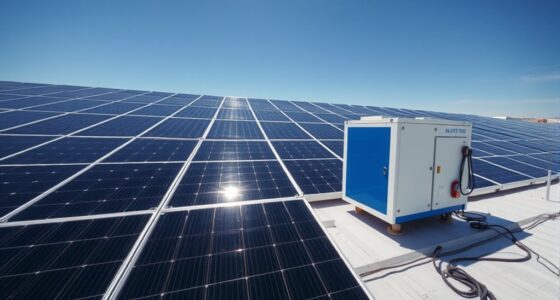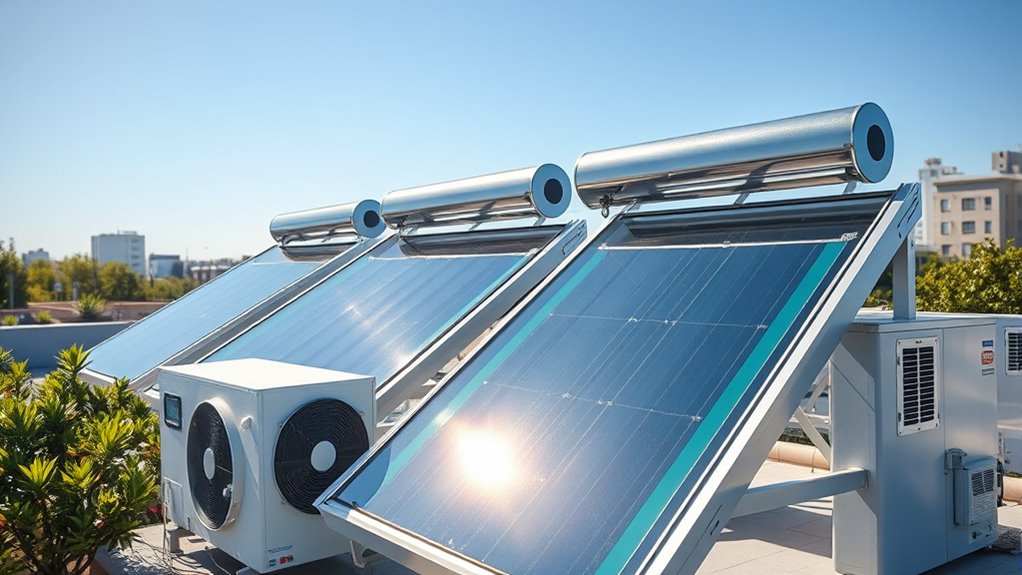

Solar water heaters use sunlight to produce hot water, which works best in sunny climates, but their efficiency drops on cloudy days or during winter. Heat pumps extract heat from air, ground, or water to warm your home and water efficiently, especially in moderate climates. Both options are sustainable and can lower your energy bills, but choosing the right system depends on your climate and needs. To learn more about which system suits you best, keep exploring further.
Key Takeaways
- Solar water heaters harness sunlight to provide hot water, ideal in sunny climates but less effective on cloudy days.
- Heat pumps transfer heat from air, ground, or water, offering efficient heating and cooling, especially in moderate climates.
- Installation costs and system performance depend on climate, roof orientation, system quality, and maintenance.
- Solar heaters require higher initial investment but can reduce long-term energy costs with incentives; heat pumps generally cost less upfront.
- Choosing between the two depends on local climate, hot water needs, budget, and long-term energy savings considerations.
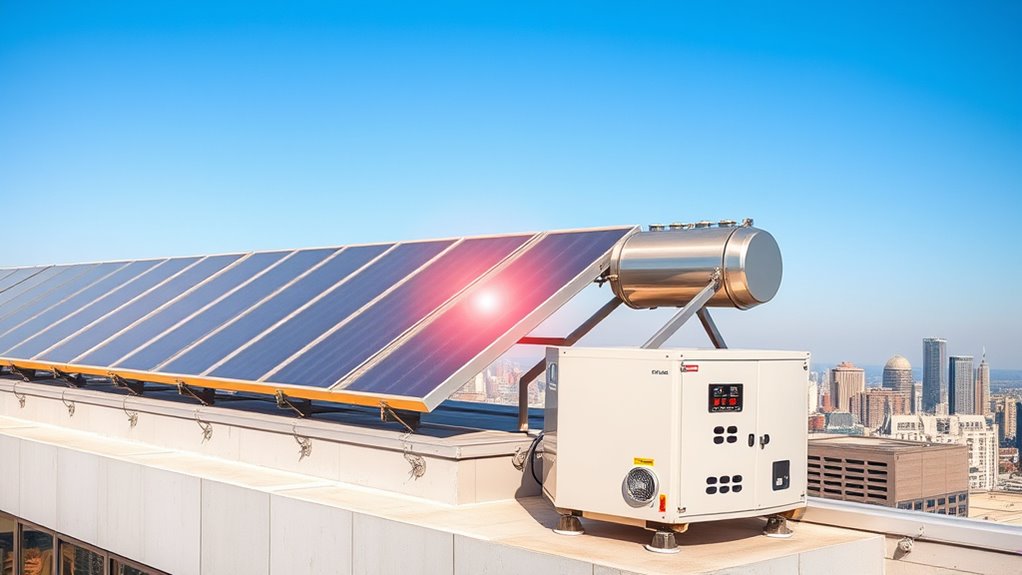
Are solar water heaters and heat pumps the right solutions for your home’s energy needs? If you’re exploring ways to reduce your energy bills and lessen your carbon footprint, understanding these options can help you make an informed decision. Solar water heaters rely on solar efficiency to generate hot water by harnessing sunlight, which makes them an attractive eco-friendly choice. Their efficiency depends heavily on the climate in your area, the angle of your roof, and the quality of the system you choose. Generally, solar water heaters can provide a notable portion of your hot water needs, especially in sunny regions, but their effectiveness decreases during cloudy days or winter months. The installation costs for solar water heaters vary depending on the size of the system, your home’s energy demands, and whether you opt for an active or passive system. While initial expenses can be higher than traditional water heaters, many homeowners find that the long-term savings on energy bills offset these costs over time. Plus, there are often tax incentives and rebates available that can reduce your upfront investment. Proper installation and regular maintenance are essential to maximize efficiency and safety, ensuring your system operates reliably for years to come.
Heat pumps, on the other hand, operate by extracting heat from the air, ground, or water and transferring it to your home’s heating system. They’re known for their high efficiency, especially in moderate climates, because they move heat rather than generate it directly. This process allows them to produce more heat energy than the electrical energy they consume, making them a cost-effective solution for year-round heating and cooling. Installation costs for heat pumps tend to be lower than solar water heaters, but they still vary based on the size and type of the system, as well as the complexity of the installation. For example, ground-source heat pumps require extensive excavation, which can add to costs, while air-source models are easier to install but may be less efficient in extremely cold weather. When considering either option, it’s essential to evaluate your local climate and your household’s hot water and heating needs to determine which system offers the best balance of upfront costs and long-term savings.
Both solar water heaters and heat pumps offer sustainable alternatives to traditional systems, but your choice hinges on your specific circumstances. Solar systems excel in sunny environments and can considerably cut your reliance on fossil fuels, but they often require higher initial investment and depend on solar efficiency. Heat pumps provide versatile heating and cooling solutions with generally lower installation costs and consistent performance in moderate climates. Weighing these factors carefully will help you choose the right system to meet your energy goals while staying within your budget.
A good understanding of safety standards and regulations for installation and operation can further ensure optimal performance and safety of your chosen system.
Frequently Asked Questions
What Is the Average Lifespan of a Solar Water Heater?
A solar water heater typically lasts around 10 to 15 years, depending on system efficiency and component durability. You can extend its lifespan by regular maintenance, such as checking for leaks and cleaning collectors. High-quality materials and proper installation also play a crucial role. If you keep up with these practices, your system will perform at its best, ensuring you get the most value and longevity from your investment.
How Much Maintenance Do Heat Pumps Require Annually?
You’ll spend about $150 to $300 annually on heat pump maintenance, which includes regular filter replacements. Interestingly, filters should be changed every 1 to 3 months to keep the system running efficiently. Proper maintenance reduces energy costs by up to 25%, so staying on top of filter replacement and checking for dust buildup helps extend your heat pump’s lifespan and guarantees ideal performance throughout the year.
Can Solar Water Heaters Work During Cloudy Days?
Solar water heaters can work during cloudy days, but their solar efficiency drops because of weather dependence. You might notice less hot water or slower heating when skies are overcast. To keep up with your needs, consider a backup system, like electric or gas, which kicks in when solar efficiency is low. Overall, they still provide hot water, just with reduced performance during less sunny weather.
Are Heat Pumps Suitable for Cold Climates?
Imagine a cold mountain landscape, where frost clings to every surface. You’ll find that heat pumps can be quite effective in such environments, thanks to their cold climate adaptation. They maintain high heat pump efficiency even when temperatures drop, pulling warmth from the air around you. So, yes, heat pumps are suitable for cold climates, helping you stay warm without sacrificing energy efficiency during harsh winters.
What Is the Typical Installation Time for These Systems?
The installation time for these systems usually takes between one to three days, depending on the complexity of the system setup and your home’s existing infrastructure. During the installation process, a professional technician handles the setup, ensuring proper placement and connections. Factors like permits, site conditions, and system size can influence the timeline. You can expect a smooth process with minimal disruption when experienced installers manage the installation process efficiently.
Conclusion
Choosing between solar water heaters and heat pumps depends on your needs and budget. Both options can save you money and reduce your carbon footprint. Remember, don’t put all your eggs in one basket—consider what works best for your home and lifestyle. While no solution is perfect, investing in renewable energy is like hitting two birds with one stone: it benefits both the environment and your wallet.