For most hikers seeking premium hiking boots, I’d start with the Salomon Quest Element Gore-Tex for supportive, waterproof coverage on demanding trails; the Danner Mountain 600 EVO stands out for grip and a more refined build, while the Merrell Moab 3 Mid is a versatile choice for everyday hiking. The main tradeoff is between lighter boots that feel nimble and sturdier designs that offer more support but can feel heavier or need more break-in. Waterproof membranes help in wet conditions, yet can feel warm and dry more slowly than non-waterproof footwear. The right choice depends on your terrain, pack weight, fit, and tolerance for stiffness. Read on for the full breakdown and a guide to matching a boot to your hikes.

Turn the school run and nap time into listening time
- Thousands of audiobooks, podcasts and originals
- Listen on your phone, tablet or Echo — also offline
- Cancel anytime
Complete the kit


Key Takeaways
- The Salomon Quest Element is the roundup’s strongest all-around match for hikers who want waterproof protection and added support for rougher trails; it is more boot than casual day hikes may require.
- Danner’s Mountain 600 options split the difference between trail comfort and a more finished build. The EVO versions highlight upgraded traction and materials, while the standard Mountain 600 is a simpler option.
- The Kenetrek Mountain Extreme and La Sportiva Makalu sit at the rugged end of the list. Their supportive, demanding designs make more sense for steep, loaded, or technical trips than easy walks.
- The Merrell Moab 3 Mid and Columbia Transverse favor accessible everyday hiking. They suit less demanding use better than buyers seeking a stiff boot for heavy loads or technical terrain.
- Several entries target different needs rather than a single definition of premium. Timberland White Ledge and NORTIV 8 lean toward straightforward general use, while waterproof construction, insulation, and intended terrain should drive the final choice.
| Merrell Men’s Moab 3 Mid Waterproof Hiking Boots |  | Best All-Rounder | Shaft height: Mid | Upper: Pigskin leather and mesh | Waterproofing: Waterproof membrane | VIEW ON AMAZON | See Our Full Breakdown |
| Danner Mountain 600 Men’s Hiking Boots |  | Best for Wet-Trail Grip | Shaft height: Ankle | Upper: Waterproof suede or full-grain leather | Waterproofing: Danner Dry waterproof barrier | VIEW ON AMAZON | See Our Full Breakdown |
| Columbia Men’s Transverse Hike Waterproof | 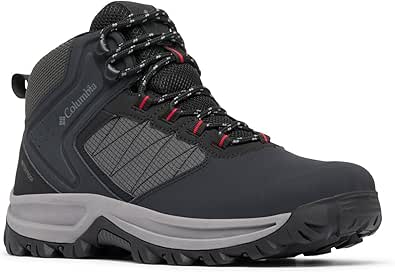 | Best Lightweight Option | Shaft height: Ankle | Shaft circumference: 1 inch | Upper: Leather and mesh | VIEW ON AMAZON | See Our Full Breakdown |
| Danner Men’s Mountain 600 ID Gore-Tex Hiking Boots |  | Best Flexible Gore-Tex Pick | Outer material: Nylon | Inner material: Gore-Tex | Water resistance: Waterproof | VIEW ON AMAZON | See Our Full Breakdown |
| Danner Men’s Mountain 600 EVO 4.5″ Hiking Boot – Waterproof GORE-TEX Leather, Vibram Megagrip Traction, OrthoLite Footbed |  | Best Premium Leather Build | Shaft height: 4.5 inches | Shaft circumference: 9–10 inches | Upper: Full-grain leather | VIEW ON AMAZON | See Our Full Breakdown |
| La Sportiva Makalu Mountaineering and Hiking Boots |  | Best for Technical Mountain Terrain | Weight: 34.57 oz / 980 g | Sole material: Rubber | Inner material: Leather | VIEW ON AMAZON | See Our Full Breakdown |
| Salomon Men’s Quest Element Gore-Tex Waterproof Leather Hiking Boots |  | Best for Multi-Day Backpacking | Upper material: Nubuck leather | Waterproof: Yes | Breathable: Yes | VIEW ON AMAZON | See Our Full Breakdown |
| Kenetrek Men’s Mountain Extreme Non-Insulated Hiking Boots |  | Best for Heavy Loads and Rugged Terrain | Upper: 100% leather | Leather thickness: 2.8 mm | Shaft height: 10 in | VIEW ON AMAZON | See Our Full Breakdown |
| Timberland Men’s White Ledge Mid Waterproof Hiking Boots | 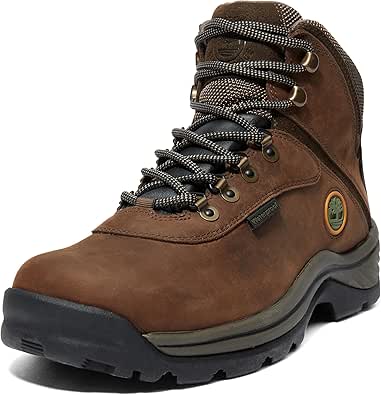 | Best for Straightforward Day Hikes | Upper material: Waterproof premium Timberland leather | Construction: Seam-sealed | Lining: ReBOTL fabric | VIEW ON AMAZON | See Our Full Breakdown |
| Danner Men’s Mountain 600 EVO 4.5-Inch Waterproof Hiking Boot |  | Best for Recraftable Trail Versatility | Upper material: Full-grain leather | Lining: Waterproof, breathable GORE-TEX; 45% post-consumer recycled materials | Outsole: Vibram Megagrip | VIEW ON AMAZON | See Our Full Breakdown |
| NORTIV 8 Men’s Ankle High Waterproof Hiking Boots |  | Best Lightweight Everyday Pick | Sole material: EVA, rubber | Shaft height: Ankle | Shaft circumference: 29.4 cm | VIEW ON AMAZON | See Our Full Breakdown |
| premium hiking boot | Shaft height | Outsole | Shaft circumference |
|---|---|---|---|
| Merrell Men’s Moab 3 Mid Water | Mid | Vibram TC5+ rubber | — |
| Danner Mountain 600 Men’s Hiki | Ankle | Vibram Fuga | — |
| Columbia Men’s Transverse Hike | Ankle | — | 1 inch |
| Danner Men’s Mountain 600 ID G | — | Danner Plyolite | — |
| Danner Men’s Mountain 600 EVO | 4.5 inches | Vibram Megagrip | 9–10 inches |
| La Sportiva Makalu Mountaineer | — | — | — |
| Salomon Men’s Quest Element Go | Ankle | — | 14 in |
| Kenetrek Men’s Mountain Extrem | 10 in | K-Talon | — |
| Timberland Men’s White Ledge M | Ankle | Rubber with multidirectional lugs | 9.75 in |
| Danner Men’s Mountain 600 EVO | Ankle; 4.5 in | Vibram Megagrip | 11.02 in |
| NORTIV 8 Men’s Ankle High Wate | Ankle | — | 29.4 cm |
More Details on Our Top Picks
Merrell Men’s Moab 3 Mid Waterproof Hiking Boots
The Moab 3 Mid Waterproof is the balanced choice here: its breathable membrane, cushioned insole, and mid-height build suit a broad mix of day hikes without leaning as heavily into premium leather construction as the Danner Mountain 600 EVO. A Vibram TC5+ outsole supplies durable rubber traction, while the protective toe cap and reinforced heel cushioning add useful protection and comfort on uneven trails. Recycled laces and webbing are a small material choice that distinguishes it from the lineup’s more leather-focused options.
The tradeoff is weight: this boot may feel less nimble than a trail-specific shoe, and the supplied description notes a break-in period. I’d choose it for varied hiking where cushioning and weather protection matter more than a lightweight feel; hikers seeking a more supple, premium leather build may prefer the Mountain 600 EVO.
Pros:- Waterproof membrane pairs with breathable construction for changeable conditions
- Contoured removable insole and Merrell Air Cushion support and soften each step
- Vibram TC5+ rubber outsole offers durable traction
- Recycled laces and webbing reduce reliance on newly made materials
Cons:- May feel heavier than trail-specific shoes on fast hikes
- May need a break-in period before reaching its most comfortable fit
Best for: Day hikers who want waterproof coverage, cushioning, and dependable traction for mixed trails without choosing a highly specialized boot
Not ideal for: Hikers who prioritize a lightweight, trail-shoe feel or want a premium full-grain leather construction
- Shaft height:Mid
- Upper:Pigskin leather and mesh
- Waterproofing:Waterproof membrane
- Midsole:Lightweight EVA foam
- Outsole:Vibram TC5+ rubber
- Insole:Removable contoured insole with reinforced heel cushioning
- Protection:Protective toe cap and Merrell Air Cushion
- Laces and webbing:100% recycled
Our verdict“Choose the Moab 3 Mid if you want a cushioned, waterproof, versatile hiking boot and can accept more weight than a trail shoe.”
Danner Mountain 600 Men’s Hiking Boots
The Danner Mountain 600 puts wet- and dry-surface grip at the center of its appeal. Its Vibram Fuga outsole and Danner Dry waterproof barrier make it a compelling pick for hikers who expect damp trails, while the Ortholite triple-density footbed and rubberized EVA midsole provide cushioning and support. Compared with the Merrell Moab 3 Mid, this model leans more on a suede or full-grain leather upper and a distinctly grippy outsole than on recycled trim and a protective toe cap.
That construction brings tradeoffs: it may feel heavier than lightweight hiking shoes, and a break-in period may be needed. Its ankle-height shaft also offers less coverage than mid-height boots such as the Moab 3. I’d choose it for hikers who value a supportive footbed and confident traction, but not for those whose first priority is a light, ready-to-wear feel.
Pros:- Vibram Fuga outsole is designed for grip on wet and dry surfaces
- Danner Dry barrier provides waterproof protection
- Ortholite triple-density footbed combines cushioning with support
- Upper is available in waterproof suede or full-grain leather
Cons:- May weigh more than lightweight hiking shoes
- May require a break-in period for comfortable wear
Best for: Hikers on frequently damp trails who want a supportive footbed and a traction-focused outsole in an ankle-height boot
Not ideal for: Fast-moving hikers seeking a lightweight boot, or buyers who want the added shaft coverage of a mid-height design
- Shaft height:Ankle
- Upper:Waterproof suede or full-grain leather
- Waterproofing:Danner Dry waterproof barrier
- Outsole:Vibram Fuga
- Midsole:Rubberized EVA
- Insole:Ortholite triple-density polyurethane
- Lace options:Two lace options included
Our verdict“Pick the Mountain 600 if wet-trail traction and a supportive footbed matter more to you than low weight or mid-height coverage.”
Columbia Men’s Transverse Hike Waterproof
The Columbia Transverse Hike Waterproof is the lineup’s lighter-feeling alternative for hikers who want ankle-height coverage without the more substantial build of the leather-focused Danner Mountain 600 EVO. Its leather-and-mesh upper combines with OMNI-TECH waterproofing, while TECHLITE impact absorption is intended to soften the feel of repeated steps. OMNI-GRIP rubber traction adds multi-terrain versatility, making this a practical match for varied day-hike conditions rather than a specialist boot for heavy-duty use.
Compared with the Merrell Moab 3 Mid, Columbia emphasizes impact absorption and a lower ankle shaft instead of a mid-height profile with a protective toe cap and Merrell Air Cushion. The supplied details give less information about the insole and protective features, so buyers wanting a clearly specified, more supportive boot may prefer the Merrell. I’d pick the Columbia when lower weight and all-weather flexibility lead; its narrow listed shaft circumference may not suit every fit.
Pros:- OMNI-TECH construction combines waterproof protection with breathability
- TECHLITE impact absorption is designed to soften footfalls
- OMNI-GRIP outsole supports traction across varied terrain
- Leather-and-mesh upper balances durable materials with a mixed-material build
Cons:- Listed shaft circumference of 1 inch may feel narrow to some wearers
- Ankle-height shaft provides less coverage than the Merrell Moab 3 Mid
- Product details provide limited information about the insole and protective features
Best for: Day hikers who want an ankle-height waterproof boot with impact absorption for mixed terrain and changeable weather
Not ideal for: Hikers who need a roomier shaft fit, extra ankle coverage, or clearly specified underfoot support and toe protection
- Shaft height:Ankle
- Shaft circumference:1 inch
- Upper:Leather and mesh
- Waterproofing:OMNI-TECH
- Impact absorption:TECHLITE
- Traction:OMNI-GRIP
- Sole material:Rubber
- Hardware and collar:Metal hardware and cushioned collar
Our verdict“Choose the Transverse Hike if you want a lighter-feeling, waterproof ankle boot for day hikes and do not need a roomier shaft or extra coverage.”
Danner Men’s Mountain 600 ID Gore-Tex Hiking Boots
The Mountain 600 ID Gore-Tex is the fit-and-flex choice among these waterproof Danner models. Its Gore-Tex lining supplies waterproof protection, while a Vibram SPE midsole and Ortholite footbed bring cushioning and support without the full-grain leather upper specified for the Mountain 600 EVO. The description also emphasizes a flexible design, a useful distinction for hikers who want a boot that moves readily rather than a more substantial-feeling leather option.
Its Danner Plyolite outsole differs from the EVO’s Vibram Megagrip, so I’d favor the ID for flexibility and cushioning over the EVO’s stated traction focus and recraftable construction. The nylon outer material may also appeal to buyers who prefer not to choose a leather upper. On the other hand, the supplied specifications offer little detail on shaft height or fit, and the boot may still feel heavier than lightweight hiking shoes. It suits demanding walks better than speed-focused outings.
Pros:- Gore-Tex inner material provides waterproof protection
- Vibram SPE midsole and Ortholite footbed supply cushioning and support
- Flexible design is suited to a more adaptive walking feel
- Nylon outer material offers an alternative to the leather upper of the Mountain 600 EVO
Cons:- May feel heavier than lightweight hiking shoes
- Danner Plyolite outsole lacks the named Vibram Megagrip traction specification of the Mountain 600 EVO
- Provided product details do not specify shaft height or circumference
Best for: Hikers who want Gore-Tex protection, cushioned support, and a flexible feel without opting for the full-grain leather Mountain 600 EVO
Not ideal for: Buyers who need confirmed shaft-height or fit details, prioritize a lightweight shoe, or want the EVO’s stated recraftable leather construction
- Outer material:Nylon
- Inner material:Gore-Tex
- Water resistance:Waterproof
- Midsole:Vibram SPE
- Footbed:Ortholite
- Outsole:Danner Plyolite
Our verdict“Choose the Mountain 600 ID if you want a flexible, Gore-Tex-lined Danner with cushioning and do not need the EVO’s leather and recraftable construction.”
Danner Men’s Mountain 600 EVO 4.5″ Hiking Boot – Waterproof GORE-TEX Leather, Vibram Megagrip Traction, OrthoLite Footbed
The Mountain 600 EVO is the most material-focused pick in this group, pairing a full-grain leather upper with a GORE-TEX lining and Vibram Megagrip outsole. Its 4.5-inch shaft gives it a more substantial profile than the ankle-height Danner Mountain 600, while the removable OrthoLite ECO footbed allows for replacement. The recraftable design is a notable distinction from the other listed options, making this the clearest choice for buyers who value long-term repair potential as well as trail performance.
That premium construction comes with practical compromises. The boot may feel heavy, and the higher shaft may restrict some wearers; its build is less suited to hikers who prize a low-profile, quick-moving feel than the Columbia Transverse Hike. I’d choose the EVO for durable leather construction and traction, not simply because it carries more premium materials. Buyers wanting a flexible-feeling Danner may prefer the Mountain 600 ID instead.
Pros:- Full-grain leather upper offers a durable, substantial construction
- GORE-TEX lining provides waterproof protection
- Vibram Megagrip outsole is built around traction
- Recraftable design and removable OrthoLite ECO footbed support long-term upkeep
Cons:- May feel heavy compared with lighter hiking options
- 4.5-inch shaft may restrict wearers who prefer a lower profile
- Premium leather construction may not suit buyers prioritizing flexibility or a minimal feel
Best for: Hikers seeking a waterproof full-grain leather boot with strong stated traction, a removable footbed, and recraftable construction
Not ideal for: Hikers who want a lightweight, low-profile boot or find higher shafts restrictive
- Shaft height:4.5 inches
- Shaft circumference:9–10 inches
- Upper:Full-grain leather
- Waterproofing:GORE-TEX
- Outsole:Vibram Megagrip
- Footbed:Removable OrthoLite ECO
- Lace options:Round and flat laces
- Sole material:Rubber
- Construction:Recraftable
Our verdict“Choose the Mountain 600 EVO if you value full-grain leather, Megagrip traction, and recraftability more than a light or low-profile boot.”
La Sportiva Makalu Mountaineering and Hiking Boots
The La Sportiva Makalu is the most mountaineering-focused choice here, built for rough ground, snow travel, and use with compatible crampons rather than everyday trail comfort. Its full steel shank adds support for crampons and firm footing, while the protective Vibram rubber rand and resoleable leather construction favor long service in demanding conditions. Compared with the Salomon Quest Element, the Makalu puts more emphasis on a rigid, durable platform than on agility for multi-day hiking. That comes with a clear cost: at 34.57 ounces, it is heavy, and its stiffness can feel excessive on moderate trails or during casual wear. I would choose it for technical outings where its structure and repairable build matter, not as an all-purpose backpacking boot.
Pros:- Full steel shank supports compatible crampon use and firm footing
- All-leather construction and Vibram rubber protection suit rugged conditions
- Resoleable design can extend the boot’s service life
- Aggressive tread is suited to challenging terrain
Cons:- Heavy at 34.57 ounces
- Stiff construction may feel uncomfortable on casual hikes
- Specialized mountaineering design is less adaptable to everyday wear
Best for: Experienced hikers and mountaineers tackling rugged routes who need a crampon-compatible, resoleable leather boot.
Not ideal for: Casual day hikers or backpackers prioritizing a lighter, flexible boot for ordinary trails.
- Weight:34.57 oz / 980 g
- Sole material:Rubber
- Inner material:Leather
- Crampon compatibility:Full steel shank
- Resole compatibility:Yes
- Origin:Made in USA or imported
Our verdict“Choose the Makalu for demanding mountain travel and crampon compatibility, but skip it if you want a light, flexible trail boot.”
Salomon Men’s Quest Element Gore-Tex Waterproof Leather Hiking Boots
The Salomon Quest Element is the lineup’s practical choice for hikers covering several days with a pack, pairing a waterproof GORE-TEX membrane with a supportive chassis and Nubuck leather upper. That mix aims to keep feet protected in wet conditions without the mountaineering-level rigidity of the La Sportiva Makalu. Its stated lightweight construction also favors a more agile feel on long routes than the Makalu’s heavy, crampon-ready build. The tradeoff is that the higher cut may feel restrictive, and the lace closure may need readjustment on the trail. It is a stronger fit for wet-weather backpacking than for technical snow travel; buyers seeking a long-wearing, recraftable option might instead compare it with the Danner Mountain 600 EVO.
Pros:- GORE-TEX membrane provides waterproof, breathable protection
- Nubuck leather upper is suited to repeated rugged use
- ADV-C chassis adds support and stability
- Lightweight construction favors agility on longer hikes
Cons:- Higher cut may feel restrictive to some hikers
- Laces may need frequent adjustment
- Not specified for crampon compatibility like the La Sportiva Makalu
Best for: Backpackers planning multi-day routes who want waterproof leather support for wet, rugged trails.
Not ideal for: Hikers who prefer a low, unrestricted ankle feel or need a boot specified for crampon use.
- Upper material:Nubuck leather
- Waterproof:Yes
- Breathable:Yes
- Shaft height:Ankle
- Shaft circumference:14 in
- Closure:Lace
- Designed for:Backpacking, hiking, and multi-day routes
Our verdict“Pick the Quest Element for supported, waterproof multi-day hiking, especially if you do not need a mountaineering boot.”
Kenetrek Men’s Mountain Extreme Non-Insulated Hiking Boots
For heavy packs and rough, uneven ground, the Kenetrek Mountain Extreme puts support ahead of easygoing flexibility. Its 2.8 mm full-grain leather, one-piece vamp, 7 mm nylon midsole, and K-Talon outsole form a substantial platform intended to take on demanding conditions. Compared with the Salomon Quest Element, this boot is taller and more rigid, a distinction that may suit load-bearing hikes but can feel stiff on less challenging paths. The Windtex membrane adds waterproof protection, though the non-insulated design is a poor match for prolonged cold-weather outings without appropriate additional insulation. I’d favor it over the more mountaineering-specific Makalu for demanding hiking under heavy loads, but its stiffness and height make it a specialized choice rather than a casual all-rounder.
Pros:- 2.8 mm full-grain leather and one-piece vamp support rugged use
- 7 mm nylon midsole is designed for support under heavy packs
- Windtex waterproof breathable membrane
- K-Talon outsole provides aggressive traction
Cons:- Non-insulated construction may not suit prolonged cold conditions
- Rigid support can feel stiff on moderate trails
- 10-inch shaft may feel excessive for hikers seeking a lower-cut boot
Best for: Hikers carrying heavy loads over rugged terrain who want a tall, supportive, non-insulated leather boot.
Not ideal for: Cold-weather hikers needing built-in insulation, or trail walkers who prefer a flexible, lightweight boot.
- Upper:100% leather
- Leather thickness:2.8 mm
- Shaft height:10 in
- Insulation:Non-insulated
- Midsole:7 mm nylon
- Waterproof membrane:Windtex
- Outsole:K-Talon
- Sole material:Rubber
Our verdict“Choose the Kenetrek for heavy loads and rugged hikes, not for cold-weather insulation or a flexible everyday trail feel.”
Timberland Men’s White Ledge Mid Waterproof Hiking Boots
The Timberland White Ledge Mid is the more straightforward pick for day hikers who want waterproof leather, ankle-height coverage, and a cushioned EVA platform without the specialized structure of the Kenetrek Mountain Extreme. Its seam-sealed construction and fully gusseted tongue help limit water entry, while multidirectional outsole lugs provide grip on trail surfaces. The EVA footbed and midsole put comfort ahead of the stiff, load-focused support found in the Kenetrek or the crampon-ready La Sportiva Makalu. The product details do not specify a resoleable build or technical mountaineering features, so I would not choose it for demanding snow travel or a long-term repair-focused investment. It makes more sense for ordinary hikes where waterproofing and accessible ankle-height construction matter most.
Pros:- Waterproof premium Timberland leather with seam-sealed construction
- Fully gusseted tongue helps limit water entry
- EVA footbed and midsole provide cushioning
- Rubber outsole has multidirectional lugs
Cons:- Product details do not specify crampon compatibility
- No resoleable construction is listed
- Less specialized for heavy-load support than the Kenetrek Mountain Extreme
Best for: Day hikers seeking an ankle-height waterproof leather boot with cushioning for routine trail outings.
Not ideal for: Mountaineers or backpackers carrying heavy loads who need crampon compatibility, robust structural support, or a stated resoleable design.
- Upper material:Waterproof premium Timberland leather
- Construction:Seam-sealed
- Lining:ReBOTL fabric
- Footbed:EVA
- Midsole:EVA
- Outsole:Rubber with multidirectional lugs
- Shaft height:Ankle
- Shaft circumference:9.75 in
Our verdict“Choose the White Ledge Mid for routine waterproof day hikes, but look elsewhere for technical mountain use or heavy-pack support.”
Danner Men’s Mountain 600 EVO 4.5-Inch Waterproof Hiking Boot
The Danner Mountain 600 EVO balances waterproofing, trail grip, and cushioning in a lower ankle-height boot, making it a more versatile hiking option than the mountaineering-focused La Sportiva Makalu. Its GORE-TEX lining is waterproof and breathable, and the listed recycled content adds a material detail without changing the boot’s central appeal: protection for varied trails. The Vibram Megagrip outsole is designed for traction on wet and dry surfaces, while a removable OrthoLite footbed offers cushioning and the option to change the insole. Its recraftable design is a useful distinction from the Timberland White Ledge, whose supplied details do not list that feature. The tradeoff is less coverage and no stated crampon compatibility, so this is a hiking boot rather than a technical mountaineering choice.
Pros:- Waterproof, breathable GORE-TEX lining includes 45% post-consumer recycled materials
- Vibram Megagrip outsole is designed for wet and dry traction
- Removable three-layer OrthoLite ECO footbed
- Recraftable construction supports longer-term upkeep
Cons:- 4.5-inch shaft offers less coverage than the Kenetrek Mountain Extreme
- No crampon compatibility is specified
- Recraftability may matter less to hikers seeking a simple, short-term trail boot
Best for: Hikers seeking a waterproof, cushioned leather boot for varied trails who value a recraftable design.
Not ideal for: Mountaineers needing crampon compatibility or hikers who want the greater coverage of a taller boot.
- Upper material:Full-grain leather
- Lining:Waterproof, breathable GORE-TEX; 45% post-consumer recycled materials
- Outsole:Vibram Megagrip
- Footbed:Removable OrthoLite ECO, three-layer construction
- Shaft height:Ankle; 4.5 in
- Shaft circumference:11.02 in
- Laces:Round and flat options
- Recraftable:Yes
Our verdict“Choose the Mountain 600 EVO for waterproof trail versatility and recraftability, but not for crampon-ready mountaineering.”
NORTIV 8 Men’s Ankle High Waterproof Hiking Boots
The NORTIV 8 is the more approachable choice for buyers who want waterproof protection and flexible comfort for day hikes and everyday outdoor wear, rather than a boot built around technical mountain travel. Its suede-and-mesh upper and EVA-and-rubber sole point to a lighter, more yielding feel than the substantial La Sportiva Makalu, which is better suited to demanding routes and heavier-duty support. Shock-absorbing insoles and slip-resistant traction add practical comfort on mixed paths, while the ankle-height design offers coverage without a tall shaft.
The tradeoff is a less specialized package: the product details do not specify a waterproof membrane or a technical support system, so I would favor the Salomon Quest Element Gore-Tex for extended, wet, rugged trips. A break-in period may also be needed, and limited color options may narrow the choice. This is a sensible premium-roundup alternative for casual hikers prioritizing ease of wear over expedition-level construction.
Pros:- Waterproof design suits damp trails and outdoor daily wear
- EVA-and-rubber sole combines cushioning with slip-resistant traction
- Lightweight, flexible construction is suited to all-day use
- Suede and mesh upper balances durable materials with a less rigid feel
Cons:- May need a break-in period before reaching its most comfortable fit
- Product details do not identify a waterproof membrane or technical support system
- Less specialized for demanding mountain routes than the La Sportiva Makalu
Best for: Day hikers and outdoor commuters who want a flexible, waterproof ankle boot for mixed trails and regular wear.
Not ideal for: Backpackers tackling steep, technical routes or carrying heavy loads who need clearly specified waterproofing technology and more specialized support.
- Sole material:EVA, rubber
- Shaft height:Ankle
- Shaft circumference:29.4 cm
- Outer material:Suede, mesh
- Waterproofing:Waterproof design
- Traction:Slip-resistant
- Insole feature:Shock-absorbing
Our verdict“Choose the NORTIV 8 for flexible waterproof comfort on day hikes and everyday outings, but look to a more technical boot for rugged, loaded trips.”

How We Picked
I compared these boots by the jobs hikers are likely to ask them to do: cover mixed trails comfortably, protect feet in wet conditions, grip on varied ground, and provide support that matches terrain and carried load. I also weighed construction and fit considerations that affect day-to-day usefulness, including boot stiffness, waterproofing, likely warmth, and whether a design seems oriented toward casual outings or demanding mountain travel. A premium label alone did not determine placement; a boot earns a higher position when its strengths suit a wider range of hiking needs without asking every buyer to accept a specialized fit or use case.
The ranking favors versatility first, then gives credit to purpose-built performance where the intended terrain justifies it. That puts the Salomon Quest Element ahead as a supportive, waterproof all-rounder, with Danner’s Mountain 600 EVO models close behind for buyers drawn to upgraded traction and construction. The La Sportiva Makalu and Kenetrek Mountain Extreme rank as specialized choices, not universal winners, while accessible models such as the Moab 3 Mid and Columbia Transverse offer more approachable trail use. The list also includes overlapping Danner variants, so I distinguish them by their listed construction rather than treating the names as proof of identical fit or performance.
| premium hiking boot | Outsole |
|---|---|
| Merrell Men’s Moab 3 Mid Water | Vibram TC5+ rubber |
| Danner Mountain 600 Men’s Hiki | Vibram Fuga |
| Columbia Men’s Transverse Hike | — |
| Danner Men’s Mountain 600 ID G | Danner Plyolite |
| Danner Men’s Mountain 600 EVO | Vibram Megagrip |
| La Sportiva Makalu Mountaineer | — |
| Salomon Men’s Quest Element Go | — |
| Kenetrek Men’s Mountain Extrem | K-Talon |
| Timberland Men’s White Ledge M | Rubber with multidirectional lugs |
| Danner Men’s Mountain 600 EVO | Vibram Megagrip |
| NORTIV 8 Men’s Ankle High Wate | — |
Factors to Consider When Choosing Premium Hiking Boots
Before choosing among premium hiking boots, I’d match the boot to the hardest conditions you expect to face, not the most dramatic trip you might take someday. These factors help narrow the field without paying for stiffness, insulation, or waterproofing that works against your usual hikes.
Match Support to Terrain and Pack Weight
A boot’s stiffness and ankle structure matter most when the trail is uneven or your pack is heavy. For maintained paths and short day hikes, a flexible mid boot can feel easier and less tiring than a rigid mountain model. Rocky descents and multi-day loads can make that extra structure worthwhile by giving your foot a steadier platform. A common mistake is buying the stiffest boot available because it sounds more protective, then finding it cumbersome on ordinary routes. I’d use your typical terrain and pack weight as the baseline, then choose more support only when those demands justify it. If your plans range from local walks to technical climbs, one pair may not serve both equally well.
Choose Waterproofing for Your Climate
A waterproof membrane helps when you regularly encounter rain, wet brush, or shallow puddles, but it is not automatically the best choice for every hike. In warm weather, waterproof boots can retain more heat, and water that enters over the collar may take longer to escape. If you mostly hike in dry, hot conditions, breathability may matter more than keeping out occasional splashes. Another frequent mistake is treating a waterproof label as a substitute for gaiters or sensible water crossings. Think about how often your trails are genuinely wet and whether you can dry your boots between outings. For cold or persistently damp conditions, waterproofing can be a useful part of a broader footwear plan.
Prioritize Fit Before Features
Even a well-built boot is a poor choice if your heel slips or your toes strike the front on descents. Try boots with the socks you hike in, and check fit late in the day when feet may be slightly swollen. Leave room for toe movement while keeping the midfoot and heel secure; tightening laces cannot reliably fix a boot that is the wrong shape. Buyers often focus on listed features before checking width, instep height, or how the toe box matches their foot. If you use custom insoles, bring them to a fitting and check that they do not crowd the boot. A good fit usually matters more to comfort than a longer feature list.
Decide How Much Break-In You’ll Accept
Boot construction ranges from comparatively flexible designs to heavy, stiff footwear built for demanding terrain. More structure can offer welcome support, but may need time to soften and feel less natural on short outings. If you plan to use boots for an upcoming trip, buying them shortly before departure leaves little room to spot rubbing or adjust lacing. Wear a new pair on short walks first, then increase distance gradually. A boot that feels comfortable in a shop can behave differently on a long downhill, so test it on varied ground before relying on it. Choose a more flexible model if you want a pair that feels approachable from the first outings.
Weigh Durability Against Versatility
More robust materials and construction can make sense for frequent use, rough trails, and long trips, but they can also add weight and stiffness. Lighter, more flexible boots may suit everyday hikes better even if they are less specialized for sustained hard use. Think about how many days you hike, how rough the terrain is, and whether you are willing to maintain leather and keep footwear clean and dry. A common buying error is paying for expedition-style durability when most outings are on established trails. Conversely, a casual boot may not be the right tool for repeated trips with a heavy pack. The best balance is the one that fits your actual use rather than an imagined worst-case scenario.
Treat Insulation and Seasonal Use as Separate Choices
Insulation can help in cold conditions, but it may make a boot uncomfortably warm during active hiking or mild-weather use. Non-insulated boots are usually more flexible across seasons, especially when paired with appropriate socks. Do not assume a waterproof boot will also keep your feet warm; weather protection and insulation solve different problems. If you hike in winter, consider the temperature, pace, snow depth, and whether you will stand still for long periods. For a single pair used year-round, a less insulated design may be easier to adapt with socks. For consistently cold, remote trips, specialized warmth can be worth the added limits on other outings.
Frequently Asked Questions
Which boot here makes the most sense for a first pair of hiking boots?
I’d start by checking the Merrell Moab 3 Mid or Columbia Transverse if your plans are mostly day hikes on established trails. Both are more approachable starting points than the stiff La Sportiva Makalu or Kenetrek Mountain Extreme, which suit more demanding terrain. Fit should decide between the accessible options: heel hold, toe room, and width vary by foot. If your first hikes will involve heavy packs or rough mountain routes, the Salomon Quest Element may provide a more supportive starting point. Try options with your hiking socks before choosing.
Are waterproof hiking boots the right choice if I hike mostly in warm weather?
Not always. A waterproof membrane is useful when you frequently face rain, wet vegetation, or muddy trails, but it can feel warmer than a more breathable non-waterproof boot. In hot, dry conditions, a waterproof design may provide less benefit than ventilation and faster drying. Also think about how often water enters over the boot collar, since a membrane cannot stop that. Among this list, several models are waterproof, so climate and fit may narrow your choice more than the label alone.
How do I choose between the Danner Mountain 600 versions listed here?
Start with the exact model name and listed construction, since the roundup includes the standard Mountain 600, the ID Gore-Tex version, and two Mountain 600 EVO listings. The EVO descriptions call out Gore-Tex, Vibram Megagrip traction, and an OrthoLite footbed, which may appeal to hikers prioritizing those features. The standard listing may suit someone seeking the Mountain 600 family without assuming those same details. The two EVO entries have very similar names, so check the current product specifications and fit information before treating them as distinct choices. If possible, compare them on foot rather than selecting by name alone.
Should I choose a heavy-duty boot if I sometimes hike technical trails?
Only if technical terrain is a regular part of your hiking, or if your expected pack weight calls for added support. A more rigid boot can feel secure on rough ground, but it may be unnecessarily heavy and stiff on routine day hikes. The La Sportiva Makalu and Kenetrek Mountain Extreme are the more specialized choices in this lineup, while the Salomon Quest Element offers a more versatile route to added support. Consider renting or borrowing a specialist boot for occasional trips before committing to one pair for every outing. Your usual terrain should carry more weight in the decision than a rare exception.
What should I check before relying on new boots for a multi-day hike?
Wear them on several short outings that include hills and descents, then check for hot spots, heel movement, and toe contact. Test them with the socks and insoles you plan to use on the trip, and adjust lacing to see whether the fit remains secure without pressure points. Confirm that the boots dry at a pace that works for your itinerary, especially if you expect wet conditions. Do not assume a waterproof membrane prevents water from entering over the cuff. If discomfort persists during short walks, a long trip is unlikely to make the fit problem disappear.
Conclusion
For the best overall balance, I’d choose the Salomon Quest Element if you want waterproof coverage and support for varied, more challenging hikes. The best value-oriented everyday pick is the Merrell Moab 3 Mid for straightforward trail use, while the Columbia Transverse is another approachable option. For a premium-focused build and traction, compare the Danner Mountain 600 EVO listings, checking their exact specifications and fit. Beginners should begin with a comfortable, flexible option rather than buying a specialist boot before their routes demand it. For technical or heavily loaded trips, the La Sportiva Makalu or Kenetrek Mountain Extreme may be better suited; for casual use, I’d skip that extra stiffness and weight.
Fall Picks

eufy Security Essential 7-Piece Alarm System
As an affiliate, we earn on qualifying purchases.