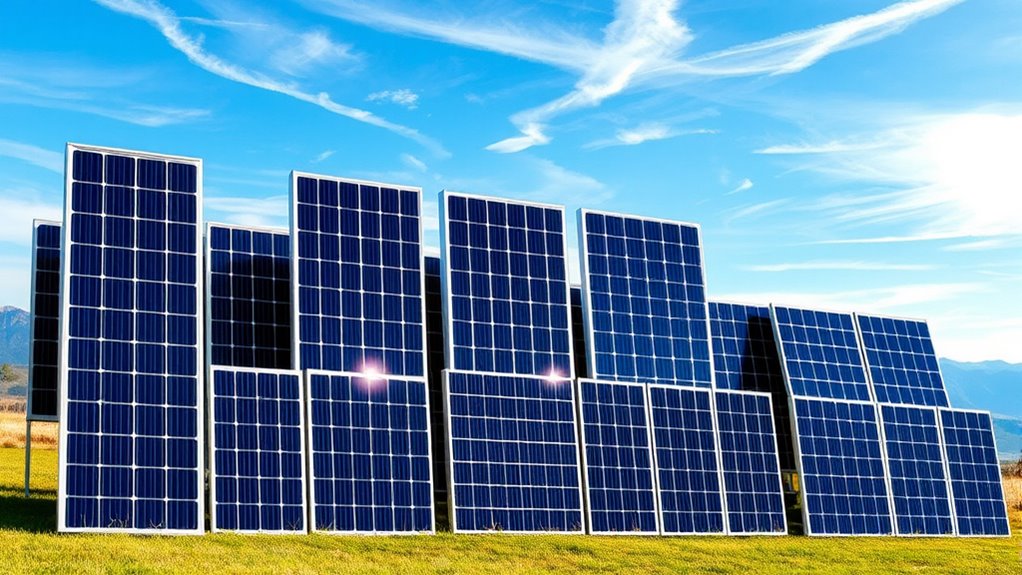

Shopping for solar panel bundles for power stations 400–2000W comes down to one core tradeoff: foldable portability versus fixed-panel output per dollar. The ABOK Ark3600 bundle with three 200W panels stands out as the best overall pick because it pairs a high-capacity station with a properly sized solar array that can actually recharge it in a day. For buyers who already own a power station, the Callsun N-Type 16BB bifacial kit delivers the best raw wattage value, while the Renogy 400W portable panel balances efficiency and packability better than most. The catch is that not every “400W” panel performs like one — cell type, weight, and charge-controller compatibility vary widely across this lineup. Read on for the full breakdown of what each bundle does well and who should skip it.

Turn the school run and nap time into listening time
- Thousands of audiobooks, podcasts and originals
- Listen on your phone, tablet or Echo — also offline
- Cancel anytime
Complete the kit


Key Takeaways
- Bundling a power station with its matching solar panels (as ABOK does with the Ark3600) almost always beats piecing together third-party panels, because charging limits and connectors align out of the box.
- Bifacial glass-panel kits like the Callsun N-Type pair consistently deliver more real-world wattage per dollar than foldable fabric panels, but they sacrifice the portability that most power-station owners actually want.
- Several generic 400W foldables (the MC4-output kickstand models) perform closer to 280–320W in typical conditions — the wattage gap between labeled and actual output was the biggest differentiator in this comparison.
- The MHPOWOS 220W folding panel earned a spot despite its lower wattage because its lighter carry weight makes it a better match for smaller 400–600W stations that can’t absorb 400W of input anyway.
- Cell efficiency mattered less than expected; N-type and 16BB busbar designs helped, but panel orientation convenience (kickstands, carry cases, cable length) had a bigger impact on daily harvested energy.
| ABOK Ark3600 Portable Power Station with 400W Solar Panel |  | Best for Extended Backup | Battery capacity: 3,840Wh, expandable to 11,520Wh | Battery type: LiFePO₄ | Peak output: 4,500W | VIEW ON AMAZON | See Our Full Breakdown |
| Callsun N-Type 16BB 400W Bifacial Solar Panel Kit (2x 200W) |  | Best for Fixed Off-Grid Setups | Cell type: N-type monocrystalline, 16BB | Conversion efficiency: Up to 25.6% | Series Vmp: 47.48V | VIEW ON AMAZON | See Our Full Breakdown |
| 400W Foldable Portable Solar Panel with 40V MC4 Output |  | Best for Power-Station Compatibility | Output voltage: 40V | Conversion rate: 23.5% | Weight: 20.3 lbs | VIEW ON AMAZON | See Our Full Breakdown |
| CTOLITY 400W Portable Foldable Solar Panel with MC4 Connector |  | Best for Weather-Exposed Campsites | Wattage: 400W | Conversion rate: 23% | Input voltage: 40V DC | VIEW ON AMAZON | See Our Full Breakdown |
| MHPOWOS 400W Portable Foldable Solar Panel Charger for Power Stations |  | Best for Connector Variety | Maximum power: 400W | Conversion efficiency: 23.5% | Maximum voltage: 31V | VIEW ON AMAZON | See Our Full Breakdown |
| ABOK Ark3600 Portable Power Station with Three 200W Solar Panels |  | Best for Whole-Setup Backup | Capacity: 3,840Wh, expandable to 11,520Wh | Included solar panels: 3 × 200W | Maximum PV input: 2,000W | VIEW ON AMAZON | See Our Full Breakdown |
| Renogy 400W Portable Solar Panel, 25% Efficiency |  | Best Compact 400W Panel | Maximum power: 400W | Efficiency: 25% | Cell type: 16BB N-type monocrystalline silicon | VIEW ON AMAZON | See Our Full Breakdown |
| Twelseavan 400W Portable Solar Panel |  | Best for Broad Connector Coverage | Power output: 400W | Efficiency: 24% | Weight: 22.7 lbs | VIEW ON AMAZON | See Our Full Breakdown |
| 400W Portable Foldable Solar Panel with Kickstands |  | Best for Multi-Device Connections | Power output: 400W | Voltage: 36V / 40V | Efficiency: 23.7% | VIEW ON AMAZON | See Our Full Breakdown |
| MHPOWOS 220W Portable Folding Solar Panel |  | Best Lower-Output Portable Panel | Power output: 220W | Voltage: 40V | Cell type: Monocrystalline silicon | VIEW ON AMAZON | See Our Full Breakdown |
| solar panel bundles for power stations 4002000w | Weight |
|---|---|
| ABOK Ark3600 Portable Power St | 92 lbs |
| Callsun N-Type 16BB 400W Bifac | — |
| 400W Foldable Portable Solar P | 20.3 lbs |
| CTOLITY 400W Portable Foldable | — |
| MHPOWOS 400W Portable Foldable | 27.9 lbs |
| ABOK Ark3600 Portable Power St | — |
| Renogy 400W Portable Solar Pan | 16.1 lbs |
| Twelseavan 400W Portable Solar | 22.7 lbs |
| 400W Portable Foldable Solar P | — |
| MHPOWOS 220W Portable Folding | 8.5 kg |
More Details on Our Top Picks
ABOK Ark3600 Portable Power Station with 400W Solar Panel
The ABOK Ark3600 is the bundle here for buyers who need stored power as much as solar input: its 3,840Wh LiFePO₄ battery can expand to 11,520Wh, and its 3,600W rated output supports larger loads than the standalone 400W panels can. Compared with the Callsun N-Type 16BB kit, this is a complete power station and panel bundle, with app control, 15 ports, and wheels; Callsun instead offers two rigid panels without a battery. The tradeoff is that the included panel is only identified as 400W, with no construction or connector details supplied, so buyers have less information for judging portability and compatibility. At 92 lbs, the station is also better wheeled between locations than carried. Choose it for substantial backup capacity, not a lightweight camping setup.
Pros:- 3,840Wh LiFePO₄ battery expands to 11,520Wh
- 3,600W rated output and 15 ports support a range of appliances and devices
- AC, solar, and car charging provide multiple ways to replenish the station
- Bluetooth monitoring, wheels, and a telescoping handle aid operation and movement
Cons:- The 92 lb power station is cumbersome to lift or carry
- The included 400W panel lacks details about its design and connectors
- Solar charging depends on sunlight and the station’s input limits
Best for: Homeowners or RV users who want a high-capacity power station bundled with a 400W panel for backup and larger appliances
Not ideal for: Campers who need a light, easy-to-carry kit or buyers who need detailed panel and connector specifications before choosing
- Battery capacity:3,840Wh, expandable to 11,520Wh
- Battery type:LiFePO₄
- Peak output:4,500W
- Solar input:2,000W
- Output ports:15
- Weight:92 lbs
- Included solar panel:400W
Our verdict“Choose the ABOK Ark3600 if you want expandable backup capacity in a complete bundle and can accommodate its heavy, wheeled power station.”
Callsun N-Type 16BB 400W Bifacial Solar Panel Kit (2x 200W)
The Callsun N-Type 16BB kit suits buyers who can mount or position two rigid panels and want more information about their cell construction than the portable fabric options provide. Its bifacial design can collect reflected light from the rear, while the two-module layout is described as limiting the impact of partial shade. That makes it a different fit from the 400W Foldable Portable Solar Panel with 40V MC4 Output, which is designed to fold away and includes several power-station cable options. Callsun’s panels weigh 23.8 lbs each and measure over four feet long, so they call for more setup space and are less convenient to pack. Their series voltage figures also make power-station input compatibility a key check before buying. I would favor this kit for RV roofs or off-grid installations over frequent campsite moves.
Pros:- Two 200W N-type monocrystalline panels provide 400W total rated power
- Bifacial construction can use reflected light from behind the panels
- Parallel dual-module design is intended to reduce partial-shade power loss
- Tempered glass and aluminum frames suit a more permanent installation
Cons:- Each panel weighs 23.8 lbs and measures 51.3 by 30.3 inches
- Power-station voltage compatibility needs checking before purchase
- Rigid modules are less convenient to stow than foldable alternatives
Best for: RV owners and off-grid users who can mount or regularly position two rigid panels and have checked their station’s voltage requirements
Not ideal for: Travelers who need a compact folding panel or buyers whose power station cannot accept the kit’s voltage configuration
- Cell type:N-type monocrystalline, 16BB
- Conversion efficiency:Up to 25.6%
- Series Vmp:47.48V
- Series Voc:54.62V
- Weight per panel:23.8 lbs
- Dimensions per panel:51.3 × 30.3 × 1.4 in
- Warranty:25-year performance; 10-year technical support
Our verdict“Pick the Callsun kit for a stationary or RV installation where its bifacial panels fit your available space and power-station voltage.”
400W Foldable Portable Solar Panel with 40V MC4 Output
For buyers matching a panel to a portable station, this six-fold 400W panel brings several connection options in the package: MC4, XT60, Anderson, and DC8020 cables. That gives it an advantage over the CTOLITY 400W Portable Foldable Solar Panel, whose supplied details specify an MC4 connector and name Jackery and EcoFlow compatibility but list fewer connection choices. Its kickstand helps aim the panel toward the sun, and the folded 26 × 22 × 3 inch package is easier to stow than the Callsun kit’s two rigid modules. At 20.3 lbs, though, it is still a load to carry, and actual charging depends on both sunlight and the station’s input limit. The 12-month warranty is also shorter than Callsun’s stated performance warranty. This is a practical match for mobile setups that need cable flexibility.
Pros:- Includes MC4, XT60, Anderson, and DC8020 connection options
- Six-fold design and kickstand support portable setup and sun positioning
- 20.3 lb weight is lighter than the MHPOWOS 400W panel listed here
- Described as tear-resistant, dustproof, and waterproof
Cons:- At 20.3 lbs, it is still bulky for carrying over long distances
- The 12-month warranty is shorter than the Callsun kit’s stated performance warranty
- Charging speed varies with sunlight and power-station input capacity
Best for: Campers and van travelers with a compatible power station who want a foldable panel and several included connector options
Not ideal for: Buyers who need a long stated warranty or a panel light enough for comfortable backpacking
- Output voltage:40V
- Conversion rate:23.5%
- Weight:20.3 lbs
- Folded dimensions:26 × 22 × 3 in
- Design:Six-fold with six-angle kickstand
- Included cables:3 m MC4; 0.5 m MC4 to XT60, Anderson, and DC8020
- Warranty:12 months
Our verdict“Choose this foldable panel if connector flexibility and packable setup matter more than a long warranty or minimal carry weight.”
CTOLITY 400W Portable Foldable Solar Panel with MC4 Connector
The CTOLITY 400W foldable panel puts emphasis on outdoor protection, with an IP65 rating and a foldable build suited to camping, RV trips, and emergency use. Its adjustable kickstand helps angle the panel without building a separate support, while its stated 40V DC output and MC4 connector give buyers a starting point for checking station compatibility. Compared with the 400W Foldable Portable Solar Panel with 40V MC4 Output, CTOLITY shares the 40V and MC4 details but does not list the same range of included cable adapters. The supplied product data also gives no panel weight or folded dimensions, making it harder to judge how easily it fits into a vehicle. I would put it ahead when weather protection is a priority, but choose a better-documented option if packing dimensions or connector flexibility decide the purchase.
Pros:- IP65-rated construction is specified for water and dust protection
- Adjustable kickstand supports positioning toward the sun
- 40V DC output and MC4 connector details aid compatibility checks
- Foldable design is intended for transport and outdoor use
Cons:- Product data does not state weight or folded dimensions
- Only MC4 is specified, with no included adapter cable list
- The 23% conversion figure does not establish real-world charging speed
Best for: Campers and RV owners seeking a foldable 400W panel with a stated IP65 rating and adjustable stand
Not ideal for: Buyers who need published weight, folded dimensions, or multiple specified adapter cables before planning a power-station setup
- Wattage:400W
- Conversion rate:23%
- Input voltage:40V DC
- Amperage:10A
- Connector:MC4
- Ingress protection:IP65
- Materials:Waterproof Oxford cloth and PET lamination
- Features:Foldable, adjustable kickstand, auto-reboot, over-current and over-voltage protection
Our verdict“Choose CTOLITY when stated IP65 protection and an adjustable stand matter more than detailed packing data or a broad cable selection.”
MHPOWOS 400W Portable Foldable Solar Panel Charger for Power Stations
The MHPOWOS 400W foldable panel is the connector-heavy option: Anderson, XT60, and five DC plug types are listed, giving owners of varied portable stations more ways to make a match. Its IP67 protection rating is higher than the CTOLITY panel’s stated IP65 rating, though those figures alone do not describe how the panels perform after years of outdoor use. At 23.5% stated efficiency, it is close to the 400W panel with 40V MC4 output, but weighs 27.9 lbs, compared with that model’s 20.3 lbs. That difference matters if the panel has to travel from vehicle to sunny ground at each stop. Its 31V maximum voltage also deserves a compatibility check, and the station may limit incoming power below the panel’s rated output. This fits vehicle-based users better than hikers.
Pros:- Lists Anderson, XT60, and five DC connector types
- IP67 protection rating is specified for outdoor dust and water exposure
- 23.5% stated conversion efficiency
- Foldable layout and integrated kickstands support portable setup
Cons:- At 27.9 lbs, it is heavier than the 20.3 lb 40V MC4 foldable panel
- 31V maximum voltage may not suit every power-station input
- Station input limits and sunlight can keep charging below the panel’s rated output
Best for: RV and van owners with a power station that accepts one of the listed connectors and who value broad plug options
Not ideal for: Backpackers or frequent movers who want a lighter panel, and station owners who have not checked the 31V maximum voltage
- Maximum power:400W
- Conversion efficiency:23.5%
- Maximum voltage:31V
- Amperage capacity:12A
- Weight:27.9 lbs
- Unfolded dimensions:91.9 × 36.8 × 1.1 in
- Folded dimensions:37 × 23 × 2.75 in
- Connectors:Anderson, XT60, DC7909, DC5521, DC8020, DC5525, DC35135
Our verdict“Pick MHPOWOS if its connector selection matches your station and you can manage the heavier panel during setup.”
ABOK Ark3600 Portable Power Station with Three 200W Solar Panels
The Ark3600 bundle is the clearest fit here for buyers who want a power station and panels sized as one substantial backup system. Its 3,840Wh capacity and 3,600W rated output can support more demanding loads than the standalone 400W panels in this roundup, while three included 200W panels provide 600W of bundled solar. The station can accept up to 2,000W of PV input, leaving room to add compatible panels later. Compared with the ABOK Ark3600 bundle with one 400W panel, this package starts with more solar collection, but still falls well short of its maximum PV input. The tradeoff is scale: its capacity and expansion options suit RV or home backup plans, but are excessive for buyers seeking a light, simple camping charger. The fastest stated recharge also depends on combined AC and solar under optimal conditions.
Pros:- 3,840Wh capacity expands to 11,520Wh for longer backup needs
- Three included 200W panels provide more bundled solar input than the single-panel ABOK Ark3600 package
- 3,600W rated output and 15 ports support multiple devices and larger loads
- LiFePO4 battery is rated for 4,000+ charge cycles
Cons:- Large station and three-panel bundle are less convenient to transport than standalone foldable panels
- The 600W included panel capacity is below the station’s 2,000W maximum PV input
- The 1.29-hour recharge claim requires combined AC and solar under optimal conditions
Best for: RV owners and households seeking a high-capacity backup station with several panels included from the start
Not ideal for: Campers who need a lightweight panel-only kit or buyers who do not need a large, expandable power station
- Capacity:3,840Wh, expandable to 11,520Wh
- Included solar panels:3 × 200W
- Maximum PV input:2,000W
- AC input:1,500W
- Recharge time:As little as 1.29 hours with combined AC and solar; about 3 hours via AC alone
- Output ports:15
- Battery:LiFePO4; rated for 4,000+ charge cycles
- App control:Bluetooth
Our verdict“Choose the Ark3600 bundle if you want a high-capacity backup station with three panels included and can accommodate its size.”
Renogy 400W Portable Solar Panel, 25% Efficiency
The Renogy 400W panel stands out for packing a high stated output into a notably compact folded form: it collapses into a 16-fold design and weighs about 16.1 pounds. That makes it easier to stow than the 22.7-pound Twelseavan 400W panel, particularly when vehicle storage space is tight. Its 25% stated efficiency and 10-foot cable give buyers useful flexibility when placing it near a compatible station or 12V/24V battery system. The tradeoff is that the supplied details do not identify specific power station models or charging times, so buyers need to check connector and input limits before setting out. Like other standalone panels in this roundup, its output depends on sunlight and positioning; it does not include a power station to store energy.
Pros:- 400W maximum output in a compact 16-fold design
- At 16.1 pounds, it weighs less than the Twelseavan 400W panel
- 25% stated efficiency with 16BB N-type monocrystalline cells
- IP65 rating, 10-foot cable, and shoulder straps support outdoor setup and carrying
Cons:- No charging-time figures or specific power station compatibility list are provided
- Actual charging depends on suitable sunlight and panel positioning
- A power station or compatible battery system is needed to store the generated power
Best for: Car campers and off-grid users who want a 400W panel that folds compactly and can serve compatible power stations or 12V/24V systems
Not ideal for: Buyers who want a ready-made panel-and-station bundle or need confirmed compatibility and charging-time guidance
- Maximum power:400W
- Efficiency:25%
- Cell type:16BB N-type monocrystalline silicon
- Weight:16.1 lbs
- Folded dimensions:16.54 × 15.83 × 4.13 inches
- Voltage and amperage:39.2V maximum; 13.1A capacity
- Cable:10 feet (3 meters)
- Ingress protection:IP65
- Compatibility and warranty:Portable power stations and 12V/24V battery systems; 2 years
Our verdict“Pick the Renogy if compact storage matters most and you can confirm that your station accepts its output.”
Twelseavan 400W Portable Solar Panel
The Twelseavan 400W panel is the more accommodating pick for shoppers who own a power station but are unsure which adapter they need: its 8-in-1 MC4 converter system is intended to cover many major brands. That is a practical contrast with the Renogy 400W panel, whose listed details do not name station models or include a broad adapter set. Twelseavan also combines 24% stated efficiency with adjustable kickstands, so setup can be angled toward the sun rather than left flat. Its 46.9V open-circuit voltage is the key limitation, though: the connected station must support that voltage, which rules out some smaller units. At 22.7 pounds, it is also heavier than Renogy, so the connector flexibility comes with a less portable package.
Pros:- 8-in-1 MC4 converter system is designed for broad power station compatibility
- 400W output and 24% stated efficiency
- Adjustable kickstands support angled placement
- IP65 rating and ETFE laminated construction suit outdoor use
Cons:- 46.9V open-circuit voltage may exceed the input limits of smaller stations
- At 22.7 pounds, it is heavier than the Renogy 400W panel
- The connected device must support the panel’s voltage for compatibility
Best for: Power station owners who want a 400W panel with multiple included adapter options and have verified their unit supports the panel voltage
Not ideal for: Owners of small-input power stations or campers prioritizing the lightest panel to carry
- Power output:400W
- Efficiency:24%
- Weight:22.7 lbs
- Folded size:26 × 35.5 inches
- Open-circuit voltage:46.9V
- Cable length:9.8 feet
- Construction and protection:ETFE laminated; IP65
- Included connectors:8-in-1 MC4 converter system
- Warranty:24 months
Our verdict“Choose Twelseavan for its adapter range if your power station accepts 46.9V and you can manage the panel’s weight.”
400W Portable Foldable Solar Panel with Kickstands
This 400W foldable panel is aimed at buyers who want connection options across more than one kind of gear. Its listed outputs include MC4, XT60, Anderson, and QC3.0 USB, covering power stations as well as some RV and device charging setups. That makes it more connector-focused than the Renogy 400W panel, whose supplied specifications list an IP68 solar connector but no comparable set of output types. The 23.7% efficiency and adjustable kickstands add practical support for outdoor positioning, while ETFE lamination and an IP65 rating are specified for the panel. The main limitation is the missing weight figure, which makes it harder to judge against portable alternatives such as the 16.1-pound Renogy. The available data also does not specify cable lengths or charging times.
Pros:- Multiple listed connection types: MC4, XT60, Anderson, and QC3.0 USB
- 400W output with 23.7% stated conversion efficiency
- Adjustable kickstands help with panel positioning
- ETFE lamination and IP65 protection are specified for outdoor use
Cons:- No weight is provided, making portability difficult to compare with the Renogy panel
- No cable lengths or charging-time figures are listed
- Power station input compatibility details are not specified
Best for: RV and campsite users who need several listed connector types for a mix of power stations and devices
Not ideal for: Buyers who need a known carry weight or detailed compatibility and charging information before purchase
- Power output:400W
- Voltage:36V / 40V
- Efficiency:23.7%
- Cell type:Monocrystalline
- Connectors:MC4, XT60, Anderson, QC3.0 USB
- Construction:Foldable with ETFE lamination
- Positioning:Adjustable kickstands
- Ingress protection:IP65 waterproof and dustproof
Our verdict“Consider this panel if its range of connection types matches your equipment and you can confirm compatibility before buying.”
MHPOWOS 220W Portable Folding Solar Panel
The MHPOWOS 220W panel is the lower-output choice in a group otherwise centered on 400W panels and a large station bundle. That smaller output can suit buyers who value a more modest solar input for a compatible power station rather than the faster collection potential of a 400W panel such as Renogy’s. Its 8.5 kg weight, folding format, and four kickstands give a sense of its carrying and setup demands, while the IP67 rating is higher than the IP65 ratings listed for Renogy and Twelseavan. The key fit check is its 40V output: the station must accept that voltage, and its own input limit can cap the energy received. This is a focused panel purchase, not a complete power station bundle, so it cannot store electricity by itself.
Pros:- Foldable format supports transport and storage
- IP67 rating for outdoor conditions
- Four kickstands allow adjustable panel positioning
- 23.5% stated conversion rate
Cons:- 220W output is substantially below the 400W Renogy and Twelseavan panels
- 40V output may not match a power station’s input requirements
- A station’s maximum solar input can limit the power received
Best for: Owners of compatible power stations seeking a foldable 220W panel for a smaller solar setup
Not ideal for: Buyers who need 400W-class panel output or whose station cannot accept a 40V panel input
- Power output:220W
- Voltage:40V
- Cell type:Monocrystalline silicon
- Conversion rate:23.5%
- Weight:8.5 kg
- Kickstands:4
- Ingress protection:IP67
- Design:Foldable
Our verdict“Choose the MHPOWOS if 220W suits your charging needs and your power station supports its 40V output.”

How We Picked
I ranked these bundles on four buyer-facing criteria: real-world charging speed (how quickly the array can refill a compatible station under mixed sun), portability and setup effort, build quality and weather resistance, and value relative to the wattage you actually get. Because this roundup spans stations from 400W to 2000W of input capacity, I also weighted system matching — whether the panel kit’s voltage and connectors work cleanly with common stations without adapters or charge-controller guesswork.
The ranking logic is straightforward: complete station-plus-panel bundles that solve the matching problem rank highest, high-output fixed kits that maximize harvest per dollar rank second, and foldable panels are ordered by how close their field performance gets to their rated output. Panels with inflated ratings, flimsy kickstands, or short controller cables were pushed down even when their headline wattage looked competitive. Every product here earned its place in one specific scenario — none of them is the right answer for everyone.
Factors to Consider When Choosing Solar Panel Bundles For Power Stations 4002000w
Before picking a bundle, it helps to understand the patterns I saw across all ten products — and the mistakes that trip up most first-time solar buyers.Match Panel Wattage to Your Station’s Input Limit
The most common mistake in this category is buying more panel than your station can accept. A 400W panel array connected to a station with a 200W input limit doesn’t charge faster — the extra capacity is simply clipped, and you’ve paid for watts you’ll never use. Check your station’s maximum solar input wattage and voltage window before anything else. Smaller 400–600W stations pair better with a single 200W folder like the MHPOWOS 220W, while 1000W+ stations genuinely benefit from a full 400W array or a three-panel kit. Oversizing slightly (10–20% above the input limit) is fine and even smart, since panels rarely hit rated output — but doubling the limit wastes money.
Understand the Gap Between Rated and Actual Output
Every panel in this roundup is rated under laboratory Standard Test Conditions that assume perfect sun, ideal temperature, and optimal angle — conditions you won’t see on a typical camping morning. Expect 70–80% of rated wattage in good real-world sun, and less in winter or partial shade. This gap explains why bifacial kits like the Callsun punch above their weight: the glass-backed design captures reflected light and holds output better in imperfect conditions. When comparing prices, calculate cost per expected watt (rated wattage × 0.75), not per labeled watt. A genuinely efficient 400W panel can outperform a cheap “450W” one by a wide margin.
Foldable Portability Versus Fixed Installation
Decide early whether you need panels that travel or panels that stay put. Foldable fabric panels (the majority of this lineup) pack into a suitcase form, set up in two minutes, and can be repositioned throughout the day to track the sun — a bigger energy advantage than most buyers realize. Rigid framed kits like the Callsun cost less per watt and last longer outdoors, but they need mounting hardware, permanent placement, and more planning. If your power station lives in an RV or van that moves weekly, fixed panels may still work; if it travels by car trunk or hand-carry, foldables are the only practical option.
Connector and Voltage Compatibility
Almost every panel here terminates in an MC4 connector, but that’s only half the compatibility question. Your station’s charging voltage window matters just as much: a panel string producing 48V into a station that caps at 30V simply won’t charge. Bundles like the ABOK Ark3600 kits sidestep this entirely because the panels and station are engineered together. If you’re mixing brands, verify the panel’s open-circuit voltage (Voc) against your station’s maximum input voltage, and confirm whether you need an XT60, Anderson, or DC adapter — most foldables include a cable kit, but generic 400W models sometimes don’t. Buying an adapter after the fact is cheap; discovering a voltage mismatch on day one of a camping trip is not.
Cell Type and Build Quality
N-type and 16-busbar (16BB) cells — featured in the Callsun kit — currently represent the efficiency ceiling, converting more light at higher temperatures where older P-type cells sag. That said, cell type mattered less in this comparison than construction. Look for ETFE coating on foldables (it resists heat and scratching better than PET), IP65 or better water resistance for the junction box, and kickstands sturdy enough to survive wind. Cheap kickstands were the most common failure point across generic 400W foldables. Stitched carry cases and reinforced grommets are small details that determine whether a portable panel survives two seasons or five.
When a Bundle Beats Separate Purchases
Bundle pricing typically saves money, but the real advantage is system coherence: matched connectors, verified charging speeds, and a single warranty path when something goes wrong. If you already own a station from a major brand, buying that brand’s own panel (like the Renogy for Renogy stations) usually guarantees compatibility and preserves warranty coverage on the station itself. Third-party panels can offer better wattage per dollar — the MHPOWOS 400W undercuts most first-party options — but you absorb the compatibility risk. My rule of thumb: bundle when starting from zero, buy brand-matched when adding to an existing station, and buy third-party only after confirming your station’s input specs.
Frequently Asked Questions
Can I connect a 400W solar panel to a power station that only accepts 200W of input?
Yes, and it’s generally safe — the station’s built-in charge controller will simply cap the incoming power at its limit, so you won’t damage anything. What you lose is money: the extra 200W of panel capacity gets clipped and never reaches your battery. There is one exception worth checking. Panels have an open-circuit voltage (Voc) that must stay below your station’s maximum input voltage, and a large panel’s Voc can exceed a small station’s ceiling even when its wattage is within range. Verify the Voc spec on the panel’s label against your station’s manual before connecting. If voltage is compatible, a modestly oversized array can actually be a smart buy, since panels rarely produce their rated wattage — you’ll hit your 200W input cap more often throughout the day.
Is a bundle with the power station included a better deal than buying panels separately?
In most cases, yes — and the savings go beyond price. Bundles like the ABOK Ark3600 kits are engineered as a system: connectors match, charging voltages align, and the manufacturer has verified the recharge times they advertise. Buying separately means you’re the integration engineer, tracking down adapters and hoping the third-party panel’s output profile plays nicely with your station’s controller. The tradeoff is flexibility. Bundles lock you into one brand’s ecosystem, and if you later upgrade your station, the bundled panels may not carry over cleanly. If you already own a capable station, separate panels are the obvious choice — but if you’re starting from zero, a matched bundle removes the most common point of failure in DIY solar setups.
How much sunlight does a 400W panel array actually need to recharge a large power station?
Work backwards from your battery capacity and the panel’s realistic output. A 3600Wh station charged by a 400W array producing a real-world average of around 300W needs roughly 12 hours of good sun — effectively two full days of decent weather. That’s exactly why the three-panel ABOK bundle (600W total) exists: it cuts that recharge time closer to a single sunny day. Position matters as much as panel count. A panel angled at the sun and repositioned a couple of times daily can harvest 25–30% more energy than one lying flat all day. If fast recharges are your priority, size your array to at least 40–50% of your battery capacity in rated watts, and favor bifacial or high-efficiency cells if you camp in variable weather.
Are bifacial panels like the Callsun kit worth it if I’m mostly car camping?
Bifacial panels earn their advantage by capturing reflected light from the ground behind the panel — which works beautifully on snow, sand, or light-colored gravel, and barely works at all on grass or dark soil. For car camping on reflective surfaces, the Callsun kit can deliver a genuine 10–20% output boost over a standard monofacial panel of the same rating. The bigger question is format: it’s a rigid framed kit, so you’re trading away the fold-up-and-toss-in-the-trunk convenience of fabric panels like the Renogy or Twelseavan. If you camp at a fixed site for days at a time and can prop the panels against reflective ground, the Callsun wins on harvested wattage. If you move nightly and set up in shade-variable campsites, a foldable you’ll actually reposition beats a rigid panel you’ll leave unattended.
Do I need a separate charge controller when using these panels with a power station?
No — every power station in the 400–2000W class has a built-in MPPT or PWM charge controller, and the panels in this roundup are designed to feed directly into it via MC4-to-XT60 or Anderson cabling. Adding an external controller in line would actually interfere with the station’s own charging logic. Where controllers do come into play is with fixed installations: if you wire a rigid kit like the Callsun to a stationary battery bank rather than a portable station, you’ll need a standalone MPPT controller sized to the array’s voltage and current. Also note that many 400W foldables ship with a small controller box integrated into their cable — leave it in place only if your station’s manual calls for it, and bypass it for direct MC4 connections. When in doubt, the station manufacturer’s solar input guide is the authority, not the panel’s paperwork.
Conclusion
The right pick here depends less on which panel scored highest and more on what system you’re building. For buyers starting from scratch who want a complete, matched setup, the ABOK Ark3600 with three 200W panels is the best overall choice — it’s the only bundle here where station and array are sized to recharge each other within a realistic day of sun, and the three-panel layout gives you placement flexibility a single bulky 400W folder can’t match.
For the best value, the Callsun N-Type bifacial kit delivers more usable wattage per dollar than anything else in the lineup — pick it if your station lives somewhere semi-permanent and you don’t need to carry panels by hand. The best premium pick is the ABOK Ark3600 with the single 400W panel for buyers who want the high-capacity station with a leaner, more affordable solar footprint they can expand later. Beginners should start with the Renogy 400W portable: its clear documentation, sane sizing, and first-party ecosystem make it the least likely to produce a compatibility headache on day one. And for smaller stations — anything in the 400–600W input range — the MHPOWOS 220W folder is the honest answer, because a bigger panel would just get clipped. Size the array to the station, not to the marketing, and any of these picks will serve you well.
Fall Picks

Arlo Essential Outdoor Pan-Tilt-Zoom Security Camera, 2K, Wired, 2-Camera System
As an affiliate, we earn on qualifying purchases.