
You might think regular cleaning is enough, but sanitizing cycles matter more for baby bottles because they kill hidden bacteria and viruses that soap alone can’t eliminate. Babies have developing immune systems, making them especially vulnerable to infections like E. coli and Salmonella. Proper sterilization provides an added layer of safety, actively protecting your little one from unseen germs. Keep going to discover more about how these cycles can truly safeguard your baby’s health.
Key Takeaways
- Baby bottles can harbor unseen bacteria and viruses that regular cleaning may not eliminate.
- Sterilization cycles reach high temperatures that effectively kill harmful pathogens.
- Proper sterilization reduces the risk of infections like E. coli and Salmonella in infants.
- Modern sterilization methods provide reliable, time-saving, and thorough sanitation for baby bottles.
- Incorporating sterilization into daily routines ensures safer feeding and supports overall child health.
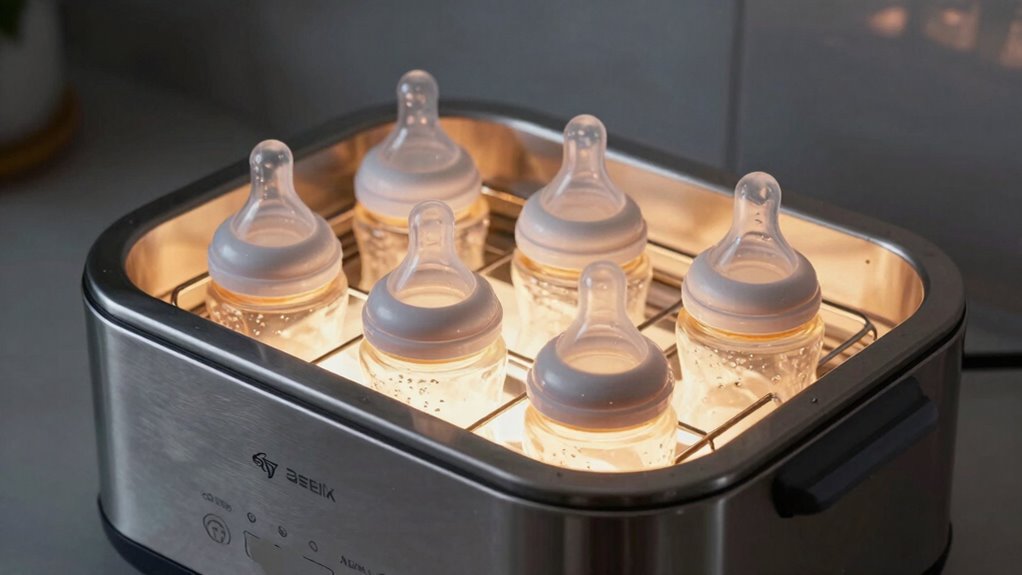
When it comes to feeding your baby, ensuring their bottles are thoroughly sanitized is essential for their health and safety. Babies have developing immune systems, making them particularly vulnerable to germs and bacteria that can lurk on surfaces like bottles. Because of this, maintaining proper household hygiene isn’t just about cleaning; it’s about eliminating potential threats. That’s where sterilization methods come into play. You might think washing with soap and water is enough, but for baby bottles, a deeper level of cleaning is necessary to remove bacteria and viruses that aren’t visible to the naked eye.
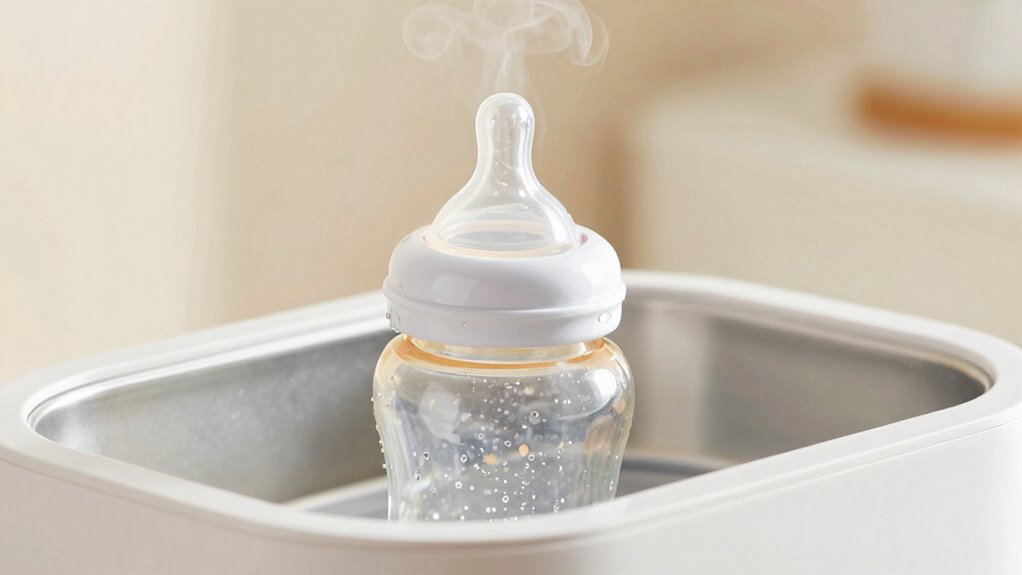
Using sterilization cycles in your dishwasher or sterilizer is one of the most effective sterilization methods available. These cycles are designed to reach high temperatures that kill germs thoroughly, guaranteeing that bottles are safe for your little one. It’s a step that goes beyond regular cleaning, providing an extra layer of protection that greatly reduces the risk of infection. When you opt for sterilization cycles, you’re not just cleaning; you’re actively safeguarding your baby’s health with a proven method that emphasizes household hygiene. It’s easy to underestimate the importance of this step, but in reality, it’s a critical part of your routine that can prevent illnesses caused by bacteria like E. coli or Salmonella.
Sterilization cycles effectively kill germs, safeguarding your baby’s health beyond regular cleaning.
Moreover, sterilization cycles are convenient and reliable, saving you time while giving you peace of mind. Modern dishwashers often come with dedicated sterilization settings, and there are specialized sterilizers available that use steam, UV light, or chemical sterilants. These devices are designed specifically for baby bottles, ensuring that every nook and cranny is sanitized. Proper sterilization eliminates bacteria effectively, which can otherwise linger in hard-to-reach areas and pose health risks. Additionally, proper sterilization can help prevent the transmission of harmful pathogens that can lead to serious health issues. Incorporating these sterilization methods into your routine also supports household hygiene, which is vital for overall safety and health.
In essence, the importance of sterilization cycles for baby bottles isn’t just about cleanliness; it’s about actively protecting your child from unseen dangers. Regularly using these cycles as part of your household hygiene routine ensures that every bottle is safe for feeding. It’s a simple yet indispensable step that offers peace of mind, knowing you’re doing everything possible to keep your baby healthy and secure. In the end, investing in proper sterilization methods makes a big difference in nurturing your child’s well-being, giving you confidence in their daily care.
As an affiliate, we earn on qualifying purchases.
Frequently Asked Questions
Can I Sanitize Baby Bottles Without Using a Dishwasher?
Yes, you can sanitize baby bottles without a dishwasher by using alternative sterilization methods like boiling, steaming, or microwave sterilizers. These methods effectively eliminate harmful bacteria, guaranteeing bottle material safety. Just make certain you follow proper procedures: boil bottles in water for at least five minutes, or use microwave sterilizers according to instructions. Regularly sanitizing with these methods keeps your baby’s bottles hygienic and safe for use.
How Often Should I Run Sanitizing Cycles on Baby Bottles?
You should run a sanitizing cycle on your baby bottles daily, especially if your little one is very young or has a weakened immune system. Coincidentally, proper bottle sterilization is vital for maintaining hygiene practices and preventing bacteria buildup. Regularly sanitizing guarantees your baby’s bottles stay germ-free, reducing illness risks. Make it a habit to run a sanitizing cycle every day or after every use to keep your baby’s health protected.
Are Sanitizing Cycles Safe for All Bottle Materials?
Sanitizing cycles are generally safe for most bottle materials, but you should check the manufacturer’s guidelines to confirm material compatibility. For example, plastic, glass, and silicone bottles usually withstand sanitizing cycles well. Just make sure the cycle uses safe, non-toxic cleaning agents to guarantee chemical safety. If you’re unsure, opt for hand washing and sterilizing methods recommended for your specific bottle material to avoid damage or health risks.
What’s the Difference Between Cleaning and Sanitizing Baby Bottles?
Cleaning removes dirt and milk residues, while sanitizing guarantees bottle sterilization by killing germs and bacteria. You actively wash bottles with soap and water, but sanitizing involves high heat or chemicals to eliminate invisible threats. Both steps are essential for safe feeding. You don’t just clean; you sanitize to protect your baby’s health, ensuring that germs are thoroughly removed and bottles are truly safe for every feed.
Do Sanitizing Cycles Remove All Bacteria and Germs Completely?
Sanitizing cycles greatly reduce bacteria and germs, but they don’t eliminate every single one, contrary to some sterilization myths. While these cycles are effective for germ elimination, no method guarantees 100% sterilization. You should still handle baby bottles carefully, wash them thoroughly first, and use sanitizing cycles regularly. This approach ensures your baby’s bottles are as safe as possible, minimizing the risk of infections.
Conclusion
By now, you realize that sanitizing cycles aren’t just a small detail—they’re the fortress guarding your baby’s health. Skipping this step is like leaving your little one open to an army of germs ready to invade. Think of sanitizing as your superhero shield, protecting your baby from invisible enemies and ensuring their tiny world stays safe and pure. Never underestimate the power of a good sanitizing cycle—it’s your secret weapon for peace of mind.