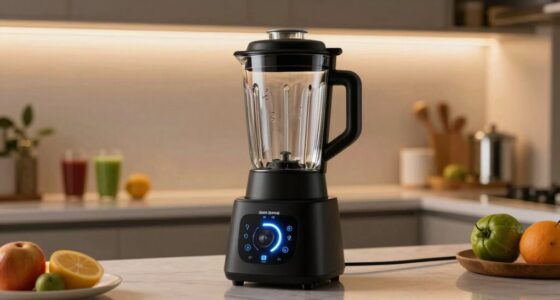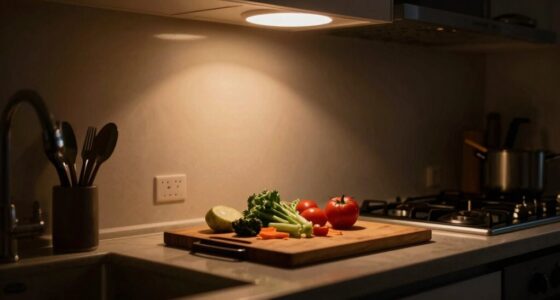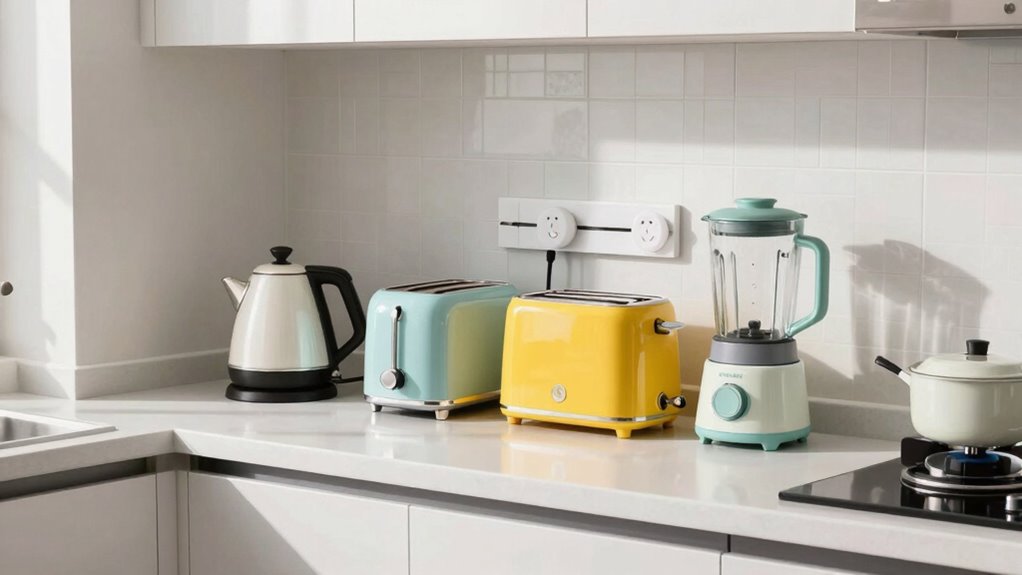
To create safer counter zones for small appliances, assign specific areas for tasks like breakfast prep, coffee making, and snack stations. Keep your coffee makers and kettles near your breakfast zone, while toasters and blenders stay nearby for quick access. Leave enough space around hot appliances and organize cords to prevent accidents. Properly zoned counters reduce clutter and hazards, making your kitchen safer and more efficient. Keep exploring to discover more tips for perfect organization.
Key Takeaways
- Designate specific zones for frequently used appliances like coffee makers and toasters near breakfast prep areas.
- Keep hot appliances such as kettles and toasters away from edges to prevent accidental knocks or spills.
- Allocate separate spaces for small appliances to reduce countertop clutter and prevent overcrowding.
- Use cord management tools to keep power cords organized and out of walkways within each zone.
- Regularly reassess zones when adding or replacing appliances to maintain safety and efficiency.
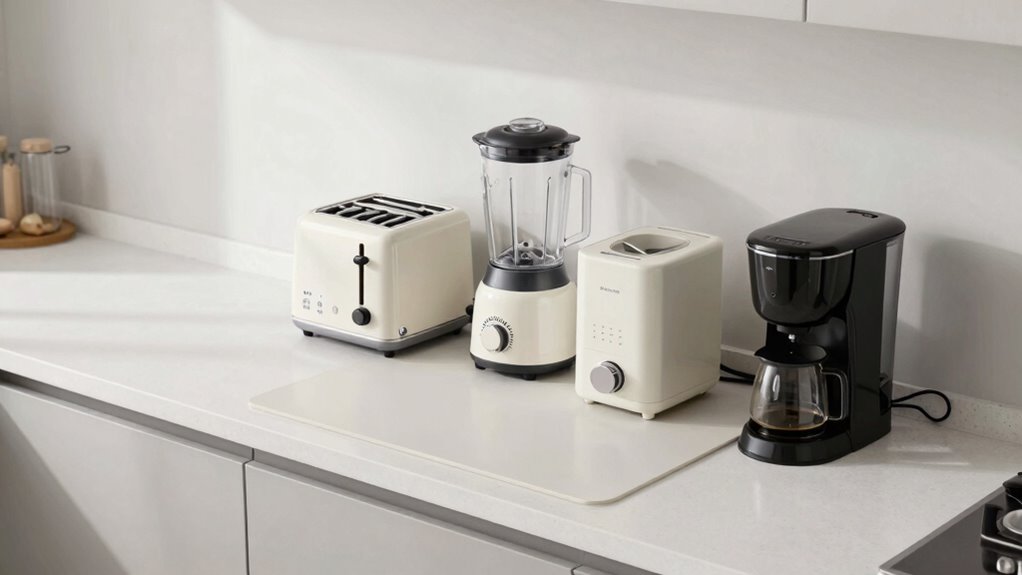
Have you ever considered how the layout of your kitchen counter can impact small-appliance safety? The way you organize your appliances and manage countertop clutter directly influences both safety and efficiency. When appliances are scattered randomly, it becomes harder to access what you need quickly, increasing the risk of accidents or spills. Proper appliance organization helps keep everything in its designated spot, making your workspace safer and more functional. By creating specific zones for different tasks, you minimize countertop clutter, reducing the chances of knocking over a blender or accidentally unplugging a device while reaching for something else.
Organizing appliances into designated zones boosts kitchen safety and makes meal prep more efficient.
A good starting point is to designate a dedicated zone for each type of small appliance. For instance, keep your coffee maker, toaster, and kettle together near your breakfast prep area. This way, you know exactly where to find them, and they’re not cluttering up space needed for other tasks. When appliances are grouped logically, you avoid the chaos of overlapping cords and misplaced gadgets. It also helps prevent the hazard of overloading power strips or accidentally unplugging something important. Remember, each zone should be tailored to your routine, so think about which appliances you use most often and keep those within easy reach.
Another key aspect is maintaining a clear, unobstructed workspace around each zone. Avoid stacking appliances or placing them too close together, as this can lead to accidental knocks or overheating. Leave enough space for safe operation, especially around hot appliances like toasters or electric kettles. Keep cords tidy and out of pathways to prevent tripping hazards or accidental unplugging. Using cord clips or ties can help keep things neat, so your countertop remains safe and manageable. Regularly assess your countertop layout to prevent clutter from building up. Additionally, understanding small-appliance safety guidelines can further reduce risks associated with electrical appliances. As you add new appliances or replace old ones, re-evaluate your zones to ensure they still serve your needs effectively. A clutter-free, well-organized space not only enhances safety but also makes meal prep more enjoyable. When appliances are stored in appropriate zones, it’s easier to clean around them and spot any potential hazards early. Remember, a well-organized counter is a safer counter—less chance of accidents, spills, or electrical issues.

120PCS XHF Adhesive Cable Wire Clips White, Cable Staples Outdoor Cable Management Wire Organizer Cord Holder for Under Desk, Car, Wall, TV PC Ethernet Cable
- High-Quality Material: Strong adhesive and PA66 nylon construction
- Versatile Usage: Suitable for USB, Ethernet, lights, and more
- Appropriate Size: Base 5/8" x 5/8", buckle 1/4" x 2/5"
As an affiliate, we earn on qualifying purchases.
As an affiliate, we earn on qualifying purchases.
Frequently Asked Questions
How Do I Identify the Safest Counter Zones in My Kitchen?
To identify the safest counter zones, focus on appliance placement and counter organization. Keep small appliances away from sink areas and stove, reducing water and heat risks. Designate specific spots for appliances, avoiding clutter and making certain pathways clear. You should also make sure outlets are accessible but not overloaded. By organizing your counters thoughtfully, you’ll minimize accidents and make your kitchen safer for daily small-appliance use.
Are There Specific Materials Recommended for Small-Appliance Counter Zones?
Think of your countertop as a stage where safety takes center spotlight. For small appliances, opt for heat-resistant, non-porous materials like quartz or granite, which prevent damage and are easy to clean. These durable surfaces support proper appliance placement and minimize accidents. Avoid softer materials like wood or laminate, which can stain or warp. Choosing the right countertop materials helps guarantee your small appliances are used safely and efficiently.
How Often Should I Inspect Counter Zones for Safety Hazards?
You should inspect your counter zones at least once a month for safety hazards. Check appliance storage areas to make small appliances are stored securely and not causing clutter. Also, examine electrical outlets for any signs of damage or loose connections that could pose a fire risk. Regular inspections help you catch potential hazards early, keeping your kitchen safe and guaranteeing your small appliances operate smoothly without electrical issues.
Can Countertop Height Affect Small-Appliance Safety?
Countertop height is like the perfect dance partner—too tall or too short, and the rhythm gets off. It definitely affects small-appliance safety because it influences appliance placement and stability. If your counter is too high or low, you might strain yourself or accidentally knock appliances over, creating hazards. Ideally, your counter height should allow you to comfortably use appliances without risking spills or falls, ensuring safer and more efficient food prep.
What Are Common Mistakes to Avoid in Counter Zone Setup?
Avoid common mistakes like improper appliance placement, which can lead to clutter and hazards. Keep cords well-managed to prevent tripping or accidental unplugging. Don’t place appliances too close to water sources or edges where they can fall. Make certain cords aren’t stretched or pinched, and regularly check for wear. Properly arranging appliances and managing cords creates a safer, more efficient workspace, reducing accidents and making your kitchen safer for small appliances.
Conclusion
By choosing the right counter zones for your small appliances, you considerably reduce the risk of accidents and electrical hazards. Keep appliances away from sinks and water sources, and always unplug when not in use. Did you know that nearly 50% of household electrical fires start in the kitchen? Staying mindful of these zones keeps your home safer and your appliances functioning properly. Prioritize safety, and enjoy peace of mind every time you cook or prep.