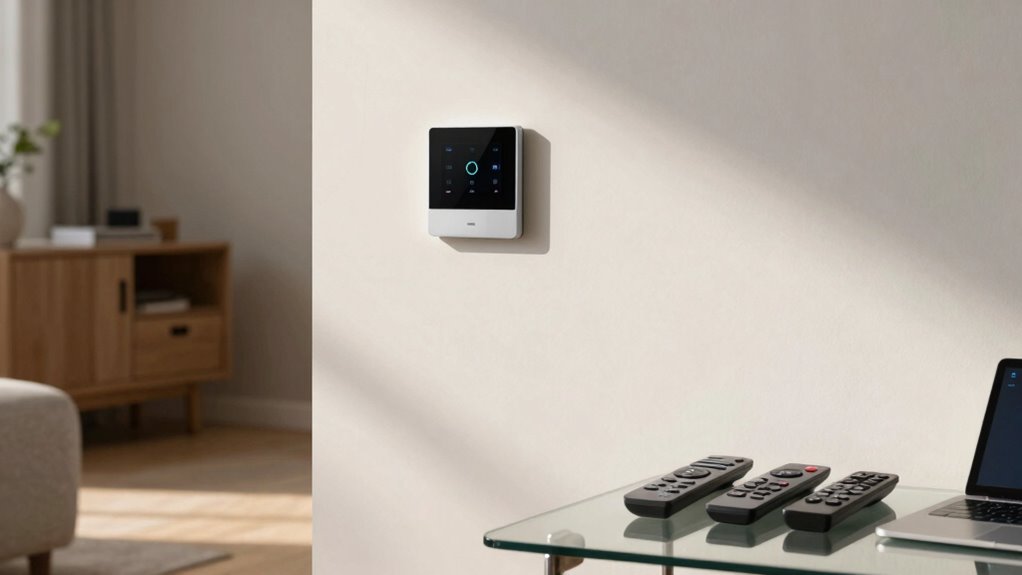

Using a smart thermostat to automatically schedule and adjust your home’s temperature is the fastest way to cut energy waste. By setting it to lower heat or cooling when you’re away or asleep, you prevent unnecessary energy use effortlessly. This simple habit can markedly reduce your energy bills and environmental impact over time. Once you start optimizing your thermostat, you’ll discover more easy ways to save energy and make your home smarter and more efficient.
Key Takeaways
- Program your thermostat to lower heating or cooling when the house is empty or during sleep hours.
- Turn off lights and devices immediately when not in use, especially in unoccupied rooms.
- Use smart lighting with automatic turn-off routines to ensure lights are off when rooms are empty.
- Regularly monitor energy consumption with smart systems to identify and reduce high-energy devices.
- Develop a habit of routine energy checks and adjustments to maintain ongoing efficiency.

Many households waste energy simply because appliances and devices are left on when not in use. It’s a common habit that silently drains your energy bill and harms the environment. But there’s a simple, effective way to reduce this waste quickly: adopting a smart home habit centered around energy management. By focusing on smart thermostat settings and energy-efficient lighting, you can make a noticeable difference without overhauling your entire routine.
Start by adjusting your smart thermostat settings. Instead of leaving your home at a constant temperature all day, program your thermostat to lower the heat or cooling when you’re away or asleep. Many smart thermostats allow you to set schedules that automatically optimize temperature based on your daily routine. This prevents energy from being wasted heating or cooling an empty house. Over time, you’ll see your energy consumption decrease, and your utility bills follow suit. The key is consistency—trust your smart thermostat to handle temperature adjustments, so you don’t have to think about it constantly. This habit alone can dramatically cut energy waste, especially during seasons when heating or cooling demands spike. Additionally, integrating home automation systems can enhance energy savings by coordinating multiple devices for optimal efficiency.
Next, consider your lighting. Energy-efficient lighting options like LED bulbs are a great start, but making a habit of turning off lights when you leave a room is just as important. If you have smart lighting, set up routines that turn lights off automatically when rooms are unoccupied. This way, you don’t rely solely on memory or discipline, and your home remains efficient without extra effort. Pairing energy-efficient lighting with smart controls amplifies the savings, ensuring lights aren’t wasting energy when they’re not needed. Plus, these bulbs last longer and consume less power, further reducing waste and maintenance costs. Incorporating energy monitoring systems can also help you identify which devices consume the most power and optimize your energy usage more effectively. Developing an understanding of electricity consumption patterns can further empower you to make smarter choices, leading to more sustainable habits.
In addition, being aware of your home electrical systems and how they consume power can help you identify further opportunities for savings. The combination of smart thermostat settings and energy-efficient lighting creates a powerful habit of energy mindfulness. It’s about being proactive rather than reactive. When you leave a room, you make it a point to turn off the lights or let your smart system handle it for you. When you’re not home, your thermostat adjusts seamlessly to save energy. This proactive approach is supported by energy efficiency principles that emphasize reducing unnecessary consumption through smarter technology. These small, consistent actions add up over time, substantially reducing unnecessary energy use. It’s a habit that requires minimal effort once set up but offers maximum savings. Not only does this approach cut waste fast, but it also helps you develop a more conscious attitude toward your energy consumption, making your home smarter and more sustainable every day.
smart thermostat with scheduling
As an affiliate, we earn on qualifying purchases.
As an affiliate, we earn on qualifying purchases.
Frequently Asked Questions
How Quickly Can I See Energy Savings After Implementing This Habit?
You can often see energy savings within days after implementing this habit. As soon as you start turning off unused electronics and adjusting your thermostat, your energy consumption drops. Consistent habit implementation accelerates savings over time, especially with smart devices that optimize power use automatically. Keep in mind, the more diligently you practice this habit, the faster and more noticeable your energy savings will become, often within a week.
Does This Habit Require Expensive Smart Home Devices?
You might think cutting energy waste requires costly smart devices, but it doesn’t. Many cost-effective solutions, like DIY smart devices or simple automation, can be just as effective. You don’t need expensive gadgets—just some creativity and basic tech skills. By using affordable, DIY options, you can start saving energy quickly without breaking the bank, proving that smart home habits can be both budget-friendly and efficient.
Can This Habit Be Automated Completely?
Yes, you can automate this habit completely, but manual control remains essential for oversight. Automation challenges include ensuring devices respond correctly and avoiding false triggers, so you’ll need to fine-tune your system. While automation reduces effort, it’s wise to periodically check settings to prevent energy waste. With the right setup, you’ll enjoy seamless operation, saving energy without sacrificing control or comfort.
Is This Habit Effective in All Types of Homes?
You’ll find this habit effective in many homes, but its success depends on home compatibility and device affordability. Studies show that over 60% of households can benefit from smart energy habits, yet older or unconventional homes might need extra upgrades. While smart devices are becoming more affordable, ensuring your home’s wiring and setup support these devices is key. So, this habit works well if your home and budget align.
What Are Common Mistakes When Adopting This Habit?
You might make mistakes when adopting energy monitoring, like neglecting habit consistency or ignoring data insights. Failing to regularly check your energy use can lead to missed savings opportunities. Also, inconsistent habits, such as sporadically adjusting devices, reduce effectiveness. To avoid this, stay disciplined, review your energy data often, and integrate monitoring into your daily routine. Consistent effort maximizes the habit’s impact and helps you cut waste faster.
Conclusion
By embracing this simple smart home habit, you’re planting seeds for a greener future. Imagine your energy use as a garden—regularly tending to your smart devices is like watering and pruning, helping your home flourish efficiently. As you turn off unused gadgets and set schedules, you’re clearing away the clutter of waste, letting your energy savings bloom. With each small step, you’re building a brighter, more sustainable landscape—one smart habit at a time.