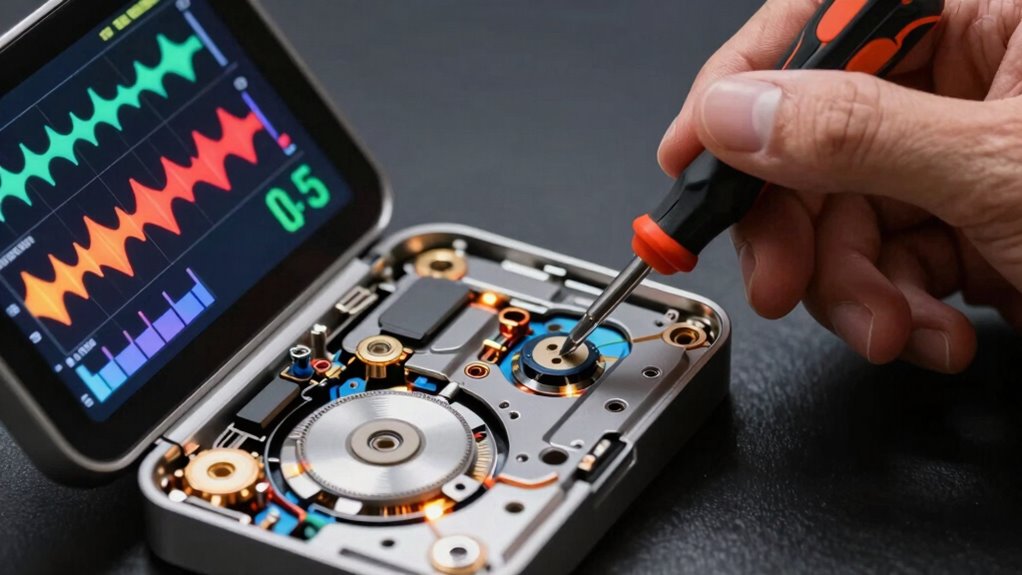

Smart diagnostics help you identify issues remotely by analyzing device performance, sending error reports, and updating software, but they don’t make repairs easier or accessible. They focus on problem detection rather than fixing problems physically, which still requires access to hardware and sometimes specialized tools. Good repairability depends on how a device’s design allows you to access and replace parts. To understand how design choices impact repair options, continue exploring the differences between smart diagnostics and real repairability.
Key Takeaways
- Smart diagnostics identify issues remotely but do not enable physical repairs or component replacements.
- Real repairability involves designing devices for easy access, modular parts, and straightforward component replacement.
- Smart diagnostics rely on software updates and remote communication, whereas repairability depends on hardware accessibility.
- Devices with high repairability offer guides, spare parts, and disassembly ease, unlike diagnostic systems that limit physical intervention.
- Overemphasis on smart diagnostics can hinder repairability by restricting user access and repair options.
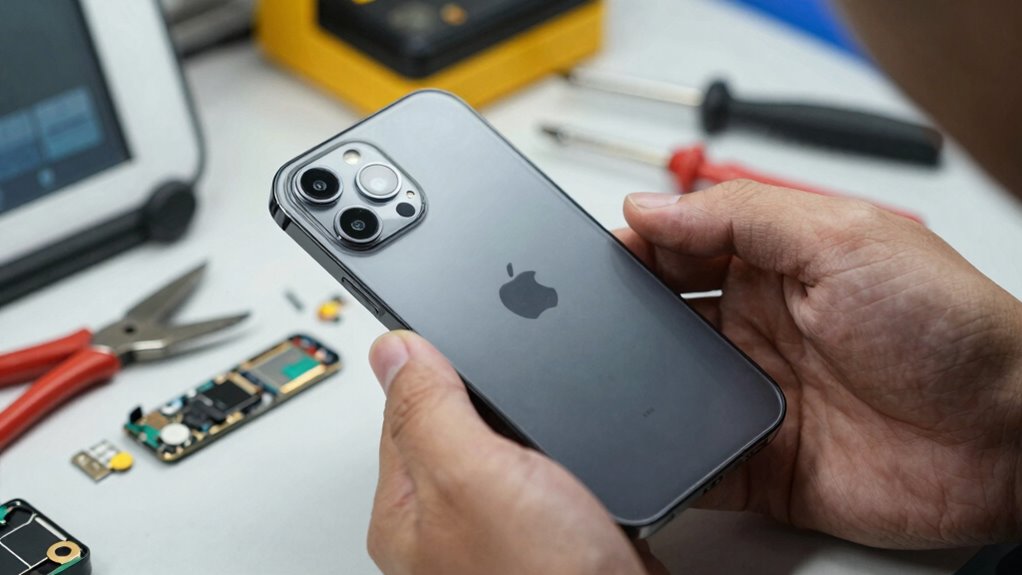
In today’s tech-driven world, manufacturers often tout “smart diagnostics” as a solution for quick and efficient repairs. You might think this technology means your device can identify problems and fix itself seamlessly, but that’s not entirely accurate. Smart diagnostics mainly involve systems that analyze your device’s performance and communicate issues through wireless connectivity. This connection allows the device to send error reports or status updates to support centers or even receive software updates remotely. These updates can include patches that enhance performance, fix bugs, or improve diagnostics themselves. While this sounds convenient, it doesn’t necessarily mean the device is easily repairable or that fixing it will be straightforward.
Smart diagnostics detect issues remotely but don’t simplify physical repairs or enhance device repairability.
Smart diagnostics rely heavily on software updates and wireless connectivity to function effectively. When a problem arises, your device can often alert you or support teams about specific issues without needing to be physically checked. This quick detection can save time, but it’s more about identifying problems than solving them. For example, if your smartphone’s battery is deteriorating, a smart diagnostic system might notify you of the reduced capacity, prompting you to replace the battery. However, replacing that battery still requires physical access to the device’s components, which isn’t always simple if the device isn’t designed with repairability in mind. Design for repairability is a crucial factor that determines how easily a device can be fixed. Additionally, repairability features such as modular components can significantly influence the ease of repairs.
This is where the distinction between smart diagnostics and real repairability becomes clear. Real repairability means you have the ability to physically access, replace, or upgrade parts of your device without specialized tools or skills. Manufacturers who prioritize repairability often design devices with modular components and provide detailed guides or spare parts. Unfortunately, many modern devices with smart diagnostics focus more on remote management and software updates, making repairs more complicated. They may restrict access to internal parts or use adhesives and integrated components, which hinder straightforward repairs. Furthermore, repairability guides and readily available spare parts are often lacking in devices that emphasize smart diagnostics, complicating DIY repairs.
While wireless connectivity and regular software updates keep your device functioning optimally for longer, they don’t address the core issue of repairability. Smart diagnostics might tell you what’s wrong, but they don’t make it easier to fix the problem yourself or through third-party repair shops. Instead, they often lead to manufacturers controlling repairs through authorized service centers, which can be costly and time-consuming. Ultimately, true repairability depends on the device’s design and how accessible its parts are, not just on the smart diagnostic features that keep it running smoothly or report issues remotely. Additionally, the focus on smart diagnostic features can sometimes overshadow the importance of designing devices with repairability in mind, which is essential for sustainable and cost-effective device maintenance.
As an affiliate, we earn on qualifying purchases.
Frequently Asked Questions
How Long Does a Typical Smart Diagnostic Process Take?
A typical smart diagnostic process takes about 30 minutes to an hour, depending on the issue. Your technician’s expertise and advanced diagnostic tools help speed up this process by quickly identifying problems. They analyze data from your device, run tests, and interpret results efficiently. While simple issues might be resolved faster, complex problems can extend the timeframe, but overall, smart diagnostics are designed to be quick and accurate.
Can Smart Diagnostics Replace Traditional Repair Assessments Entirely?
Smart diagnostics can’t fully replace traditional repair assessments because they face diagnostic limitations, and technician expertise remains vital. While smart tools quickly identify many issues, complex problems still require human insight for accurate diagnosis and effective repairs. You need a blend of technology and skilled technicians to guarantee thorough assessments, as relying solely on smart diagnostics risks missing subtler issues or misinterpreting data. Balance remains essential for ideal repair outcomes.
What Are the Costs Associated With Smart Diagnostics Versus Real Repairs?
The costs of smart diagnostics are typically lower initially because they reduce unnecessary repairs through quick, accurate assessments, offering a favorable cost comparison. However, if a fault isn’t correctly identified, you might face higher expenses with real repairs. Smart diagnostics excel in diagnostic accuracy, saving money by pinpointing problems precisely. In contrast, traditional repairs might cost more due to more extensive testing and parts replacement, but they can sometimes address issues more thorough.
Are Smart Diagnostics Accurate for All Types of Repairs?
Smart diagnostics are generally accurate for many repairs due to advanced technology, but they might not cover every issue. You should be cautious, as diagnostic accuracy can vary depending on the complexity of the problem. While these tools are great for initial assessments, complex or unique repairs may still require a professional technician’s expertise to guarantee precise diagnosis and effective repair solutions.
How Do Repair Warranties Differ Between Smart Diagnostics and Real Repairs?
Think of repair warranties like a trusted map; with smart diagnostics, you’re relying on automated testing, which might limit warranty coverage to specific systems, while real repairs involve technician oversight, offering broader coverage. Warranties for smart diagnostics often come with restrictions, whereas warranties for real repairs tend to be more extensive, reflecting confidence in actual, hands-on fixes. You get peace of mind knowing skilled technicians stand behind the work.
Conclusion
Understanding the difference between smart diagnostics and real repairability helps you make smarter choices about your devices. While smart diagnostics quickly identify issues, true repairability means you can fix your device easily and affordably. Did you know that only 20% of electronics are designed for easy repairs? That’s a stark reminder to prioritize repair-friendly products, saving you money and reducing e-waste. Stay informed, and choose devices that truly support your ability to repair and maintain them.