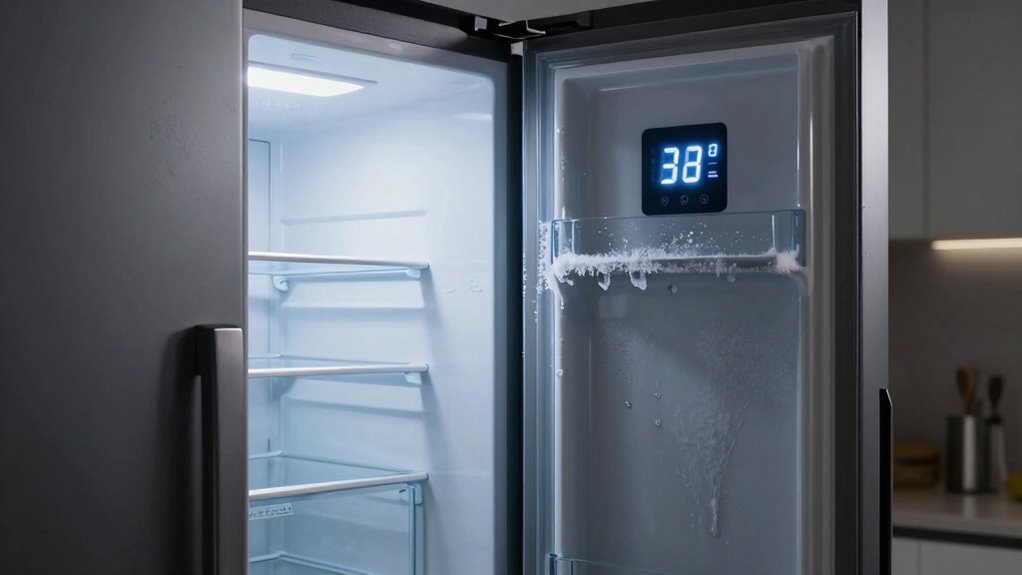

Setting your refrigerator temperature too low causes it to work harder, wasting energy and increasing your electricity bill. Overcooling strains the compressor and wears out the appliance faster. The ideal temperature is 37 to 40°F (3 to 4°C), so adjusting to this range helps save energy. If you keep your fridge properly set and avoid unnecessary door openings, you’ll use less power and extend its lifespan. Keep going to discover smarter tips for efficient fridge use.
Key Takeaways
- Setting the refrigerator temperature too low causes the compressor to work harder, increasing electricity consumption.
- Overcooling leads to unnecessary energy use and strain on the appliance, raising energy bills.
- Maintaining a temperature below 37°F (3°C) unnecessarily activates the cooling system.
- Frequent door openings or overloading disrupt airflow, forcing the compressor to run longer.
- Properly setting the fridge within 37-40°F reduces energy use and extends appliance lifespan.
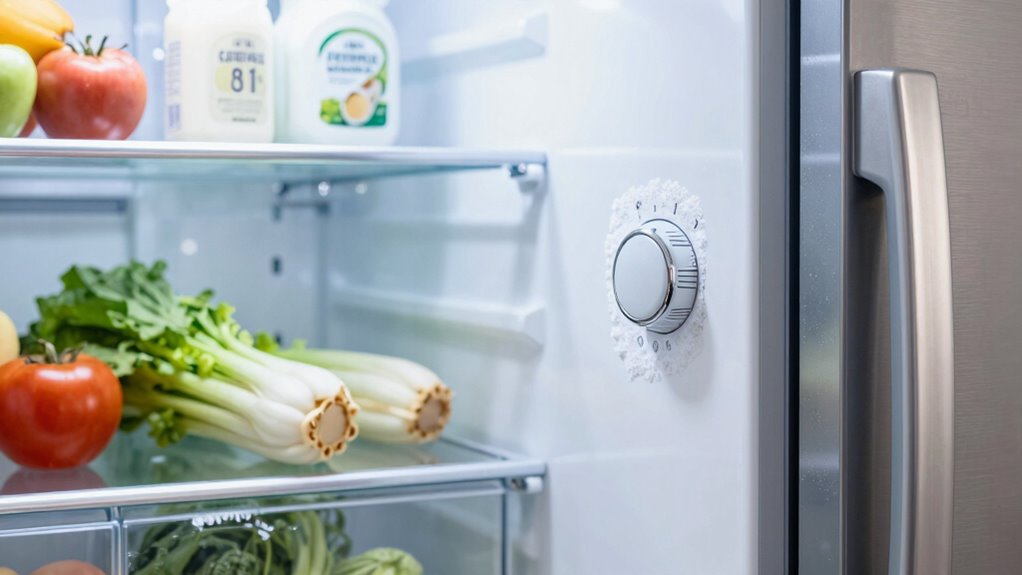
Have you ever wondered if your refrigerator is set at the right temperature? Many people overlook this simple detail, but it can have a significant impact on both energy efficiency and cooling performance. When your fridge isn’t set correctly, it has to work harder to maintain the desired temperature, which leads to unnecessary energy consumption and higher electricity bills. Too cold, and you’re wasting energy by overcooling; too warm, and your food isn’t properly preserved. Finding that perfect balance is key to making your appliance run smoothly and efficiently.
Proper refrigerator temperature saves energy and keeps food fresh. Find the perfect balance for efficiency and safety.
If your refrigerator is set too low, it will run constantly, trying to achieve a colder temperature than necessary. This not only uses more power but also puts extra strain on the compressor. Over time, this can lead to increased wear and tear, shortening the lifespan of your appliance. Conversely, if the temperature is too high, your food may spoil faster, and you might end up using more energy by trying to compensate for the inadequate cooling. Maintaining the right temperature ensures optimal cooling performance without wasting electricity, helping you save money and extend the life of your fridge.
The ideal refrigerator temperature for energy efficiency and food safety is around 37 to 40 degrees Fahrenheit (3 to 4 degrees Celsius). Setting it within this range allows your fridge to operate efficiently without overexerting itself. Many modern refrigerators come with built-in temperature controls, making it easy to dial in the correct setting. If yours doesn’t have precise controls, using a thermometer to monitor the internal temperature can help you fine-tune the settings. Remember, a small adjustment can make a big difference in how much energy your fridge consumes daily. Proper temperature management can significantly reduce your energy usage and prevent food waste. Additionally, understanding how energy consumption varies with different settings can help you make more informed choices about your appliance. Maintaining proper air circulation within the fridge is essential, as poor airflow can cause uneven cooling and increase energy use unnecessarily.
Another common mistake is leaving the door open for too long or opening it frequently. Each time you do, warm air enters, forcing the compressor to work harder to restore the correct temperature. Keeping the door closed as much as possible and opening it briefly when needed helps maintain consistent temperatures and reduces energy waste. Also, avoid overloading your fridge, as overcrowding can obstruct airflow and hinder proper cooling. Proper organization ensures good circulation, which improves cooling performance and reduces the workload on your appliance. Additionally, understanding the importance of biodiversity in sustainable living can motivate us to adopt energy-efficient habits that help reduce environmental impact.
As an affiliate, we earn on qualifying purchases.
Frequently Asked Questions
How Often Should I Check My Refrigerator’s Temperature?
You should check your refrigerator’s temperature at least once a month to guarantee ideal performance. Regularly verify the thermostat calibration to prevent overcooling or warming, which affects power cycle efficiency. If you notice inconsistent temperatures, recalibrate the thermostat. Keeping an eye on these factors helps your fridge run efficiently, saves energy, and prolongs its lifespan. Remember, consistent monitoring is key to avoiding unnecessary electricity consumption.
What Causes My Refrigerator to Run Excessively?
Your refrigerator runs excessively when the defrost cycle is faulty or when the compressor noise indicates it’s overworking. If the defrost cycle doesn’t operate properly, frost buildup forces the compressor to work harder, increasing energy use. Additionally, unusual compressor noise suggests it’s struggling or overworking, causing excessive running time. Regularly checking and maintaining these components helps keep your fridge running efficiently and prevents unnecessary electricity consumption.
Can Incorrect Door Sealing Affect Energy Consumption?
Is a door seal just a simple rubber strip? Not quite. When your door seal isn’t tight, it acts like an open window, allowing cold air to escape and warm air to enter. This causes energy loss, making your fridge work harder and consume more electricity. Regularly check and replace worn or damaged door seals to keep your appliance efficient and save on energy costs.
Is It Better to Set a Colder Temperature for Safety?
Setting your refrigerator to a colder temperature isn’t necessarily better for safety. Ideal cooling usually means keeping it around 37-40°F (3-4°C), which slows bacterial growth without wasting energy. Going colder won’t improve safety considerably and can increase electricity use. Focus on maintaining the right temperature for safety considerations, and guarantee your fridge is sealed properly and functioning efficiently to keep your food safe and save energy.
How Does Ambient Room Temperature Impact Fridge Efficiency?
Like a boat in choppy waters, your fridge battles ambient room temperature. When your room’s warmer or more humid, it forces the compressor to work harder, reducing efficiency. High humidity levels cause moisture buildup, making the compressor strain and consume more electricity. To keep your fridge running smoothly, maintain a steady room temperature and humidity, ensuring peak compressor performance and saving energy.
Conclusion
By setting your refrigerator to the wrong temperature, you’re playing a dangerous game with energy and safety. Think of it as steering your ship into treacherous waters—what seems small can cause big damage. Keep the temperature just right, around 37°F, to prevent unnecessary energy waste and keep your food fresh. When you avoid this common mistake, you’re not just saving electricity; you’re anchoring your home in smart, efficient habits that last.