
TL;DR

Turn the school run and nap time into listening time
- Thousands of audiobooks, podcasts and originals
- Listen on your phone, tablet or Echo — also offline
- Cancel anytime
An opinion article describes how Pennsylvania educator Lori McGarry guided first- and second-graders through a classroom dispute over a guinea pig. The students discussed who might be affected and agreed the animal could visit sometimes while the class also got a fish; the authors argue that deliberation can give children practical experience with democratic decision-making. Their supporting pilot involved 23 educators and teacher-reported findings, not long-term causal evidence.
An opinion article published by The 74 describes how Pennsylvania educator Lori McGarry helped first- and second-graders resolve a classroom dispute over a visiting guinea pig through discussion rather than a quick vote. The authors use the episode to argue that structured deliberation can help young students practice listening, weighing trade-offs and considering classmates affected by a decision.
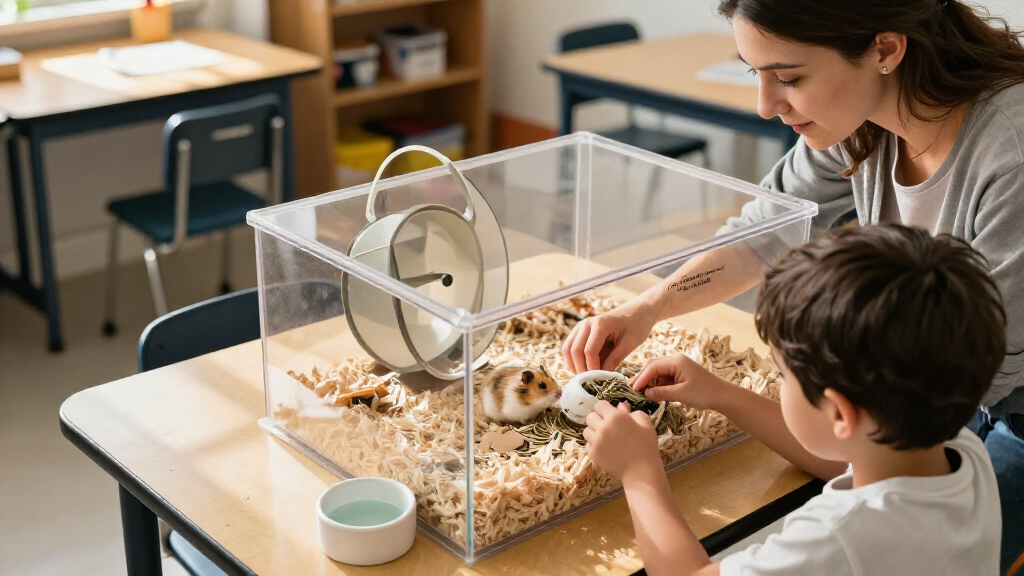
A family offered to lend McGarry’s class a guinea pig for the school year. The arrangement prompted questions about fairness and allergies, and the animal began drawing students’ attention during recess, lunch and math time, according to the article. McGarry’s six- and seven-year-old students considered four possible approaches, using drawings, construction paper, lists of advantages and disadvantages, and a talking stick to support discussion.
The class reached a compromise: the guinea pig could visit sometimes, and the students would also get a fish. The article says one child changed their preferred option after considering that a classmate might become sick. The authors report that, after the discussion, students began asking questions such as who needed to be heard and what the class still needed to understand when other problems came up.
The article’s authors also describe a mixed-methods pilot of classroom deliberation resources developed with the USC Democracy Project. Among 23 participating educators, 95% rated the curriculum highly relevant, according to the report. Teachers described student engagement and connections between public issues and local concerns. The authors caution that the findings rely on teacher reports and classroom artifacts, not long-term evidence that the approach causes lasting changes.
Practicing Decisions Together
The argument is that civics education can extend beyond learning about government institutions to practicing how people make decisions together. In the class-pet example, children had to consider fairness, health concerns and shared attention, rather than simply choose the most popular option. The authors say this kind of process can help students recognize that a decision affects people differently.
The report presents deliberation as a repeatable classroom practice, not a promise that every discussion will produce agreement or lasting civic change. Its pilot results are encouraging to the authors, but the limited, teacher-reported evidence does not establish long-term effects. The distinction matters for educators weighing a practical teaching approach against broader claims about its impact.
classroom discussion cards for kids
As an affiliate, we earn on qualifying purchases.
As an affiliate, we earn on qualifying purchases.
From Class Pets to Public Issues
The article places the classroom story against the approaching 250th anniversary of the Declaration of Independence and another general election. Its authors contend that students may hear about democracy without getting many chances to participate in decision-making. They define deliberation as a structured discussion of a shared problem that asks students to weigh evidence and trade-offs, listen to different views and identify a possible judgment or next step.
They say classroom deliberation need not begin with a divisive national debate. The examples in the article range from pets, recess and school cleanliness to neighborhood safety and local water quality. In the pilot, teachers reported that students explored subjects including gun violence, human rights, police and safety, and pollution in local water sources. These examples are reported by the authors; the article does not provide independent outcome measures for the student work.
““I loved seeing my students slowly start to care more about the injustices currently going on in our world.””
— A participating teacher, quoted in the article
What the Pilot Cannot Establish
The article does not give the publication date, identify all authors in the supplied text, or specify how long the pilot ran. It also does not report a comparison group, student-level outcome data or long-term follow-up. The 95% figure refers to participating teachers who rated the curriculum highly relevant; it is not a measure of student achievement or proof of lasting civic effects.
The source also does not say whether McGarry’s class later revisited its decision or how the guinea pig and fish were cared for. The class story is presented as an example of deliberation, not as evidence that the same approach will resolve every classroom disagreement.
Putting Deliberation on the Calendar
The article urges teachers and school leaders to schedule at least one genuine classroom deliberation during the school year. It recommends starting with a shared issue students care about, presenting more than two reasonable options, making trade-offs visible and setting expectations for evidence and listening without dictating the result.
Students, the authors suggest, can ask who is affected, what remains unknown and what step they could take together, then act and reflect. The source does not announce a new program or a follow-up study, so whether the described pilot will be expanded or evaluated over a longer period is not specified.
Key Questions
What happened in Lori McGarry’s classroom?
A family offered to lend the class a guinea pig. After students discussed concerns including fairness and allergies, they agreed that the guinea pig could visit sometimes and that the class would also get a fish, according to the article.
What does the article mean by classroom deliberation?
It describes a structured discussion in which students examine a shared problem, weigh evidence and trade-offs, listen to different views and work toward a possible decision or next step.
What did the pilot find?
In a mixed-methods pilot involving 23 educators, 95% of participating teachers rated the curriculum highly relevant. The authors also report teacher observations of student engagement, while noting that the evidence came from teacher reports and classroom artifacts.
Does the pilot prove deliberation improves civic participation over time?
No. The article says the findings do not provide long-term causal evidence. It does not establish that classroom deliberation causes lasting changes in students’ civic participation.
What issues can students discuss?
The authors suggest beginning with a shared, age-appropriate classroom or community concern, such as recess, school cleanliness, neighborhood safety or local water quality. The article also reports that students in the pilot discussed broader public issues.
Source: rss
Cold & flu season Picks
humidifiers
As an affiliate, we earn on qualifying purchases.