
To make gardening accessible, choose lightweight, easy-to-grip tools with long handles to reduce strain and improve comfort. Adjust garden bed heights to waist level or use stands, making planting and maintenance easier. Use well-draining, nutrient-rich soil mixes that are light and crumbly to ease cultivation. Organizing tools efficiently keeps your space tidy and safe. Keep exploring to discover more tips that will help you create an inviting, inclusive garden for everyone.
Key Takeaways
- Use lightweight, ergonomic tools with padded grips and long handles to reduce strain and improve comfort.
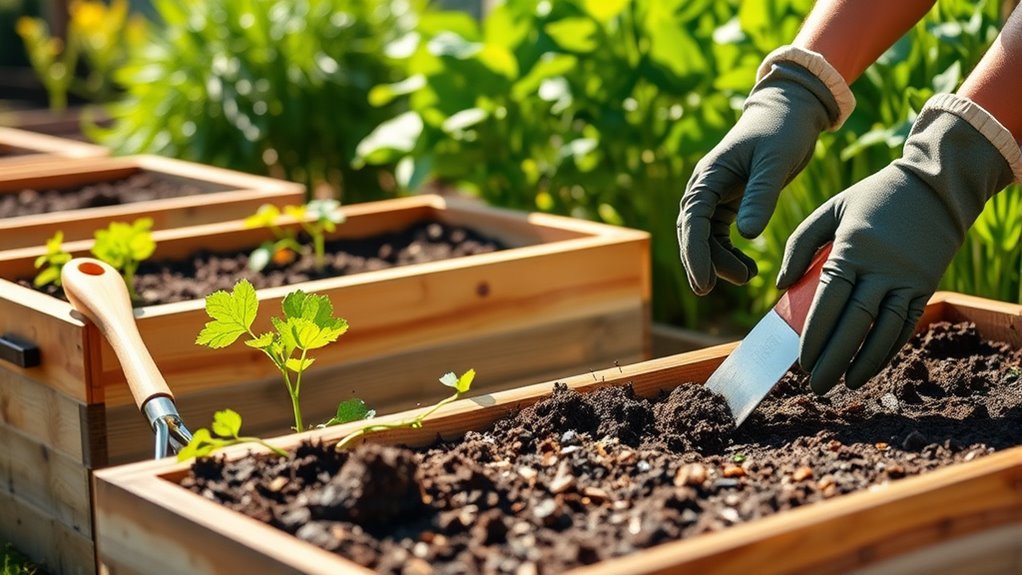
- Adjust garden bed heights to waist level or on stands, minimizing bending and reaching.
- Select well-draining, organic soil mixes with proper nutrients to facilitate easier planting and maintenance.
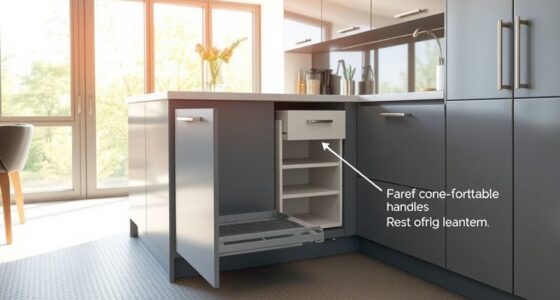
- Organize tools with vertical storage solutions to enhance accessibility and reduce clutter.
- Design gardening spaces with adjustable features and accessible pathways to support inclusive participation.

Accessible gardening transforms outdoor spaces so everyone can enjoy planting and nurturing, regardless of physical ability. When designing a garden that’s inclusive, you focus on making it easier to reach and work with plants, tools, and soil. This involves choosing the right tools, adjusting planting heights, and selecting soil mixes that promote healthy growth while accommodating different needs. Your goal is to remove barriers that might hinder participation, creating a space where everyone feels confident and capable. Start by selecting ergonomic tools. Traditional gardening tools can be heavy and awkward to handle, especially if you have limited grip strength or joint issues. Opt for lightweight, padded, and easy-to-grip tools that reduce strain. Tools with long handles can help you reach plants without bending or stretching excessively, decreasing fatigue and preventing injury. Consider tools with angled heads or curved handles, which make digging, pruning, and planting more comfortable. Having tools that fit well in your hand not only makes gardening easier but also more enjoyable. Adjusting the height of your garden beds is another key factor. Raised beds are ideal because they minimize bending and make planting, weeding, and harvesting more accessible. You can build beds at waist level or use adjustable stands, ensuring that you can work comfortably without putting unnecessary strain on your back or knees. If mobility is limited, consider installing tiered or multiple-level beds, so you can access different sections without overreaching. This customization makes gardening less physically demanding and more inclusive for everyone involved. Soil mixes play a vital role in supporting healthy plant growth, especially in accessible gardens. Using high-quality, well-draining soil ensures plants receive the nutrients and moisture they need without becoming waterlogged. Incorporate organic matter like compost to boost fertility and improve soil structure, which supports root development. When designing your soil mix, consider the specific needs of your plants, such as pH levels and drainage requirements. For accessibility, avoid overly compacted or heavy soils that are difficult to work with, and instead aim for a light, crumbly consistency that’s easy to amend and cultivate. This not only benefits the plants but also makes soil management less physically taxing for you. Additionally, utilizing vertical storage solutions can help keep your gardening tools and supplies organized, reducing clutter and making it easier to find what you need. Incorporating tools, height adjustments, and suitable soil mixes into your gardening plan creates a welcoming environment for all. You’ll find that this approach reduces physical barriers, increases productivity, and enhances your overall gardening experience. Whether you’re planting vegetables, herbs, or flowers, every element should support your ability to work comfortably and efficiently. Accessible gardening isn’t just about physical ease—it’s about fostering a connection to nature that’s open and enjoyable for everyone, regardless of their physical capabilities.
Frequently Asked Questions
What Grants Are Available for Accessible Gardening Projects?
You can find grants for accessible gardening projects through local government programs, nonprofit organizations, and national initiatives like the USDA’s Rural Development grants or the Horticultural Therapy grants. Start by researching community foundations and disability advocacy groups that often support such projects. Applying involves demonstrating how your project promotes inclusivity and benefits the community. Keep an eye on deadlines and prepare detailed proposals to improve your chances of securing funding.
How Do I Choose Ergonomic Gardening Tools?
To select ergonomic gardening tools, prioritize those with lightweight, non-slip handles that fit comfortably in your hand. Look for tools with angled or padded grips to reduce strain. Consider the tool’s length to minimize bending and make sure you can work comfortably. Test different designs to find what feels best for your grip and strength. Investing in adjustable or padded tools can make gardening safer and more enjoyable.
What Are the Best Soil Mixes for Raised Beds?
You should choose a soil mix that balances drainage, fertility, and structure. For example, a common mix is one-third compost, one-third garden soil, and one-third coarse sand or perlite. This blend guarantees nutrients, good aeration, and proper moisture retention. In a raised bed, it prevents compaction and promotes healthy root growth, making your garden more accessible and productive. Adjust the ratios based on your plants’ specific needs.
How Can I Prevent Pests in Accessible Gardens?
You can prevent pests in accessible gardens by keeping the area clean and removing fallen debris regularly. Use row covers or physical barriers to block pests from reaching your plants. Encourage natural predators like ladybugs and praying mantises. Rotate crops each season to disrupt pest cycles. Additionally, avoid overwatering and ensure proper plant spacing to minimize pest attraction. These strategies help maintain a healthy, pest-resistant garden environment.
Are There Specific Plants Suitable for Limited Mobility Gardeners?
Yes, you can grow plants like lettuce, herbs, strawberries, and dwarf fruit trees. These plants are easy to reach and maintain, making them perfect for limited mobility gardeners. Choose compact varieties and plan your garden layout to minimize bending or stretching. Use raised beds, containers, or vertical planting systems to make gardening more accessible and enjoyable. Focus on low-maintenance, high-yield plants to maximize your gardening experience.
Conclusion
Now that you know the essentials—tools, heights, and soil mixes—you’re ready to transform your garden into an accessible paradise. Imagine stepping into a space where every plant, every scent, and every touch feels within reach. But wait—there’s one final detail that could change everything, opening a new level of ease and joy. Are you prepared to discover what it is? Your accessible garden journey is just beginning, and the best is yet to come.