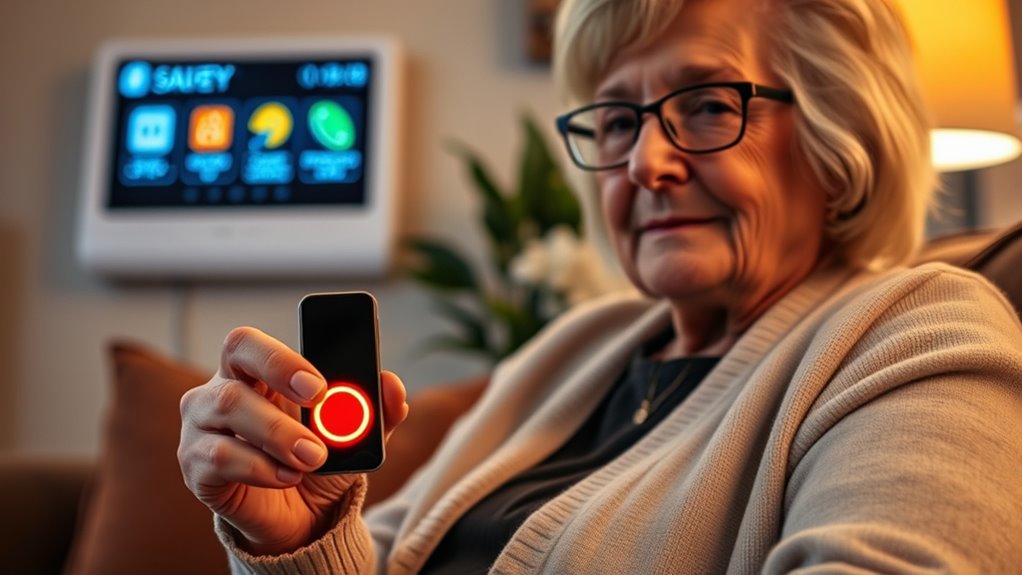

Emergency alert systems are essential for keeping seniors living alone safe by providing immediate help during emergencies, such as falls or health issues. They allow you to activate personal devices, receive medication reminders, and stay connected with caregivers or emergency services, promoting independence and peace of mind. These systems not only support quick responses but also encourage safer habits, helping you stay confident and secure. Keep exploring to discover how these tools can truly transform safety for seniors like you.
Key Takeaways
- Emergency alert systems enable quick notifications to ensure timely assistance during crises for seniors living alone.
- They support fall prevention by activating emergency devices and encouraging safety habits at home.
- These systems send medication reminders, reducing missed doses and promoting better health management.
- They foster independence and peace of mind by facilitating prompt help and regular check-ins from caregivers.
- Overall, emergency alert systems enhance safety, promote safe living habits, and enable swift emergency responses for seniors.

Have you ever wondered how communities quickly warn residents about emergencies? It’s thanks to the power of emergency alert systems—crucial tools that ensure seniors living alone receive timely notifications during crises. These systems use sirens, texts, phone calls, or siren alerts to notify residents immediately, helping them respond quickly and stay safe. But their effectiveness doesn’t just stop at alerting residents; they also play a critical role in promoting safety measures like fall prevention and medication management, which are essential for seniors aiming to maintain independence.
Emergency alert systems keep seniors safe with timely notifications and support vital safety measures like fall prevention and medication management.
When it comes to fall prevention, emergency alert systems serve as a lifeline. Falls are one of the leading causes of injury among seniors, and quick response can mean the difference between a minor mishap and a serious injury. With these systems, if you fall or stumble, you can activate a personal emergency response device or alert system, ensuring help arrives promptly. This rapid response encourages you to take preventive steps seriously, such as removing tripping hazards or installing grab bars, knowing help is just a button press away. The reassurance of immediate assistance can motivate you to maintain safe habits, reducing the risk of falls and their potentially devastating consequences.
Medication management is another critical aspect where emergency alert systems make a difference. Keeping track of medications can be challenging, especially if you’re managing multiple prescriptions. These systems can send reminders to take your medications on time, reducing the risk of missed doses or accidental overdoses. If you experience adverse reactions or forget whether you’ve taken your pills, many alert systems allow you to quickly notify emergency services or a caregiver, ensuring you get assistance when needed. This seamless communication helps you stay on top of your medication schedule and prevents health complications that might arise from errors or omissions. Additionally, medication adherence can be improved through integrated alert features, supporting your overall health management.
Moreover, emergency alert systems foster a sense of independence while providing peace of mind. Knowing that you can summon help instantly encourages you to remain active and engaged in daily activities without fear. They also facilitate regular check-ins from caregivers or family members, who can be alerted immediately if something seems off. By integrating fall prevention strategies and medication management into these alert systems, you create a broad safety net that adapts to your needs and lifestyle. It is also beneficial to incorporate community resources that work in tandem with alert systems to enhance your support network.
In short, emergency alert systems are more than just warning tools—they’re crucial components of a safety strategy that supports your independence and well-being. They help you respond swiftly to emergencies, promote safer living habits, and ensure you get the help you need, when you need it most.
Frequently Asked Questions
How Effective Are Emergency Alert Systems During Power Outages?
During power outages, emergency alert systems can still be effective if they have a reliable battery backup and strong signal strength. You’ll want to make certain your system’s battery is charged and functioning properly so alerts come through without interruption. Signal strength is vital for clear communication, especially in emergencies. Regularly testing your system and maintaining the battery backup helps you stay protected and guarantees you get timely alerts when needed most.
What Is the Cost of Installing an Emergency Alert System?
You might think emergency alert system installation costs are steep, but they vary based on features and providers. Typically, basic systems range from $100 to $300, while advanced setups with monitoring services can cost $500 or more. Investigating financing options, like grants or payment plans, can make installation more affordable. It’s worth exploring these choices to guarantee safety without overextending your budget, giving you peace of mind.
Can Alert Systems Be Customized for Specific Health Conditions?
You can definitely customize alert systems for your specific health conditions. Many systems offer personalized alerts, allowing you to set up notifications tailored to your medical needs. With medical-specific customization, the system can automatically notify caregivers or emergency services if a particular issue arises, giving you peace of mind. This guarantees the system responds promptly to your unique health requirements, making it a crucial safety tool for seniors living alone.
How Long Does It Take for Emergency Responders to Arrive After an Alert?
It’s interesting how response times can vary, isn’t it? When you trigger an alert, responders usually arrive within a few minutes, but it depends on responder availability and your location. Factors like traffic or the time of day might influence how quickly help gets to you. Rest assured, emergency systems are designed to minimize delays, ensuring help arrives as fast as possible to keep you safe.
Are Emergency Alert Systems Compatible With Smart Home Devices?
You might wonder if emergency alert systems work with your smart home devices. Many modern systems offer smart home integration, making device compatibility straightforward. This means your alerts can trigger connected devices like smart lights, locks, or speakers, enhancing safety. Check the specific alert system’s compatibility list to guarantee it works seamlessly with your existing smart home setup, giving you peace of mind during emergencies.
Conclusion
Imagine having a safety net always beneath you, ready to catch you when you stumble. That’s what emergency alert systems do for seniors living alone. One woman’s quick response to her device’s alert turned her from a potential crisis into a story of resilience. With over 90% of seniors feeling safer thanks to these systems, you can rest easy knowing help is just a button away—like a lighthouse guiding you safely through life’s storms.