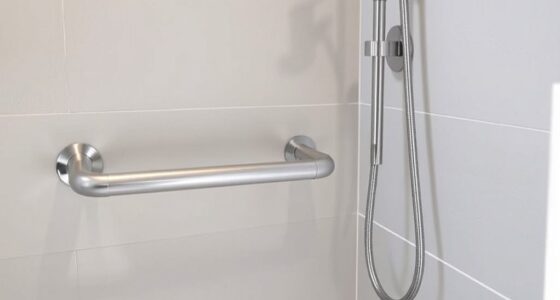
To enhance safety in hallways, you can install grab bars and rails securely into wall studs using heavy-duty hardware. Position them at 33 to 36 inches from the floor where traffic flows, and choose sleek, low-profile designs to save space. Confirm the bars have textured, non-slip surfaces and smooth edges for better grip and safety. Proper lighting also helps visibility. If you want to discover more tips on making hallways safer with grab bars, keep exploring options and best practices.
Key Takeaways
- Install grab bars securely into wall studs with heavy-duty hardware for maximum safety.
- Position grab bars at 33-36 inches from the floor and near doorways for optimal support.
- Ensure proper lighting and non-slip surfaces to improve visibility and grip in hallways.
- Use high-quality, durable materials with smooth finishes to prevent injuries and enhance aesthetics.
- Consult professionals for correct installation, especially in high-traffic or accessible hallway areas.
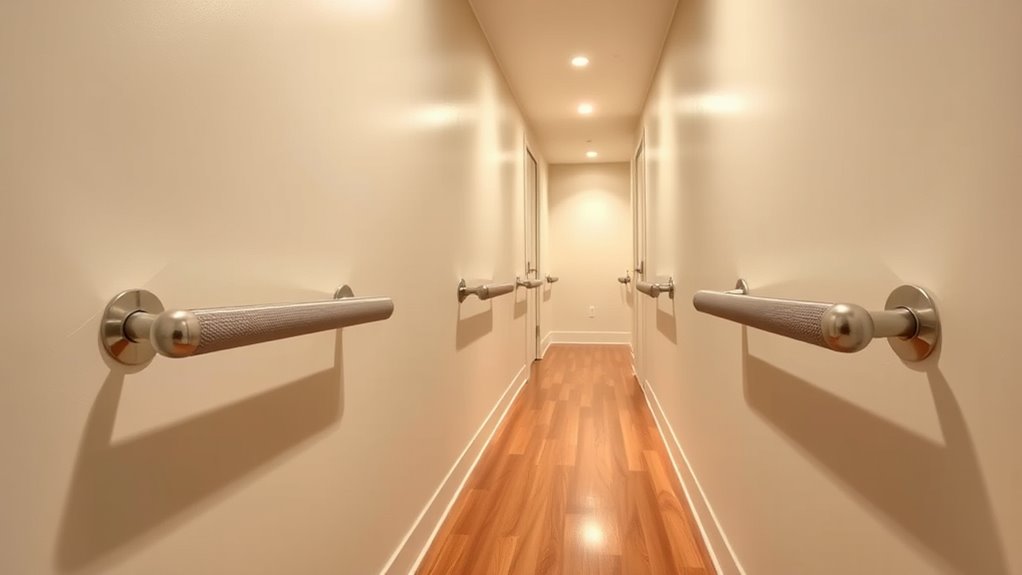
Hallways are often overlooked as safe zones, but installing grab bars and rails can considerably improve accessibility and safety. When you decide to add these features, it’s essential to focus on installation safety. Proper installation ensures that the bars are secure and can support weight without risking failure. You should always use high-quality materials designed for safety and durability. Anchoring grab bars into wall studs is *crucial*, as drywall alone cannot support significant force. Use appropriate hardware, like heavy-duty screws and anchors, to secure them firmly. If you’re unsure about the installation process, consulting a professional can prevent mistakes that might compromise safety later on.
Secure grab bars by anchoring into wall studs with quality hardware for safety and durability.
Design considerations play a *vital* role in making sure grab bars and rails serve their purpose effectively. You want to position them at heights that are accessible for everyone, typically around 33 to 36 inches from the floor. Think about the flow of traffic in your hallway — you’ll want the bars to be placed where they provide the most support, such as near doorways or along longer stretches of wall that may see frequent use. Consider the dimensions of your hallway; if space is limited, opt for sleek, low-profile bars that won’t obstruct movement but still offer reliable support. You also need to choose the right type of grab bar — straight, angled, or curved — based on your specific needs and the layout of your space.
Lighting is another *crucial* aspect of design considerations. Well-lit hallways make it easier to see grab bars clearly and avoid accidents. Bright, even lighting minimizes shadows and enhances visibility, especially for individuals with visual impairments. Keep in mind that the finish of the grab bars matters too; non-slip coatings or textured surfaces can provide additional grip, reducing the risk of slips and falls. If you have children or pets, consider designing with their safety in mind — rounded edges and smooth finishes can prevent injuries. Additionally, anti-slip coatings can further enhance grip and safety in high-traffic or moist areas.
Lastly, aesthetics shouldn’t be neglected. Modern grab bars come in various styles and finishes, allowing you to blend safety features seamlessly into your hallway decor. Whether you prefer a sleek chrome look or a more discreet, color-matched option, choosing a design that complements your interior makes the space feel inviting while remaining functional. By carefully considering installation safety and thoughtful design choices, you create a hallway that’s not only safer but also more accessible and visually appealing.
heavy-duty wall-mounted grab bars
As an affiliate, we earn on qualifying purchases.
As an affiliate, we earn on qualifying purchases.
Frequently Asked Questions
Can Grab Bars Be Installed on Uneven or Textured Hallway Walls?
You can install grab bars on uneven or textured hallway walls, but wall texture often presents installation challenges. You’ll need to find appropriate anchors and guarantee the grab bar is securely attached, which may require extra tools or specialized hardware. Carefully assess the wall’s surface and choose the right mounting method to ensure safety and stability. If unsure, consulting a professional can help you overcome installation challenges effectively.
What Are the Best Materials for Hallway Grab Bars?
Think of hallway grab bars as sturdy bridges in your home. For durability, stainless steel and aluminum are top choices—they resist rust and withstand daily use. If aesthetics matter, consider coated or decorative options in materials like brass or painted steel. These materials blend safety with style, ensuring your hallway remains both functional and attractive. Choose wisely, and you’ll create a reliable, visually pleasing support system that stands the test of time.
How Do I Maintain and Clean Hallway Grab Bars Effectively?
To maintain and clean hallway grab bars effectively, follow simple cleaning techniques like wiping them regularly with a damp cloth and mild soap. Avoid harsh chemicals that can damage the finish. Maintenance tips include checking for loose fittings and tightening them as needed. By keeping grab bars clean and secure, you ensure they remain safe and reliable, providing the support you need whenever you use them.
Are There Different Types of Grab Bars Suitable for Narrow Hallways?
You might think all grab bars are the same, but for narrow hallways, choose specialized options like angled or low-profile bars. Design considerations focus on space efficiency without sacrificing safety, and user preferences matter too—some prefer textured grips or shorter lengths. These types provide better accessibility in tight spaces, ensuring safety without clutter. Always measure carefully and pick grab bars that fit your hallway’s dimensions and your comfort needs.
What Is the Typical Cost of Installing Hallway Grab Bars?
The installation costs for hallway grab bars typically range from $50 to $150 per bar. If you hire a professional, expect to pay more, usually between $100 and $250, because of labor fees. Doing it yourself can save money, often costing only the price of the grab bar itself, usually $20 to $50. Consider your skills and safety to decide whether professional installation or DIY is best for you.
Conclusion
Installing grab bars and rails in hallways can substantially reduce falls and injuries. Did you know that falls are the leading cause of injury among older adults, accounting for about 30% of all injury-related hospitalizations? By adding these safety features, you create a more secure environment that promotes independence and peace of mind. Don’t wait until it’s too late—taking simple steps like this can make a big difference in preventing accidents and ensuring safety at home.