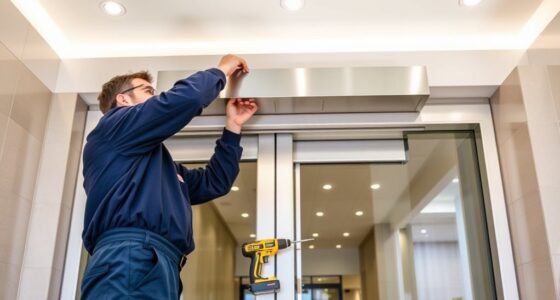

To guarantee safety when installing grab bars and handrails, securely anchor them into wall studs or use appropriate wet-area anchors. Position grab bars 33-36 inches from the floor and extend them fully along tubs, showers, and staircases. Install handrails at 34-38 inches on both sides of stairs and keep fixtures at accessible heights. Regularly check and maintain fixtures for continued safety. Discover more tips to create a safer home environment with proper support placements.
Key Takeaways
- Install grab bars and handrails securely into wall studs or use appropriate anchors, especially in wet areas.
- Position support fixtures at accessible heights, typically 33-36 inches from the floor or stair tread.
- Extend supports the full length of staircases and ensure consistent placement for safety.
- Use corrosion-resistant metal fixtures suitable for humid environments and regularly check for stability.
- Incorporate proper lighting and non-slip surfaces to enhance safety around installed support features.
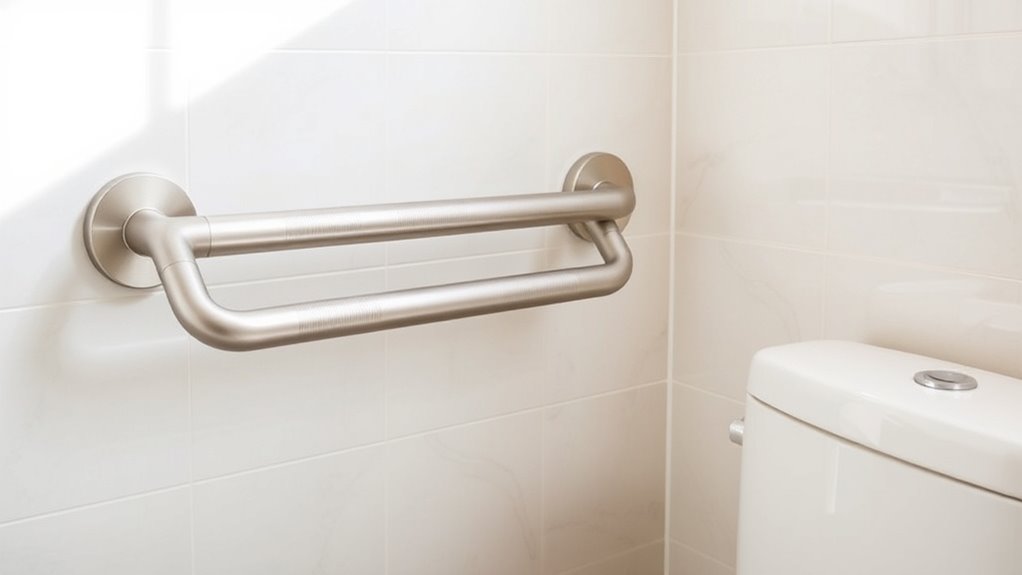
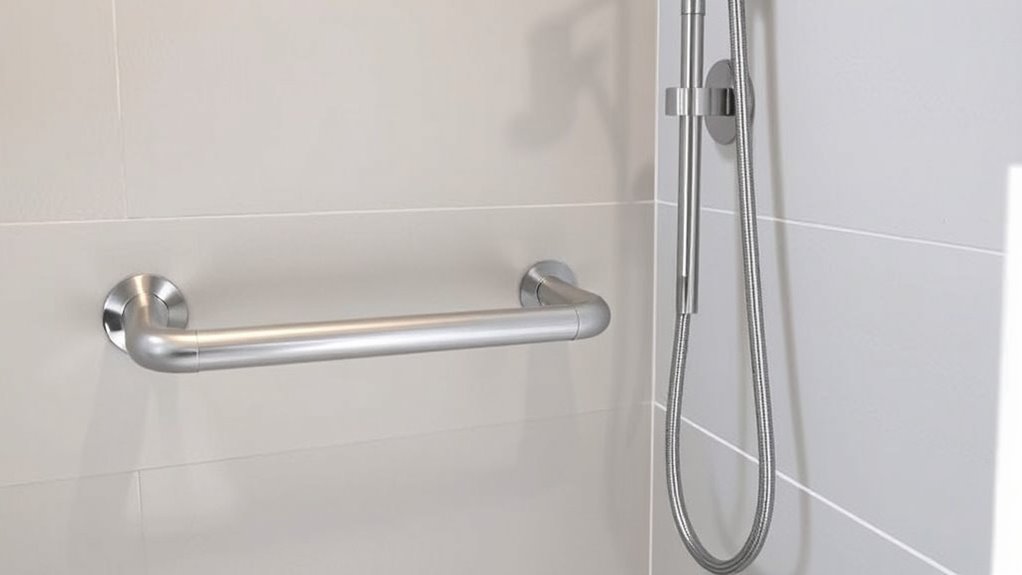
Installing grab bars and handrails is a practical way to enhance safety and independence in your home. Whether you’re aging in place, recovering from an injury, or just want to prevent accidents, these fixtures provide essential support. One of the most important areas for such safety measures is the bathroom, where slips and falls are common. Bathroom safety is paramount because wet surfaces, tubs, and showers create hazards that can lead to serious injuries. Installing sturdy grab bars near the toilet, inside the shower, and next to the bathtub gives you something reliable to hold onto, reducing the risk of slipping. Make sure they are securely anchored into wall studs or use appropriate anchors designed for wet areas. Position the bars at a comfortable height—generally about 33 to 36 inches from the floor—and ensure they can support your weight when needed. Metal, corrosion-resistant grab bars are ideal for durability and safety in humid environments.
Support on staircases is equally essential for maintaining mobility and preventing falls. Staircase support isn’t just about aesthetics; it’s about creating a safe environment. Installing handrails on both sides of the staircase offers a steady grip for ascending and descending. You should position handrails at a height of about 34 to 38 inches from the stair tread, making them accessible for most users. Extend the handrail the full length of the staircase, including at the top and bottom, to provide continuous support. Consider adding non-slip stair treads along with the handrails to improve traction, especially if you or visitors have mobility challenges. Proper lighting combined with sturdy support helps you navigate stairs confidently, minimizing missteps. Additionally, research shows that security features like well-placed support fixtures can significantly reduce the risk of falls and injuries in the home. Incorporating support features with appropriate design and placement ensures a safer environment for all household members. Regular checks and maintenance of these fixtures will also keep them functioning effectively over time. Remember that home safety awareness can make a meaningful difference in preventing accidents. Using proper installation methods ensures these fixtures provide maximum safety and durability, further protecting your loved ones.
Frequently Asked Questions
Are There Different Types of Grab Bars for Specific Rooms?
You might wonder if different rooms need specific grab bars. Yes, various rooms require tailored solutions to enhance bathroom safety or support kitchen assistive devices. For example, in bathrooms, you’ll find sturdy, corrosion-resistant bars designed for showers or toilets, while kitchens may need bars that help with stability near counters. Choosing the right type guarantees safety and functionality, making each space more accessible and secure for everyone.
How Do I Choose the Right Height for Handrails?
When choosing the right height for your handrails, consider ergonomic positioning to guarantee safety and comfort. You want the handrail height to align with your natural grip, typically around 34 to 38 inches from the floor. This height allows for easy grasping, reduces strain, and provides stability. Measure your own reach and test different heights to find the most secure and comfortable position, enhancing safety in every room.
Can I Install Grab Bars Myself or Need a Professional?
You might be tempted to try DIY installation for grab bars, but professional assistance guarantees they’re securely and correctly installed, especially in critical safety areas like bathrooms. While some handy homeowners can handle simple tasks, consulting a professional guarantees proper placement and adherence to safety guidelines. This way, you avoid potential accidents and ensure your grab bars provide the safety you need. When in doubt, always opt for professional help.
What Materials Are Best for Longevity and Safety?
When choosing materials for grab bars and handrails, you want something with excellent material durability that withstands daily use without deteriorating. Look for options with slip-resistant surfaces to ensure safety, especially in wet areas. Stainless steel is a top choice because of its strength and corrosion resistance. Alternatively, textured plastic or composite materials can also provide slip resistance and durability. Prioritize these features for long-lasting, safe installations.
Are There Design Options That Blend With Home Decor?
You can choose grab bars and handrails that blend seamlessly with your home decor by exploring decorative finishes and color coordination options. Many designs come in sleek, stylish finishes like brushed nickel, matte black, or even wood tones, so they don’t stand out but complement your existing decor. Consider matching the color of the handrails with nearby fixtures or accents, ensuring safety doesn’t compromise your aesthetic.
Conclusion
Installing grab bars and handrails truly enhances safety and independence in your home. Some believe that these fixtures are only for the elderly or disabled, but in reality, they benefit everyone by preventing falls and injuries. Think about it—adding support can give you peace of mind and protect your loved ones. Don’t wait until an accident happens; take the proactive step today and make your home a safer, more confident space for all.