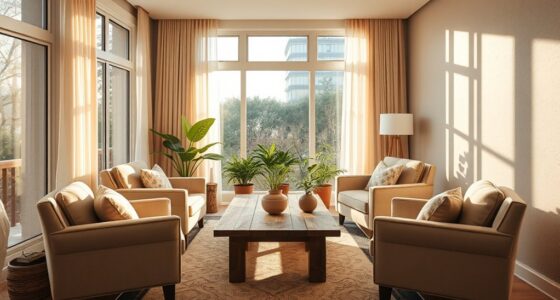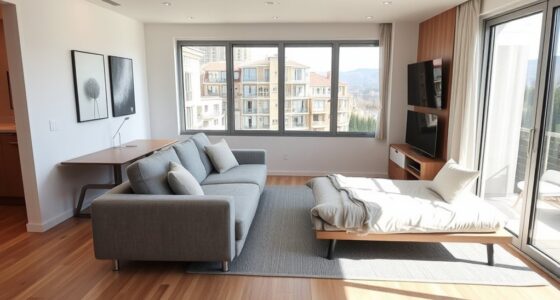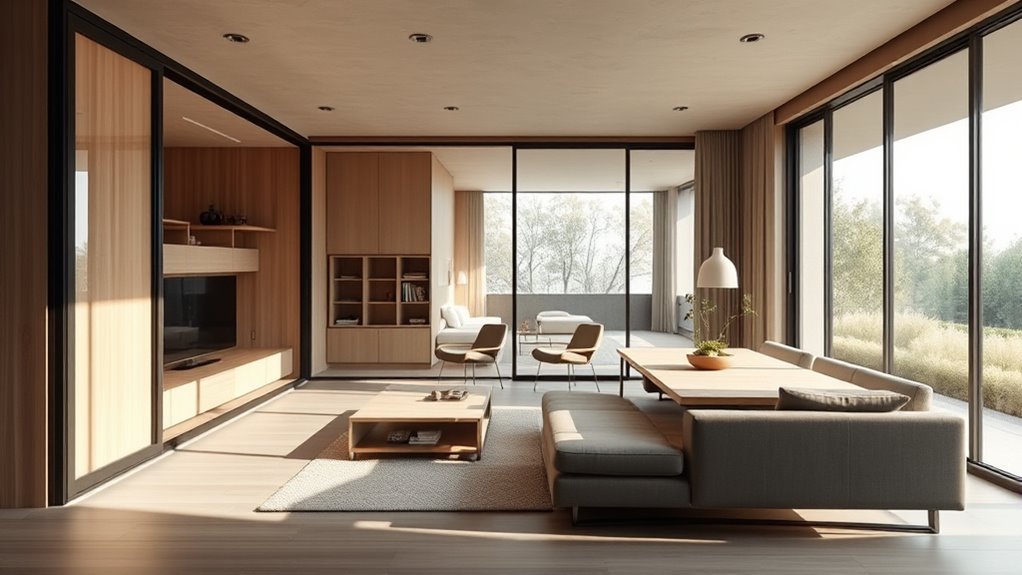

When designing homes with flexible features, you should incorporate multi-purpose spaces, adaptable furniture, and smart storage solutions to maximize functionality. Think about creating areas that can easily transform into home offices, guest rooms, or relaxation spots with fold-away desks, extendable tables, and built-in storage. This approach helps your home grow with your needs while maintaining style. If you keep exploring, you’ll discover how to craft a versatile, practical living environment that truly adapts to your lifestyle.
Key Takeaways
- Incorporate multi-purpose furniture like fold-away beds and extendable tables for adaptable living spaces.
- Utilize built-in storage solutions to maintain organization while supporting flexible room functions.
- Design rooms with movable partitions or sliding doors to easily reconfigure space layouts.
- Choose versatile design elements that can transform, such as wall-mounted desks or stackable seating.
- Plan for future needs by creating adaptable layouts that evolve with changing lifestyle requirements.
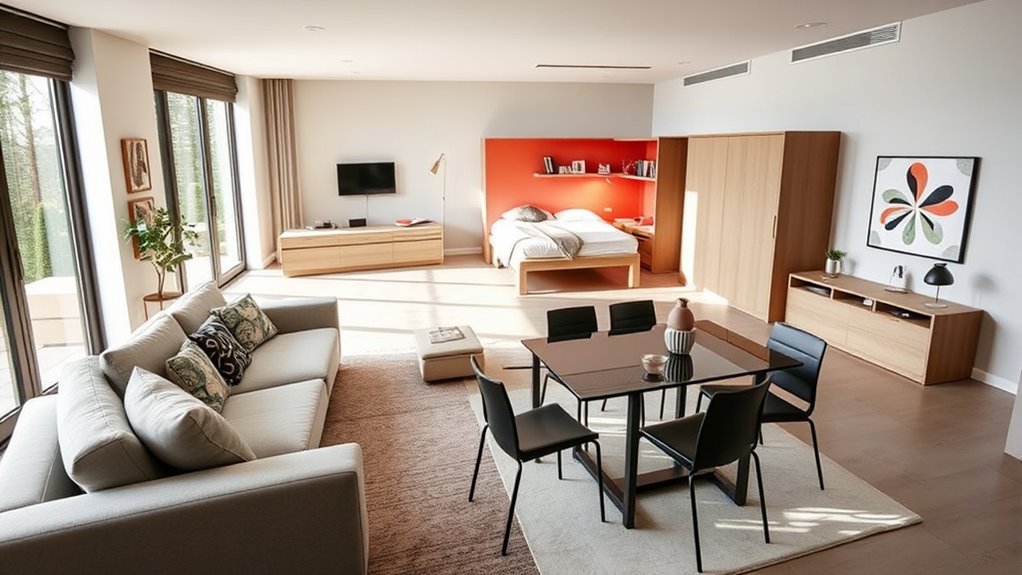
Creating a home that adapts to your changing needs starts with smart, flexible design features. When you prioritize versatility, you can transform your living space into whatever you require—whether it’s a home office, a guest room, or a cozy spot for relaxation. Multi purpose spaces are the backbone of flexible design because they maximize functionality without sacrificing style. Instead of dedicating a single room to one purpose, you design areas that can serve multiple functions, depending on the moment. For example, a living room can double as a workspace when you add a fold-away desk or a wall-mounted table. This approach allows you to make the most of limited space while keeping your home uncluttered and adaptable.
Flexible design turns one space into multiple, stylishly adapting to your changing needs.
To make these multi purpose spaces truly work for you, adaptable furniture plays a vital role. Pieces like fold-out beds, extendable dining tables, and stackable chairs enable you to switch from one use to another effortlessly. When you don’t need a guest bed, it folds away neatly, freeing up space for daily activities. During work hours, a desk can be pulled out or converted from a side table, allowing your living room to function as an office seamlessly. The key is choosing furniture that’s both stylish and flexible, so it integrates seamlessly into your home’s design while offering practical solutions. Look for items that can be easily moved, folded, or expanded, giving you the freedom to customize your environment on the fly.
Planning for adaptable furniture also means thinking about storage. When your furniture can serve multiple purposes, you’ll want solutions that keep clutter at bay. Incorporate built-in storage compartments into beds, couches, or ottomans, so you can stow away essentials without sacrificing space or aesthetic appeal. This way, your home remains organized even as its functions change. Additionally, consider adjustable shelving and modular units that can be reconfigured as your needs evolve. This flexibility ensures your home remains functional, comfortable, and visually appealing no matter how your lifestyle shifts. Understanding the importance of versatility helps guide your design choices toward more adaptable and efficient living spaces.
Ultimately, designing with multi purpose spaces and adaptable furniture isn’t just about saving space; it’s about creating a home that grows with you. It offers the freedom to change your environment without costly renovations or cluttered rooms. When you think ahead and choose versatile elements, you set the stage for a living space that’s truly yours—dynamic, practical, and stylish. By incorporating these flexible features, you build a home that responds to your changing life, making everyday living more convenient and enjoyable.

Momcozy Universal Stroller Organizer with Insulated Cup Holder
- Structured Organizer with Multiple Pockets: Internal multi-functional partition design
- Insulated Cup Holders: Includes 2 insulated cup holders
- Large Capacity Storage: Fits essentials like phone, wallet, and more
As an affiliate, we earn on qualifying purchases.
Frequently Asked Questions
How Much Does Incorporating Flexible Features Increase Construction Costs?
Incorporating flexible features can increase construction costs by about 5-15%, depending on the complexity and materials used. You should consider the cost implications early on and include them in your budget planning to avoid surprises. While flexible features may raise your initial expenses, they add long-term value and adaptability to your home, making it more functional for future needs without markedly impacting your overall budget.
What Are the Best Materials for Adaptable Interior Walls?
Think of adaptable interior walls as the backbone of your home’s flexibility. You should choose modular panels, which are easy to install and reconfigure, making your space versatile. For areas needing privacy or noise control, soundproof walls are essential. These materials give you the freedom to customize your home’s layout over time, ensuring your space evolves with your needs without sacrificing comfort or functionality.
How Can Flexible Design Accommodate Aging Homeowners?
You can accommodate aging homeowners by incorporating flexible design features that promote universal accessibility and support multi-generational living. Install wider doorways, lever-style handles, and barrier-free showers to guarantee easy mobility. Use adaptable spaces that can serve multiple functions, like a bedroom that doubles as a home office. These features create a safe, comfortable environment, allowing aging homeowners to live independently while seamlessly integrating with other generations in the household.
Are There Specific Building Codes for Flexible Home Features?
Imagine opening a door to your flexible home, knowing it meets every regulation. Yes, there are specific building codes for flexible features, ensuring safety and accessibility. You must adhere to building code compliance and zoning regulations, which vary by location. These codes guarantee your adaptable spaces remain functional and legal, guiding you in designing features like movable walls or accessible layouts without risking violations or safety issues.
How Long Does It Take to Implement Flexible Design Elements?
Implementing flexible design elements typically takes about as long as your overall construction timeline, often adding a few weeks to a few months. It depends on your design planning process and how complex the features are. You’ll want to collaborate closely with your architect and builder to make certain of seamless integration. Starting early with detailed planning helps avoid delays, so factor in extra time for adjustments and inspections.
Conclusion
Just like a chameleon adapts to its surroundings, your home with flexible features can transform to meet your changing needs. Think of it as a garden that blooms differently with each season, offering new beauty and purpose. By designing with versatility in mind, you create a space that’s not just a house, but a living, breathing environment that evolves with you. Embrace this approach, and watch your home become a canvas for endless possibilities.