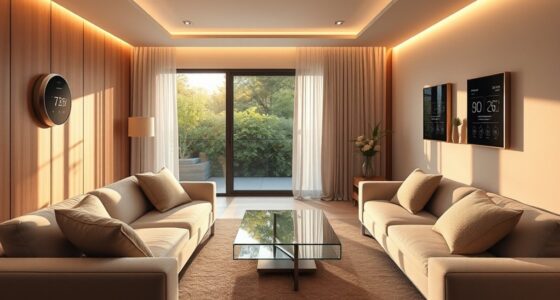

To design homes with multi-functional rooms, focus on flexible layouts and space-saving furniture that can serve multiple purposes. Use fold-away beds, wall-mounted desks, or modular sofas to maximize space and easily adapt the room for work, relaxation, or entertaining. Layer lighting and incorporate mirrors to enhance openness. Smartly arranging furniture, adding movable partitions, and planning vertical storage help create versatile environments. Keep exploring options to transform your space effortlessly and create a home that evolves with your needs.
Key Takeaways
- Incorporate space-saving, versatile furniture that serves multiple functions to maximize room utility.
- Use flexible layouts with movable partitions and zones defined by rugs and lighting for adaptability.
- Enhance visual space with layered lighting, mirrors, and uncluttered designs to create an open, dynamic environment.
- Apply adaptive design principles that allow quick transformation of the space for various activities.
- Prioritize thoughtful planning to create multi-functional rooms that evolve with changing needs and lifestyles.
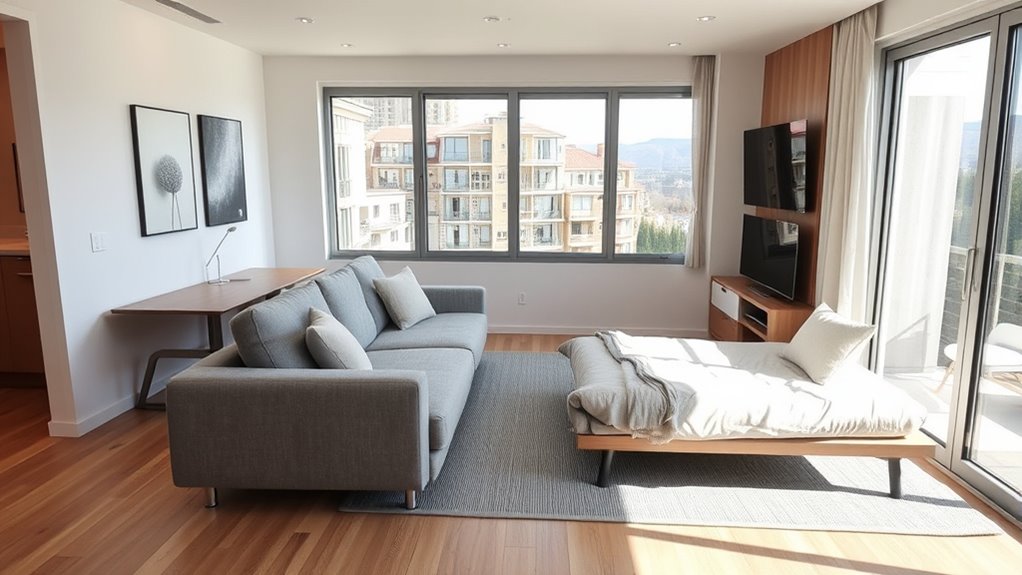
In today’s versatile living spaces, designing homes with multi-functional rooms has become essential for maximizing space and adapting to changing needs. You want rooms that serve multiple purposes without feeling cluttered or cramped. To achieve this, you should focus on incorporating space-saving furniture that allows you to utilize every inch efficiently. Think about fold-away beds, wall-mounted desks, or modular sofas that can be reconfigured easily. These pieces help create a seamless flow between different functions, making your space feel open and adaptable. When selecting furniture, prioritize items that can serve dual purposes—such as a storage ottoman that doubles as seating and a place to stow away clutter. This approach reduces the need for additional furniture pieces, freeing up space for other activities.
Maximize space with multi-functional furniture like fold-away beds and wall-mounted desks for versatile, clutter-free living.
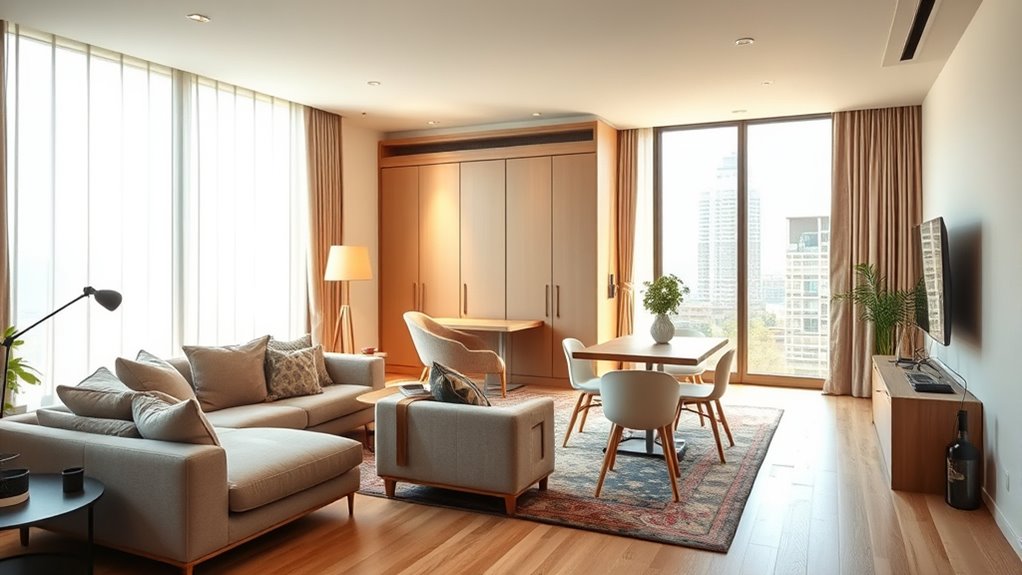
Flexible layouts are key to designing multi-functional rooms. You want to arrange your furniture in a way that allows for quick transformation from one use to another. For example, consider placing your sofa against a wall or in a corner, leaving open space in the middle for a foldable dining table or a workspace. Use rugs and lighting to define separate zones within the same room, helping to visually distinguish areas designated for work, relaxation, or entertaining. Movable partitions or screens are also practical, allowing you to divide the space when needed or open it up for larger gatherings. The goal is to create a room that adapts effortlessly as your needs change, whether you’re working from home, hosting guests, or relaxing. Incorporating adaptive design principles ensures your space remains functional and stylish over time.
Lighting plays a pivotal role in enhancing the flexibility of these rooms. Incorporate layered lighting—ambient, task, and accent—to suit different activities. Dimmer switches are a smart addition, enabling you to adjust the mood and functionality of the space easily. Mirrors can also make a room feel larger and brighter, adding to the sense of openness. When planning your layout, think vertically as well as horizontally. Wall-mounted storage, shelves, and fold-down desks help keep the floor free and maintain a clean, uncluttered look. By combining space-saving furniture with flexible layouts, you turn a single room into a versatile hub that can serve many purposes without sacrificing comfort or style.
Ultimately, designing multi-functional rooms requires thoughtful planning and a focus on adaptability. With the right furniture choices and layout strategies, you can create a home that evolves alongside your lifestyle. Your space becomes more than just a collection of rooms—it transforms into a dynamic environment that meets your needs today and can easily adjust for tomorrow.
Frequently Asked Questions
How Do I Maximize Space in Small Multi-Functional Rooms?
To maximize space in small multi-functional rooms, choose space-saving furniture that can be easily stored or folded away. Opt for flexible room layouts that allow you to quickly switch between functions, like a sofa bed or fold-out desk. Keep the room organized with smart storage solutions, and use light colors to make the space feel larger. These strategies help you make the most of limited space without sacrificing functionality.
What Are the Best Furniture Options for Versatile Rooms?
You’ll love the irony of choosing versatile furniture for your tiny space—like convertible sofas that turn into beds or extend for extra seating. Modular shelving is your secret weapon, easily reconfigured for storage or display, making your room adapt to any need. These options maximize functionality without sacrificing style, proving that smart furniture choices truly make your multi-functional room a flexible, enjoyable space.
How Can I Ensure Privacy in Multi-Purpose Spaces?
To guarantee privacy in multi-purpose spaces, you can install soundproof barriers like acoustic panels or heavy curtains to block noise. Use visual privacy solutions such as folding screens, sliding doors, or bookshelves to create separate zones. These options help you maintain tranquility and discretion, allowing each area to serve its purpose without disturbances or unwanted visibility, making your versatile room both functional and private.
What Lighting Solutions Work Best for Multi-Functional Rooms?
Wondering how to light a multi-functional room effectively? You should combine lighting layers like task, ambient, and accent lighting to suit different activities. Opt for energy-efficient LED fixtures to save power without sacrificing brightness. Use dimmers to adjust the mood and create zones for various purposes. This flexible approach guarantees your space remains functional, comfortable, and energy-efficient, no matter what you’re doing.
How Do I Organize Storage in a Multi-Use Room?
To organize storage in a multi-use room, you should incorporate decorative accents like stylish baskets and shelving units that blend seamlessly with your color schemes. Use multifunctional furniture, such as ottomans with hidden compartments, and keep clutter at bay by assigning specific zones for each activity. This approach keeps your space tidy, visually appealing, and adaptable for various functions, making your room both functional and inviting.
Conclusion
Think of your home as a versatile garden, where each room is a different plant thriving in harmony. By designing multi-functional spaces, you create a lush landscape that adapts to your needs, whether you’re working, relaxing, or entertaining. Just as a garden blooms in many forms, your home becomes a vibrant sanctuary that evolves with you. Embrace this flexibility, and watch your space flourish into a beautiful, dynamic haven.