When using a commercial-style refrigerator at home, you need a different airflow strategy to prevent uneven cooling and frost buildup. Make sure you keep vents clear of clutter and avoid overpacking shelves near cooling components. Arrange items carefully to maintain open airflow pathways, and regularly clean vents and fans. Proper organization and maintenance help keep the compressor working efficiently and extend your fridge’s lifespan. Keep going to learn how to optimize your fridge’s airflow for the best results.

Turn the school run and nap time into listening time
- Thousands of audiobooks, podcasts and originals
- Listen on your phone, tablet or Echo — also offline
- Cancel anytime
Key Takeaways
- Home environments typically have fewer compartments, requiring tailored vent placement and airflow pathways.
- Smaller space constraints necessitate more frequent vent and filter cleaning to maintain circulation.
- Overpacking at home can block vents; proper organization ensures efficient airflow.
- Different ambient temperatures at home impact cooling needs, requiring adjusted airflow management.
- Customized airflow strategies help prevent frost buildup and energy waste in residential commercial-style refrigerators.
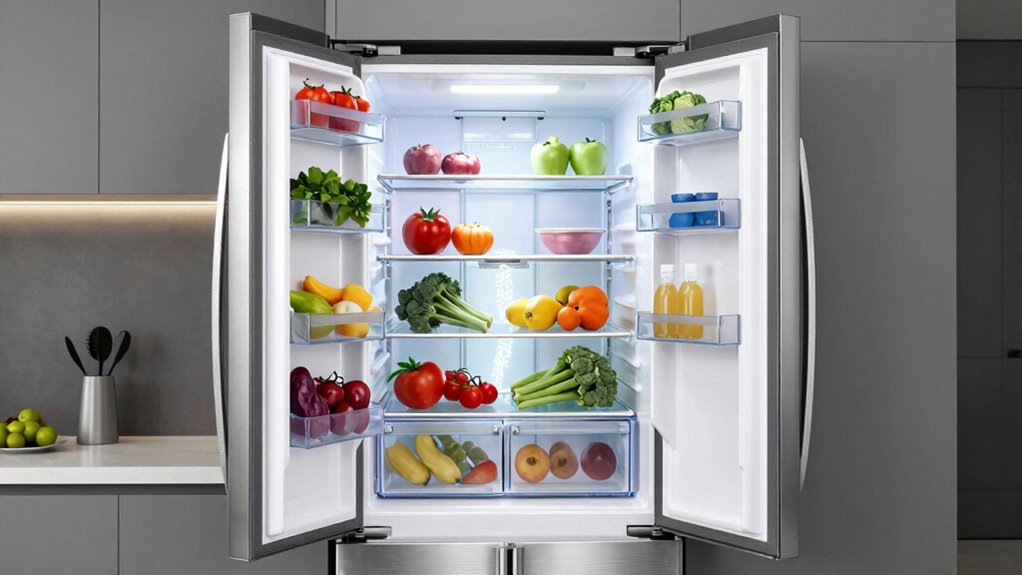
A well-designed airflow strategy is crucial for keeping your refrigerator efficient and your food fresh. When you have a commercial-style refrigerator at home, this becomes even more critical because these units are built differently from standard models. They often feature larger capacities, more complex cooling systems, and specialized airflow pathways. To maintain peak performance, you need to pay close attention to how air moves inside the unit. Proper airflow ensures the evaporator efficiency stays high, which directly impacts how well your fridge cools and conserves energy. Without good airflow, cold air can become unevenly distributed, leading to hot spots, uneven temperatures, and increased energy consumption.
One of the main challenges with commercial-style refrigerators is preventing airflow obstructions. These large units often have multiple compartments, shelves, and accessories that can inadvertently block airflow pathways. If you place bulky items in front of vents or too many items on certain shelves, you risk disrupting the circulation of cold air. When airflow gets obstructed, the evaporator struggles to maintain consistent temperatures, which can cause the compressor to work harder. Over time, this reduces the evaporator efficiency and can lead to premature wear and higher utility bills. To avoid this, you should regularly check for and clear any items or debris blocking vents and ensure that airflow pathways are open and unobstructed. Additionally, understanding the role of airflow management can help optimize refrigerator performance and longevity. Implementing proper airflow strategies can also enhance energy efficiency, leading to lower utility costs and a more sustainable operation. Proper air circulation is essential for maintaining optimal cooling and preventing frost buildup that can impair performance.
Another crucial aspect of an effective airflow strategy is arranging your items thoughtfully. Keep the air vents free from clutter and avoid overpacking shelves, especially near the evaporator coils and fans. Proper spacing allows cold air to circulate evenly, preventing hot spots and ensuring all parts of the refrigerator stay within the desired temperature range. You should also consider the placement of thicker, less cold-sensitive items away from vents to facilitate better airflow around the unit. Regularly cleaning the interior, especially the vents and fans, helps prevent dust and debris from reducing airflow efficiency. When airflow operates smoothly and without obstructions, your commercial-style refrigerator can maintain peak evaporator efficiency, which benefits both performance and energy savings. Maintaining good airflow also helps prevent frost buildup, which can impair cooling and increase energy use.
Lastly, remember that temperature settings and internal organization play a role in airflow quality. Keeping temperatures at recommended levels prevents overworking the compressor and ensures consistent cooling. By maintaining a neat, well-organized fridge and paying attention to airflow pathways, you enhance your unit’s performance. Proper airflow management isn’t just about convenience—it directly affects how long your refrigerator lasts, how efficiently it runs, and how fresh your food remains. With these strategies, your commercial-style refrigerator can operate at its best, no matter how much you load or how often you access it. Additionally, understanding the importance of biodiversity in sustainable practices can inspire eco-friendly choices even in appliance maintenance.
commercial refrigerator vent cleaning kit
As an affiliate, we earn on qualifying purchases.
As an affiliate, we earn on qualifying purchases.
Frequently Asked Questions
How Does Airflow Impact Food Preservation in Home Refrigerators?
Airflow directly impacts food preservation in your home refrigerator by maintaining consistent temperature stability and preventing hot spots. Proper air circulation ensures cool air reaches all areas evenly, slowing bacterial growth and keeping your food fresher longer. If airflow is restricted or uneven, some items may spoil faster. You should regularly check vents and avoid overcrowding to promote ideal airflow, helping your fridge preserve food effectively.
Can Improper Airflow Cause Appliance Noise or Vibrations?
Improper airflow can definitely cause your refrigerator to make noise or vibrate unexpectedly. When airflow is blocked or uneven, it forces the compressor and fans to work harder, increasing vibrations and noise. To reduce these issues, focus on noise reduction and vibration control by ensuring vents are clear and fans are unobstructed. Proper airflow keeps your appliance running smoothly, quietly, and efficiently, preventing unnecessary disturbances in your home.
Are There Specific Airflow Features to Look for in Home Models?
Look for home models with optimized airflow design and enhanced ventilation efficiency. Features like adjustable vents, multiple airflow pathways, and strategically placed fans help maintain consistent temperatures and reduce noise. Good airflow design guarantees even cooling and prevents hot spots. Ventilation efficiency directly impacts energy use and appliance longevity. Choosing a refrigerator with these features ensures your appliance operates quietly, stays efficient, and keeps your food fresh longer.
How Often Should I Clean or Maintain Airflow Vents?
Think of your fridge’s airflow vents as the lungs of your appliance. You should clean the vents every 3 to 6 months to keep airflow smooth, preventing strain on the system. Regular air filter maintenance is essential to prevent dust buildup, which hampers efficiency. By staying on top of vent cleaning frequency, you guarantee your fridge breathes easily, stays cool, and runs efficiently for years to come.
Do Airflow Strategies Differ Between Side-By-Side and Top-Freezer Models?
Yes, airflow strategies differ between side-by-side and top-freezer models. Side-by-side refrigerators focus on even airflow distribution to prevent warm spots, enhancing cooling efficiency. Top-freezer models often prioritize vertical airflow paths to cool the freezer and fridge sections effectively. Understanding these differences helps you optimize airflow design, ensuring your refrigerator maintains consistent temperatures and improves overall cooling efficiency. Proper airflow management can extend appliance life and reduce energy consumption.
Conclusion
To keep your home refrigerator running smoothly, think of airflow as its lifeblood, quietly whispering through every corner like a gentle breeze. Just as a skilled conductor guides an orchestra, guarantee your vents are unobstructed and airflow is balanced. Remember, a well-strategized airflow isn’t just about keeping things cool; it’s about creating a harmonious environment where your food stays fresh and your appliance performs at its best—like a gust of fresh air in your kitchen’s symphony.
Fall Picks
fall essentials
As an affiliate, we earn on qualifying purchases.