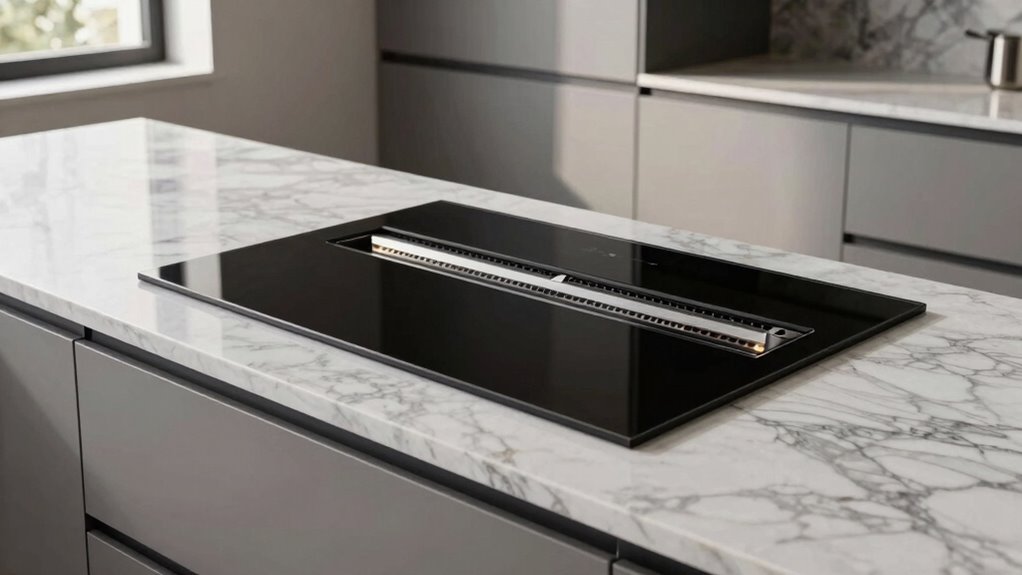
Integrated downdraft cooktops fix the clutter and bulk of traditional range hoods, giving your kitchen a sleek, modern look. However, they create new challenges, like less effective ventilation and longer-lasting odors, especially if not installed properly. Their performance can vary, and maintenance might be more demanding. If you’re curious about how to overcome these issues and get the best results, there’s more to evaluate.

Turn the school run and nap time into listening time
- Thousands of audiobooks, podcasts and originals
- Listen on your phone, tablet or Echo — also offline
- Cancel anytime
Key Takeaways
- Downdraft cooktops effectively remove smoke and odors but often struggle with capturing fumes quickly, leading to lingering smells.
- They eliminate the need for overhead hoods, creating a sleek, minimalist aesthetic but complicate installation and ductwork.
- Installation requires precise modifications, increasing costs and potential structural issues in the kitchen.
- Ventilation efficiency is typically lower than traditional hoods, especially during high-heat or frying cooking.
- Maintenance can be more challenging, and poor performance may negatively impact long-term indoor air quality.
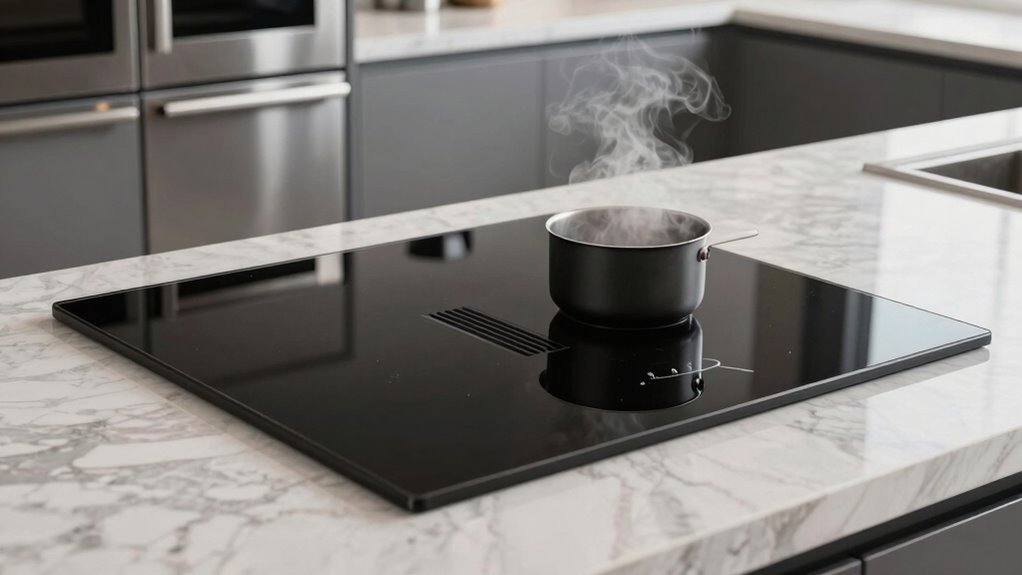
Integrated downdraft cooktops have gained popularity because they eliminate the need for a traditional range hood, providing a sleek and seamless look in your kitchen. Without the bulky overhead vent, your space feels more open and modern. However, while they seem like a perfect solution for a clean aesthetic, these cooktops introduce some ventilation challenges. Unlike over-the-range hoods that efficiently direct smoke and odors upward, downdraft systems pull air downward through built-in vents. This setup can struggle with capturing smoke, steam, and cooking odors effectively, especially if your kitchen layout isn’t ideal. You may find that strong cooking smells linger longer or that smoke isn’t vented as quickly as you’d like, forcing you to open windows or rely on additional ventilation measures.
Integrated downdraft cooktops offer a sleek look but may struggle with effective ventilation and air quality.
Beyond ventilation issues, installation complexities can become a significant hurdle. These units often require precise integration with your countertop and cabinetry, which demands careful planning and sometimes custom modifications. Unlike traditional hoods that mount directly above the stove, downdraft systems need to be installed flush with the surface, and this can involve complex cutouts and specialized mounting brackets. If you’re not experienced with such installations, you might find yourself facing unexpected challenges, like aligning the unit properly or ensuring that the venting system connects seamlessly to existing ductwork. Incorrect installation can lead to reduced efficiency, increased noise, or even damage to your cabinetry.
Furthermore, the installation process can be more expensive and time-consuming than you anticipate. It often involves working with contractors who understand the nuances of integrating these systems into your kitchen design. You may also need to consider additional structural modifications, especially if your countertop material isn’t compatible or if existing ductwork isn’t positioned conveniently. This can add to both your cost and the timeline of your kitchen upgrade. Additionally, the ventilation efficiency of downdraft systems is generally lower compared to traditional hoods, which can impact air quality over time. It’s also worth noting that airflow performance can vary significantly between models, making thorough research essential before purchase. Moreover, the cost of installation can be higher due to the custom work involved, which is an important factor to consider in your overall budget.
Another consideration is that maintenance requirements for downdraft systems may be more demanding, as cleaning and servicing the vents can be trickier in a concealed setup. Despite their sleek appearance, integrated downdraft cooktops might not be the best fit for every home. If your cooking habits involve high heat or frequent frying, the ventilation challenges can become more pronounced, and you might need supplemental exhaust systems. Additionally, the installation complexities mean you should weigh the long-term benefits against the upfront effort and expense. While these cooktops do deliver a minimalist look, they come with trade-offs that could impact your kitchen’s air quality and your renovation project’s overall success.
integrated downdraft cooktop with best ventilation
As an affiliate, we earn on qualifying purchases.
As an affiliate, we earn on qualifying purchases.
Frequently Asked Questions
Are Integrated Downdraft Cooktops Suitable for Small Kitchens?
Integrated downdraft cooktops can be suitable for small kitchens, especially if space constraints limit traditional ventilation options. They save counter space and offer a sleek, modern look, enhancing aesthetic appeal. However, keep in mind that some models may have less powerful extraction, which could impact performance. If you prioritize a clean, streamlined design and your cooking needs are moderate, these cooktops can be a smart choice for compact kitchens.
How Energy-Efficient Are Downdraft Cooktops Compared to Traditional Hoods?
Downdraft cooktops are generally less energy-efficient than traditional hoods because they rely on internal fans that use more power to extract smoke and odors directly from the cooktop. When considering energy comparison, traditional hoods often consume less energy while providing effective ventilation. From an environmental impact perspective, downdraft systems may have a higher footprint due to increased energy use, though their integrated design can reduce overall kitchen clutter.
What Are the Maintenance Requirements for Integrated Downdraft Systems?
You’ll need to regularly clean the filter to keep your integrated downdraft system working efficiently, which also helps extend motor longevity. Check the filters periodically for grease buildup and replace or wash them as recommended by the manufacturer. Keeping the motor in good shape involves inspecting it for dust or debris and ensuring all vents are clear. Consistent maintenance prevents breakdowns and maintains peak performance.
Can Downdraft Cooktops Be Installed in Existing Countertops?
Yes, you can install downdraft cooktops in existing countertops, but you must consider countertop durability and installation challenges. Guarantee your countertop is sturdy enough to support the unit, especially if it’s made of delicate materials. You may face installation challenges like cutting precise openings and accommodating ventilation ductwork. Hiring a professional can help avoid damage and ensure a secure fit, making the process smoother and safer.
Do Downdraft Cooktops Affect Overall Kitchen Ventilation?
Yes, downdraft cooktops can affect your overall kitchen ventilation. They often improve airflow efficiency by pulling smoke and odors downward, but if not properly designed or maintained, they might compromise air quality. You need to guarantee the vent system is powerful enough to handle your cooking volume. When installed correctly, downdraft cooktops can enhance ventilation, but poor setup can lead to stagnant air and reduced air quality.
Conclusion
So, while integrated downdraft cooktops might seem like a sleek, futuristic solution—kind of like having your own modern-day spaceship—they often come with quirks that can leave you wishing for simpler times. Think of it as trying to have your cake and eat it too: you get a clean look but might sacrifice some cooking power or ease of use. Weigh the pros and cons carefully, and don’t let the allure of a “Starship Enterprise” distract you from real-world practicality.
Columbus Day / Indigenous Peoples' Day Picks
long weekend sales
As an affiliate, we earn on qualifying purchases.