

Doctors love medication lists that are accurate, updated, and complete. Keep a detailed record of all prescriptions, OTC drugs, supplements, and herbal remedies, including dosages and reasons for use. Update the list immediately when changes happen. Using digital tools or apps makes it easy to stay current and share information quickly. Maintaining a thorough list improves communication, safety, and treatment outcomes — stick around to learn how to create and manage yours effectively.
Key Takeaways
- An up-to-date list includes all medications, dosages, and reasons, ensuring comprehensive and accurate information for healthcare providers.
- Regularly reviewing and promptly updating the list helps maintain accuracy and reflects any recent medication changes.
- Using digital tools or apps for medication lists allows quick access and reduces errors during medical visits or emergencies.
- Including OTC drugs, supplements, and herbal remedies provides a complete picture for safer prescribing and interactions.
- Carrying a current medication list during appointments and emergencies facilitates clear communication and better care decisions.
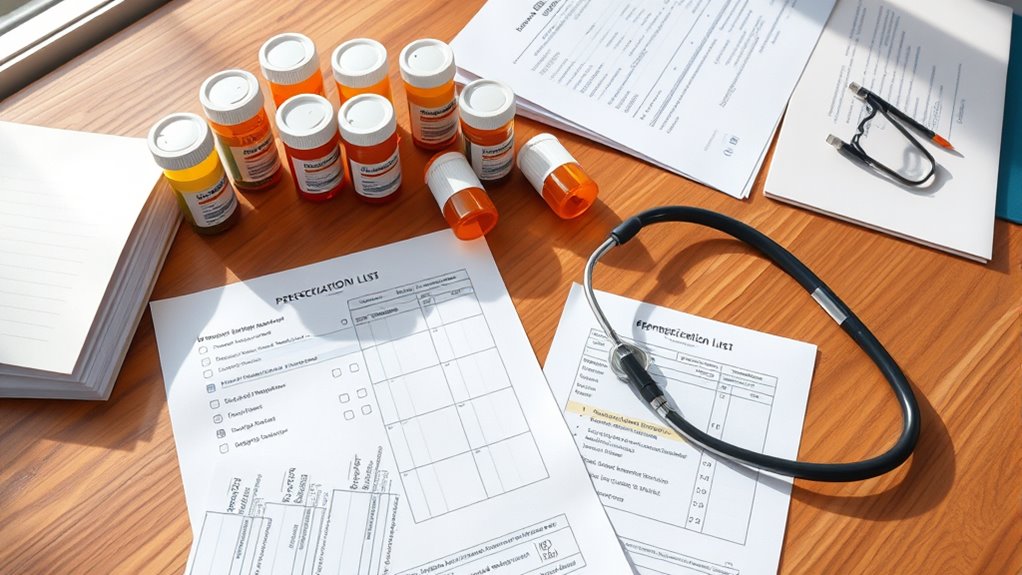
Keeping an up-to-date medication list is vital for making certain your doctor can provide the best care possible. When your healthcare provider has a clear, accurate record of all the medications you’re taking—prescriptions, over-the-counter drugs, supplements, and herbal remedies—they can make better-informed decisions about your treatment. This list helps prevent dangerous drug interactions, ensures proper dosages, and allows your doctor to identify potential allergies or adverse reactions quickly. By staying organized and providing this information at every appointment, you help your healthcare team deliver safer, more effective care.
Maintaining an updated medication list ensures safer, more effective healthcare and better communication with your medical team.
Start by keeping a written or digital list that you review regularly and update whenever you start, stop, or change medications. Include the medication name, dosage, frequency, and the reason you’re taking it. Be specific: note whether you’re taking a pill, cream, inhaler, or injection. If you get new prescriptions from different providers, make sure to add those as well. This way, you won’t forget details that could impact your treatment plan. It’s also helpful to carry a copy with you, especially when visiting new doctors, going to the emergency room, or traveling, so you always have your medication information at hand.
When discussing your medications with your doctor, be honest and thorough. Mention any side effects you experience, whether you’re taking the medication as prescribed, and if you’ve missed doses. This information can influence your treatment plan and help your doctor make necessary adjustments. Additionally, let your healthcare provider know about any supplements or herbal remedies you’re taking, even if they seem harmless. Many natural products can interact with prescription medications in unexpected ways, so full disclosure is vital.
Using technology can make maintaining your medication list easier. Smartphone apps, digital health records, or even simple spreadsheet files can keep your list accessible and up to date. Some apps allow you to scan medication labels or set reminders to take your pills, helping you stay consistent. Remember to review your list periodically, especially if your medications change, to verify it remains accurate. Keeping your list current minimizes errors, reduces the risk of adverse effects, and streamlines your healthcare visits. Additionally, understanding the importance of dog names and their significance can help foster better communication and understanding about your health routines.
Ultimately, a well-maintained medication list empowers you to be an active participant in your health. It saves time, prevents complications, and fosters better communication with your healthcare team. When your doctor has all the facts, they can tailor your treatment more effectively, leading to improved outcomes. So, take the time to organize and update your medication list regularly—your health depends on it.
Frequently Asked Questions
How Often Should I Update My Medication List?
You should update your medication list each time you get a new prescription, stop a medication, or experience changes in your health. It’s best to review it at least every few months and anytime you visit your healthcare provider. Keeping your list current helps guarantee your doctors and pharmacists have accurate info, preventing medication errors and ensuring you receive the safest, most effective treatment possible.
Can I Include Supplements and Herbal Remedies?
Yes, you should include supplements and herbal remedies on your medication list. Doing so helps your doctor get a complete picture of all substances you’re taking, which can influence your health and medication interactions. Be specific about dosages and frequency to avoid any confusion. Keeping this information current ensures your healthcare team can provide the safest and most effective treatment, especially when considering potential interactions or side effects.
What’s the Best Format for Sharing My Medication List?
Imagine your medication list as a clear map. The best format is a simple, organized document—preferably digital—that lists each medication, dose, and frequency alongside supplements and herbal remedies. Use bullet points or tables for easy reading. Keep it updated and accessible on your phone or printed. This way, when your healthcare provider reviews it, they see a complete picture, ensuring safe and effective care.
How Do I Handle Medication Changes During Travel?
When you travel, always carry an updated medication list, including dosages and schedules. Keep a few extra days’ worth of medication in case of delays. Inform your healthcare provider about your travel plans beforehand, and carry a copy of your prescriptions. Use a travel pill organizer to prevent mix-ups, and store your medications in carry-on luggage to avoid lost baggage. Staying organized guarantees your medications stay safe and effective during your trip.
Are There Apps to Help Manage My Medication List?
Think of apps as your digital compass guiding you through medication management. Yes, there are apps designed to keep your medication list organized and accessible. They send reminders, store details, and even share info with your doctor in a tap. With these tools, you stay in control, avoiding mix-ups and ensuring your health stays on course. Embrace technology and navigate your medication journey with confidence.
Conclusion
Think of these medication lists as a well-tended garden, each entry a carefully chosen flower that brings harmony and clarity. When you stay organized, it’s like watering your plants regularly—nurturing trust and understanding with your doctor. With a clear list in hand, you’re the gardener of your health, ensuring everything blooms beautifully. Keep your list tidy and up-to-date, and watch your health garden flourish with peace and confidence.