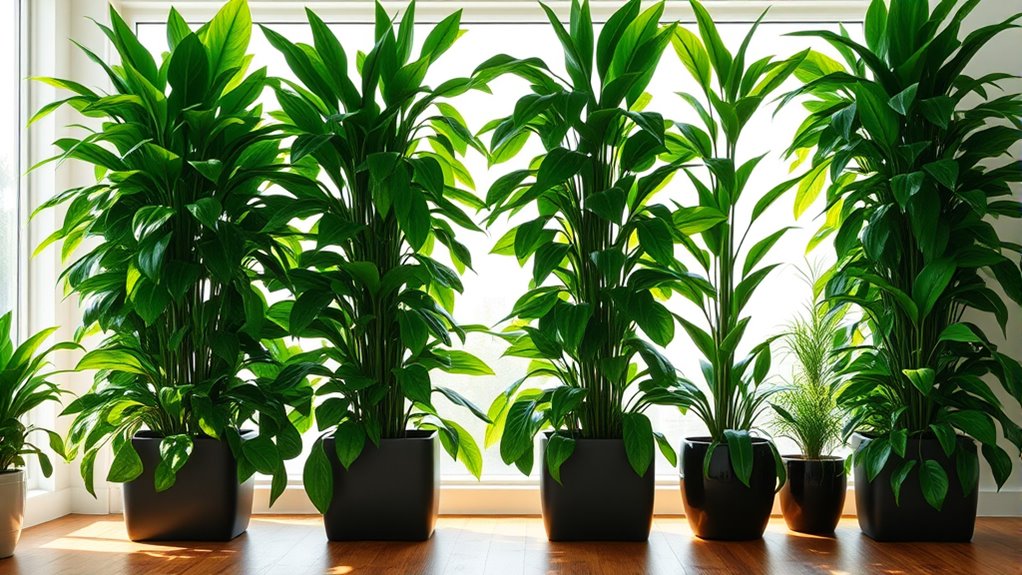

Using plants as room dividers offers a natural way to create beautiful, functional spaces. You can choose various sizes and types of plants to add visual interest, define zones, and maintain an open, airy feel. Plants also improve air quality, boost your mood, and bring a lively vibe to your home. If you want to discover more creative ways to blend style and purpose with greenery, there’s plenty to learn about transforming your space.
Key Takeaways
- Plants create natural, attractive barriers that define spaces while maintaining an open, airy atmosphere.
- Different plant sizes and types can be customized to suit specific room division needs and aesthetic preferences.
- Incorporating greenery enhances indoor air quality, promotes well-being, and adds a calming, lively element to interiors.
- Living plants introduce dynamic visual interest, evolving with seasons and growth, enriching the overall decor.
- Many indoor plants are low-maintenance, easily integrated, and adaptable to various lighting conditions, making them practical room dividers.
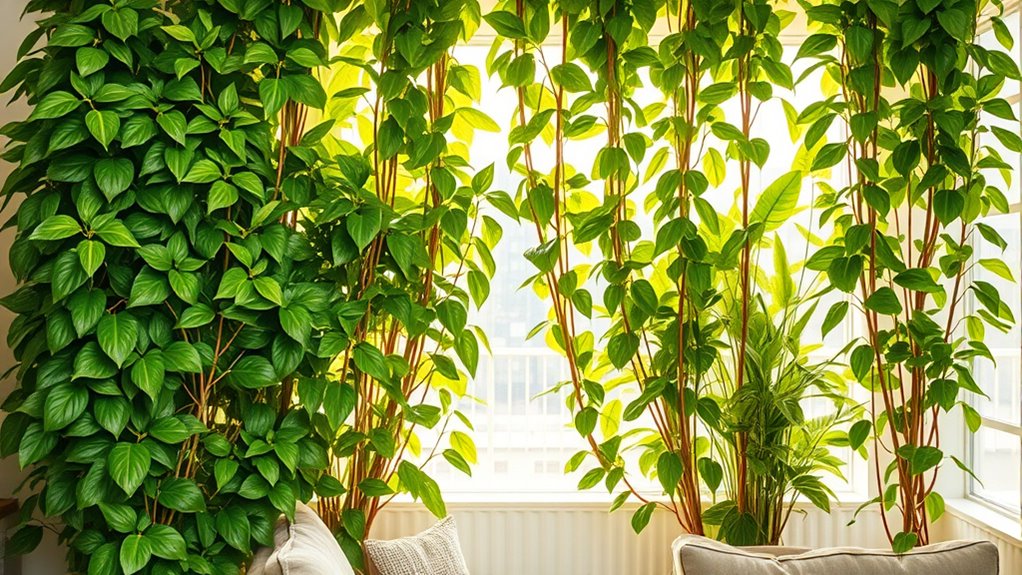
Plants can be a stylish and natural way to divide a room, creating distinct spaces without sacrificing openness. When you choose to incorporate greenery into your interior design, you’re not just adding visual interest—you’re also introducing a sense of calm and freshness that can transform your living space. Unlike traditional room dividers, plants provide a soft, organic barrier that feels inviting rather than obstructive. They can define areas for work, relaxation, or socializing, all while maintaining an airy, open atmosphere. This approach allows you to customize your space in a way that’s both functional and aesthetically pleasing.
Using plants as room dividers offers flexibility that walls or screens can’t match. You can select a variety of sizes, shapes, and types to suit your needs and style. Tall, leafy plants like fiddle leaf figs or rubber plants work well to create a visual boundary, while shorter, dense shrubs such as boxwoods or ficus can define smaller zones. You also have the option to combine different plants in decorative planters or containers to craft a layered, textured look that enhances your decor. This versatility means you can easily move or adjust your plant arrangements if your space or preferences change.
Besides their visual appeal, plants as dividers bring tangible health benefits. They improve air quality by filtering toxins, increase humidity, and contribute to a healthier indoor environment. If you choose plants with air-purifying qualities, such as snake plants or peace lilies, you’ll be actively enhancing your well-being. The presence of greenery has been shown to reduce stress and boost mood, making your home a more peaceful sanctuary. As living elements, plants also add a dynamic quality—changing with seasons or growing taller over time—giving your space a sense of life and evolution. Incorporating indoor greenery can also help improve your home’s acoustics by dampening sound and creating a quieter atmosphere.
Furthermore, plants as room dividers are incredibly easy to maintain. Many indoor varieties require minimal care, and their natural beauty is largely self-sustaining with occasional watering and pruning. You can also incorporate decorative trellises or plant stands to elevate your greenery, making the space feel more curated and intentional. If you’re concerned about light, you can select plants suited to your environment, whether it’s bright sunlight or low-light corners. This adaptability makes it simple to integrate plants into your existing decor without adding clutter or complexity.
Ultimately, choosing plants as room dividers allows you to create a functional, beautiful, and healthier home environment. They offer a harmonious balance between practicality and aesthetics, helping you define your space with purpose while celebrating nature’s simplicity. With a little planning and care, your indoor greenery can transform your home into a stylish, vibrant retreat that feels open yet distinct.
Frequently Asked Questions
How Do I Select Plants That Suit My Indoor Lighting Conditions?
You should evaluate your indoor lighting first. If you have bright, direct sunlight, opt for succulents or cacti that thrive in such conditions. For low light spaces, choose snake plants or pothos that tolerate shade. Medium light areas suit peace lilies or philodendrons. Observe your room’s natural light during different times of the day, and select plants that match those conditions to guarantee they stay healthy and vibrant.
What Maintenance Is Required for Plants Used as Room Dividers?
You need to water your plants regularly, but avoid overwatering to prevent root rot. Keep an eye on their leaves for signs of pests or disease and prune dead or yellowing leaves to promote healthy growth. Make certain they get adequate light based on their needs, and occasionally fertilize to provide essential nutrients. Also, clean dust off their leaves to keep them looking vibrant and healthy.
Are There Any Safety Concerns With Toxic Plants in Shared Spaces?
Yes, toxic plants in shared spaces pose serious safety risks, potentially causing allergic reactions, poisoning, or skin irritations if touched or ingested—even in tiny amounts. You’d want to avoid placing them where children, pets, or visitors can easily access them. Always research plant toxicity beforehand, and consider safer, non-toxic alternatives to guarantee everyone’s well-being while enjoying the beauty and function of your plant dividers.
How Do I Prevent Pests From Damaging My Indoor Plants?
To prevent pests from damaging your indoor plants, regularly inspect them for signs of pests like discolored leaves or webbing. Keep your plants healthy by watering appropriately and providing proper light. Quarantine new plants before introducing them to your space, and use natural pest repellents like neem oil or insecticidal soap. Maintaining cleanliness and proper humidity levels also helps keep pests at bay, ensuring your plants stay healthy and beautiful.
Can Plants Improve Indoor Air Quality Effectively?
Did you know that NASA research shows certain indoor plants can remove up to 87% of airborne toxins in 24 hours? Yes, plants can notably improve your indoor air quality. By choosing varieties like snake plants, pothos, or peace lilies, you actively filter pollutants and boost oxygen levels. Regular care ensures they thrive, making your home healthier and more inviting. So, adding a few plants can truly make a difference.
Conclusion
Just like a gentle river carving its way through a landscape, plants shape your space with natural grace. They’re not just pretty additions but living walls that bring harmony and privacy, turning your room into a lush oasis. Embrace these green guardians—they’re your personal storytellers, whispering tales of serenity and beauty. With each leaf and branch, you craft a sanctuary where nature and comfort flow seamlessly, making every moment surrounded by life’s vibrant touch.