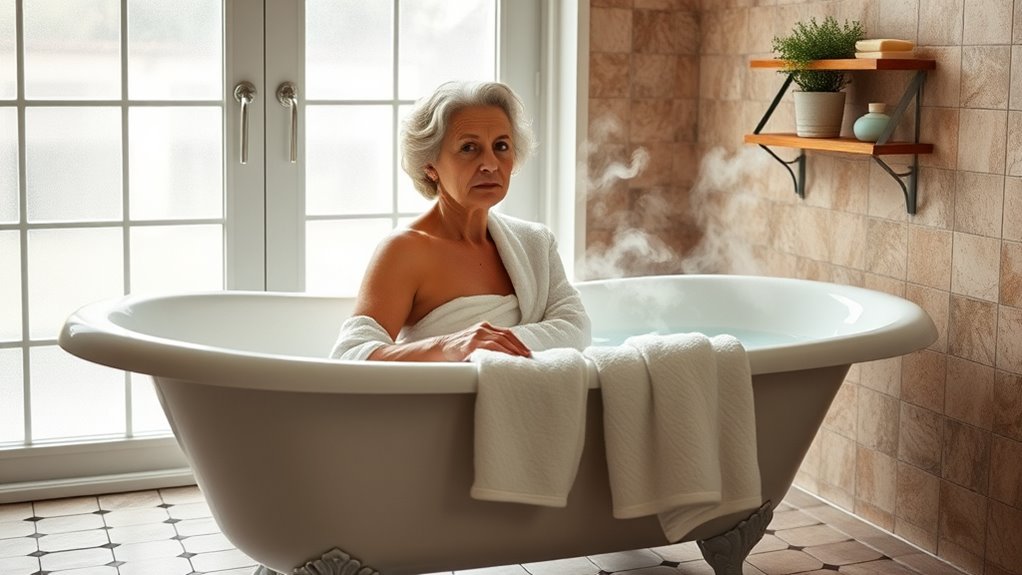

To guarantee a dignified bathing routine, start by preparing a calm, clutter-free space with all essentials close at hand. Maintain a comfortable, warm environment and check the water temperature carefully to prevent burns. Respect privacy by closing doors, using screens, and explaining each step clearly. Covering the person with a towel helps preserve modesty, creating a respectful and comfortable experience. Keep these tips in mind, and you’ll discover more ways to provide thoughtful care.

Turn the school run and nap time into listening time
- Thousands of audiobooks, podcasts and originals
- Listen on your phone, tablet or Echo — also offline
- Cancel anytime
Key Takeaways
- Prepare the bathing environment by organizing essentials, clearing clutter, and ensuring privacy to create a calm, respectful setting.
- Maintain a warm room temperature and check water temperature carefully to ensure comfort and prevent burns.
- Use privacy measures such as closing doors, curtains, and covering the person with a towel to uphold modesty.
- Communicate clearly throughout the process, explaining steps and seeking permission to foster trust and respect.
- Approach bathing with care and attentiveness, turning it into a dignified self-care routine that promotes dignity and well-being.
Maintaining a regular bathing routine is essential for personal hygiene and overall well-being. It helps you stay clean, prevents infections, and boosts your confidence. But beyond cleanliness, creating a dignified bathing routine involves more than just washing. It’s about setting up a comfortable environment, guaranteeing warmth, and respecting your privacy. When you approach bathing with intention and care, it becomes a positive and empowering experience.
Start by preparing your space before you even step into the shower or bath. Gather all the essentials—soap, shampoo, towel, clean clothes, and any other personal items. This prevents unnecessary interruptions once you’re in the process, allowing you to focus on your comfort. Clear the area of clutter to create a sense of calm and order, which can substantially improve your mood and reduce stress. If you’re bathing someone else, guarantee the environment is private and free from interruptions, so their dignity is preserved.
Prepare your space with essentials and clear clutter to enhance comfort and dignity during bathing.
Warmth is a critical element in maintaining comfort during your bath. Make sure the room temperature is pleasant, neither too cold nor too hot, to avoid discomfort or shock when you shift from the environment to the water. Before entering, check the water temperature, guaranteeing it’s warm but not scalding, to prevent burns and make the experience soothing. Using a thermometer or testing with your hand can help you find that perfect temperature. If you’re bathing someone who can’t adjust the water themselves, always double-check to avoid any accidental burns. Keeping a towel or robe nearby can help you quickly cover yourself or others after bathing, maintaining dignity right up to the moment you step out of the shower or bath.
Privacy is paramount in guaranteeing a respectful and dignified experience. Close the doors or curtains, and if you’re in a shared space, use screens or partitions to create a private zone. Respect personal boundaries, especially when assisting others, by explaining each step and asking for permission before touching sensitive areas. Covering yourself or others with a towel whenever possible reinforces a sense of control and modesty. During the process, communicate clearly, and be attentive to any discomfort or hesitation, adjusting your approach accordingly. This attentiveness fosters trust and reinforces the dignity of everyone involved.
A dignified bathing routine isn’t just about cleanliness; it’s about fostering comfort, respect, and self-esteem. With proper setup, attention to warmth, and unwavering respect for privacy, you turn a basic task into an experience that nurtures your sense of well-being and self-respect. Incorporating personal hygiene as an intentional practice can also enhance your confidence and overall mental health. When you approach bathing thoughtfully, it becomes a moment of self-care that refreshes not just your body but also your mind.
Frequently Asked Questions
How Can I Make Bathing More Accessible for Individuals With Mobility Issues?
You can make bathing more accessible for individuals with mobility issues by installing grab bars, shower seats, and handheld showerheads. Make certain the bathroom has a no-slip mat and enough space for maneuvering. Adjust fixtures to reachable heights and consider walk-in tubs or roll-in showers. Keep essentials within easy reach, and provide clear, simple instructions. These modifications promote safety, independence, and dignity during bathing.
What Are Eco-Friendly Options for Water Conservation During Baths?
If you want to save gallons of water with each bath, switch to a low-flow showerhead, which can cut water use by up to 50%! You can also fill the bathtub only halfway or use a basin to catch excess water for reuse. Taking shorter baths and choosing eco-friendly, biodegradable bath products further reduce your environmental impact, making your routine more sustainable without sacrificing comfort.
How Do I Ensure Proper Hygiene Without Compromising Privacy?
To guarantee proper hygiene without compromising privacy, use a shower curtain or privacy screen to create a secluded space. Always close doors and windows, and use a handheld showerhead for control. Keep personal items nearby but out of sight. You can also wear a swimsuit or undergarments if preferred. These steps help you maintain cleanliness while respecting your privacy and dignity during bathing.
What Are the Best Practices for Preventing Slipping and Falls?
You can prevent slipping and falls by installing non-slip mats or strips in the tub or shower. Always guarantee the surface is dry before stepping in or out. Encourage the use of grab bars and handrails for added support. Wear shoes with good grip, and avoid rushing. Keep essential items within reach to minimize movement. Regularly check for hazards like loose tiles or wet spots to maintain a safe bathing environment.
How Can I Create a Calming Atmosphere During Bathing Routines?
Creating a calming atmosphere is like planting a peaceful garden—every detail matters. You can start by dimming the lights and playing soft, soothing music to gently ease tension. Use calming scents like lavender or chamomile to engage the senses subtly. Speak in gentle tones, offering reassurance and patience. These small touches transform the routine into a soothing experience, helping your loved one feel safe, relaxed, and cared for.
Conclusion
So, next time you plunge into your “dignified” bathing routine, remember it’s all about setup, warmth, and privacy—because nothing says self-respect like carefully orchestrated cleanliness. Who needs spa days when you can master the art of bathing with minimal fuss and maximum dignity? Just make sure your soap’s in reach, the water’s just right, and your door’s locked—after all, true sophistication is achieved when no one sees you singing to your shower playlist.
Fall Picks
fall essentials
As an affiliate, we earn on qualifying purchases.