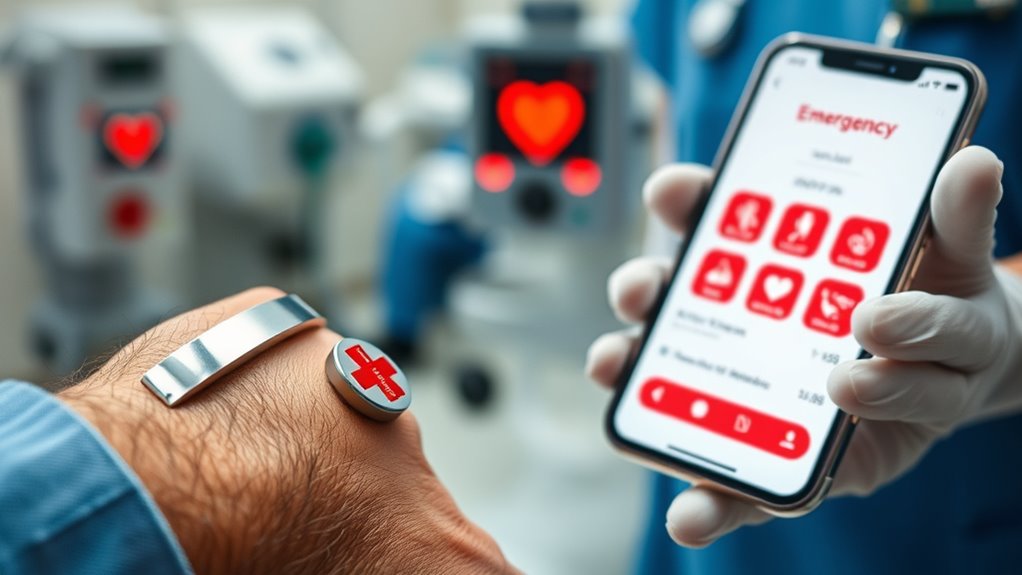

Using Medical Alert IDs and Emergency Systems helps you quickly share crucial health details and summon help in emergencies. These tools, like bracelets or necklaces, carry important info such as allergies or medical conditions, ensuring responders act swiftly. Advanced systems also include GPS tracking, fall detection, and direct links to emergency contacts or services. This proactive approach enhances your safety and peace of mind, with more helpful tips and technology options available if you continue to explore.
Key Takeaways
- Wear your Medical Alert ID visibly to ensure responders quickly access vital health information during emergencies.
- Keep your emergency system updated with current medical details and contacts for accurate assistance.
- Use features like GPS or fall detection to enhance safety and enable rapid location or response in urgent situations.
- Test your emergency system regularly to confirm all features function properly and contacts are reachable.
- Share your emergency system details with family, friends, and caregivers to ensure coordinated support when needed.
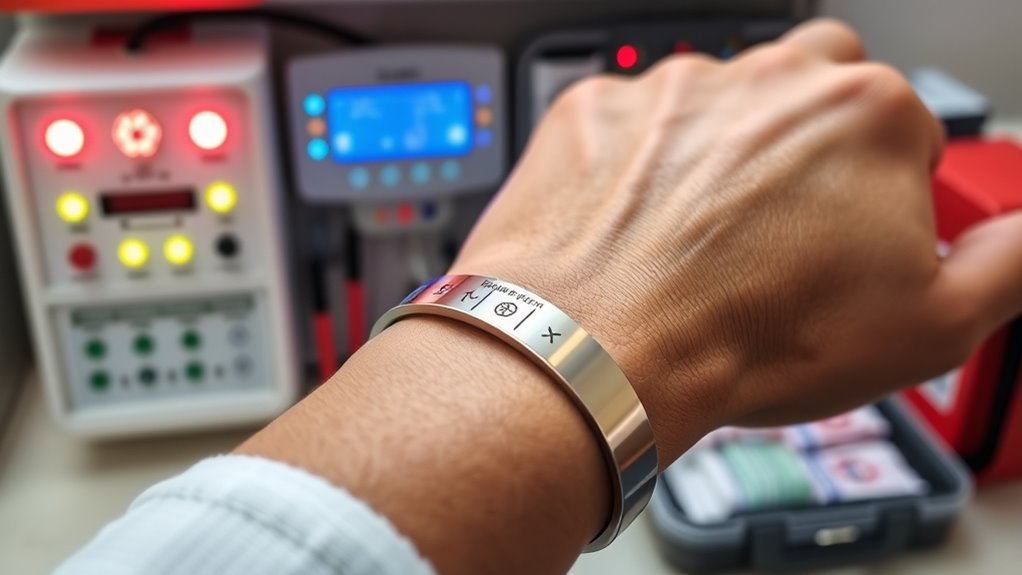
Medical alert IDs and emergency systems play an essential role in guaranteeing that you receive prompt and appropriate care during unexpected health crises. When emergencies happen, every second counts, and having a dependable system in place can make all the difference. These tools are designed to safeguard your personal safety by quickly transmitting crucial information to first responders, medical professionals, and loved ones. By integrating advanced technology, they streamline communication and help guarantee that your specific health needs are understood immediately, even if you’re unable to communicate yourself. AI detection methods are also being utilized to ensure the authenticity of digital health records and emergency communications, further enhancing the reliability of these systems. Personal safety is the core reason why many people choose to wear medical alert IDs. These IDs, often worn as bracelets, necklaces, or even adhesive tags, contain fundamental details such as your medical conditions, allergies, medications, and emergency contacts. This information is stored securely yet is easily accessible to emergency personnel once they find the ID. The immediate availability of this info reduces treatment delays and minimizes the risk of medical errors, especially in situations where you might be unconscious or unable to speak. It’s a simple yet powerful way to take control of your personal safety, giving responders the data they need without wasting precious time. Technology integration enhances the effectiveness of these systems considerably. Modern medical alert devices often include features like GPS tracking, enabling loved ones or emergency services to locate you if you’re lost or in an unfamiliar area. Some systems connect directly to your smartphone or home monitoring services, providing a seamless way to alert emergency contacts or dispatch assistance with just a push of a button. Many devices also incorporate fall detection sensors, which automatically trigger alerts if you experience a fall or sudden accident. This combination of hardware and software creates an extensive safety network around you, bridging the gap between personal safety and technological innovation. Using these systems not only helps in immediate emergencies but also offers peace of mind in everyday life. Whether you’re out running errands or at home alone, knowing that help can be summoned quickly if needed empowers you to maintain independence while staying protected. It’s a proactive approach to personal safety that leverages the latest in technology integration, ensuring that your health information is always accessible when it matters most. In today’s fast-paced world, investing in a reliable medical alert ID and emergency system is a wise choice, providing security and confidence at all times.
Frequently Asked Questions
How Do I Update My Medical Information on the Alert ID?
To update your medical information on the Alert ID, start by contacting the provider directly through their website or customer service. They often allow you to submit medical data updates and customize your Alert ID details online or via phone. Make sure to provide accurate, current medical data so responders get the right information during emergencies. Regularly review and update your medical info to guarantee your Alert ID remains current and effective.
Are These Systems Compatible With All Smartphones?
Most Medical Alert IDs and emergency systems are compatible with a wide range of smartphones, but you should check specific device requirements. Smartphone compatibility varies depending on the device’s operating system and the emergency app integration features. Confirm your phone supports the necessary app updates and Bluetooth connections. Before choosing a system, verify compatibility with your smartphone model to guarantee seamless emergency alerts and access to your medical information when needed.
What Is the Average Response Time From Emergency Services?
The average response time from emergency services typically ranges from 5 to 15 minutes, depending on your location and the nature of the emergency. When you activate an emergency alert, emergency dispatch quickly coordinates response efforts, ensuring help gets to you as fast as possible. Your Medical Alert ID can expedite this process, allowing responders to better understand your needs and provide critical assistance without delay.
Can Multiple Medical Conditions Be Listed on One ID?
Yes, you can list multiple medical conditions on one Medical Alert ID. This helps emergency responders quickly understand your medical history and guarantees better emergency preparedness. When designing your ID, include all relevant conditions, medications, and allergies. By doing so, responders get a clear picture of your health needs, which can be vital during emergencies. Keep your ID updated regularly to reflect any changes in your medical history.
How Secure Is My Personal Information on These Systems?
Your personal information on these systems is quite secure, like a vault guarding your most valuable secrets. Data encryption keeps your details safe from prying eyes, while strict privacy policies ensure only authorized personnel access your data. Though no system is completely invulnerable, these measures substantially reduce risks, giving you peace of mind. Trust that your sensitive information is protected, just as a lock secures your most cherished possessions.
Conclusion
Think of medical alert IDs and emergency systems as your personal safety net woven with care and precision. They’re like a lighthouse guiding first responders directly to your side, cutting through the fog of uncertainty. By wearing your ID and preparing your system, you’re not just protecting yourself—you’re shining a beacon of hope for those who need to find you fast. Embrace these tools, and let your safety shine bright like a guiding star in the night.