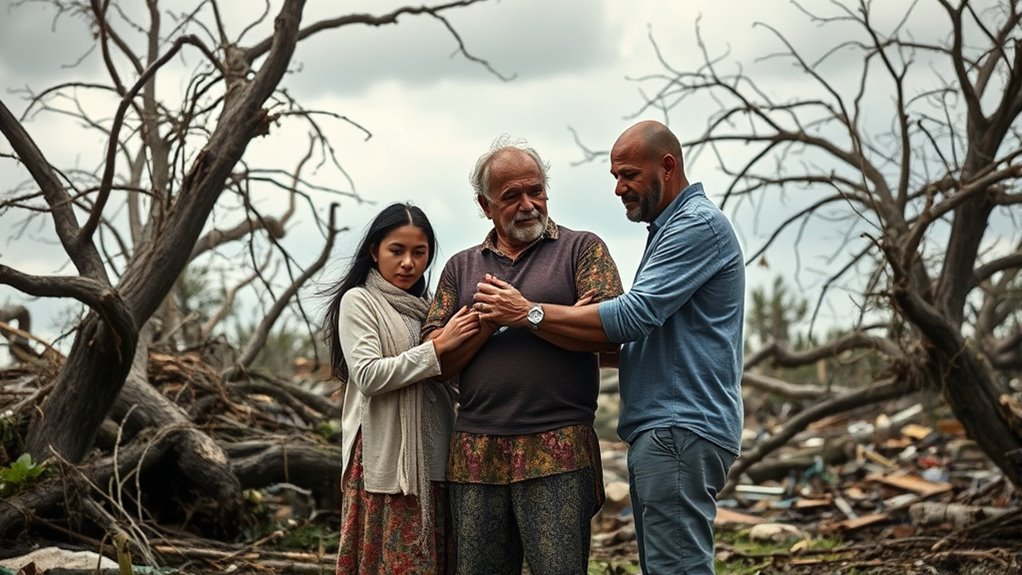

During a disaster, focus on maintaining emotional resilience and creating open family communication. Stay calm, acknowledge everyone’s feelings, and encourage honest conversations about worries. Establish routines to bring a sense of normalcy and connect with community resources for support and guidance. Modeling calmness helps children learn coping skills. Remember, resilience grows with ongoing effort and patience—continue exploring ways to strengthen your family’s ability to handle crises effectively.
Key Takeaways
- Maintain open communication to allow family members to express fears and concerns honestly.
- Establish routines to create a sense of normalcy and control during chaos.
- Model calmness and emotional resilience to help children learn healthy coping strategies.
- Connect with community resources, such as support groups or counseling, for shared guidance and reassurance.
- Foster a supportive environment that acknowledges feelings, promotes trust, and encourages collective healing.

When a disaster strikes, it can feel overwhelming for your entire family, but facing these challenges together can strengthen your bond and resilience. During such times, your emotional resilience becomes a vital tool. It helps you stay grounded amid chaos and sets an example for your children. By managing your emotions and demonstrating calmness, you create a sense of stability that everyone can lean on. Remember, emotional resilience isn’t about suppressing feelings; it’s about acknowledging them and finding healthy ways to cope. Encouraging open communication within your family fosters a safe space where everyone feels heard and supported, which is essential for collective strength. Incorporating mental health awareness into your recovery process can also promote healing and understanding. Community support plays a crucial role in managing disaster recovery. When you reach out to neighbors, local organizations, or support groups, you tap into a network of resources that can ease the burden. Whether it’s sharing supplies, offering emotional comfort, or simply exchanging information, community connections bolster your family’s ability to recover. You’re not alone in facing these hardships, and knowing that others are in the same boat can provide reassurance. Participating in community efforts also fosters a sense of belonging and shared purpose, which can uplift your spirits and those of your children. This collective resilience becomes a vital asset, helping everyone feel less isolated and more empowered. As you focus on building emotional resilience, consider practical steps like establishing routines, creating a safe environment, and encouraging your family to express their feelings. Routines offer a sense of normalcy and control amid uncertainty, while a safe environment reassures your children that they are protected. Listening actively to each family member’s concerns fosters trust and understanding, which are essential for emotional healing. It’s important to remember that children often look to adults for cues on how to react. Showing resilience and calmness can help them develop their own coping skills. In addition, connecting with community resources such as counseling services or support groups can provide your family with professional guidance and emotional relief. These outlets allow you to process your experiences and develop strategies to move forward. Keep in mind that resilience isn’t built overnight; it’s cultivated through ongoing effort, patience, and support. By leaning on community networks and nurturing emotional strength within your family, you create a foundation that helps you face current challenges and prepares you for future ones. Facing disaster as a family doesn’t mean it’s easy, but with resilience and community backing, you can emerge stronger together.
Frequently Asked Questions
How Can I Prepare My Family for Unexpected Disasters?
You can prepare your family for unexpected disasters by creating and practicing safety plans together. Gather emergency supplies like water, non-perishable food, and first aid kits, and store them in an accessible location. Regularly review and update your plans and supplies, ensuring everyone knows what to do during an emergency. This proactive approach helps your family stay safe, calm, and ready to respond effectively when disaster strikes.
What Are Effective Communication Strategies During a Family Crisis?
During a family crisis, you should prioritize active listening to understand everyone’s concerns and feelings. Use clear messaging to convey important information calmly and effectively. Encourage open dialogue, ask questions, and validate each person’s emotions. Stay composed to set a reassuring tone, and make certain everyone feels heard and understood. This approach helps maintain trust, reduces confusion, and fosters a supportive environment during difficult times.
How Do I Support Children’s Emotional Needs After a Disaster?
Think of supporting your child’s emotional needs like tending a delicate garden after a storm. You show emotional resilience by offering a safe space for them to express feelings and listen patiently. Trauma support involves reassuring them that it’s okay to be upset, just as a gardener nurtures fragile sprouts. Encourage open conversations, validate their emotions, and provide routine comfort to help them rebuild their sense of security.
What Community Resources Are Available for Family Disaster Recovery?
You can access community resources like community shelters that provide safe spaces and essentials for your family. Emergency hotlines are also crucial—they connect you with immediate support, information, and assistance during a disaster. Reach out to local agencies for guidance on additional services such as counseling, financial aid, and recovery programs. Staying informed and connected to these resources helps your family recover more quickly and regain stability after a disaster.
How Can I Rebuild Family Routines Post-Disaster?
In times of rebuilding, focus on family bonding to reconnect and heal. Start by restoring simple routines, like shared meals or bedtime stories, which create a sense of normalcy. Be patient and flexible, allowing everyone to express feelings. Slowly reintroduce activities that bring joy and comfort. Consistent routines help restore stability, making it easier for your family to move forward together, stronger and more united after the storm.
Conclusion
Remember, a family that sticks together during tough times can weather any storm. By staying calm, communicating openly, and supporting each other, you build resilience and hope. Don’t forget the saying, “United we stand, divided we fall.” When disasters strike, your bond and teamwork will help you overcome challenges and emerge stronger. Keep practicing these strategies, and you’ll find that facing adversity as a family becomes a little easier each time.