
To prepare your emergency contacts and documents, you should create a thorough list that includes family, friends, neighbors, and local authorities, and keep it updated regularly. Store this information in multiple safe locations like your phone, printed copies, and online backups. Gather all essential documents, such as IDs, medical records, and insurance papers, in waterproof containers or digital formats. Staying organized and current helps guarantee you’re ready when an emergency strikes; explore more ways to stay prepared below.
Key Takeaways
- Compile a comprehensive emergency contacts list including family, friends, neighbors, and local authorities; update regularly.
- Store contacts in multiple locations such as your phone, printed copies, and secure online platforms.
- Gather and securely store vital documents like IDs, insurance policies, medical records, and financial papers in waterproof containers.
- Create and practice evacuation plans, mapping out multiple routes and sharing the plan with all involved parties.
- Review and update your emergency contacts and documents periodically to ensure accuracy and readiness.
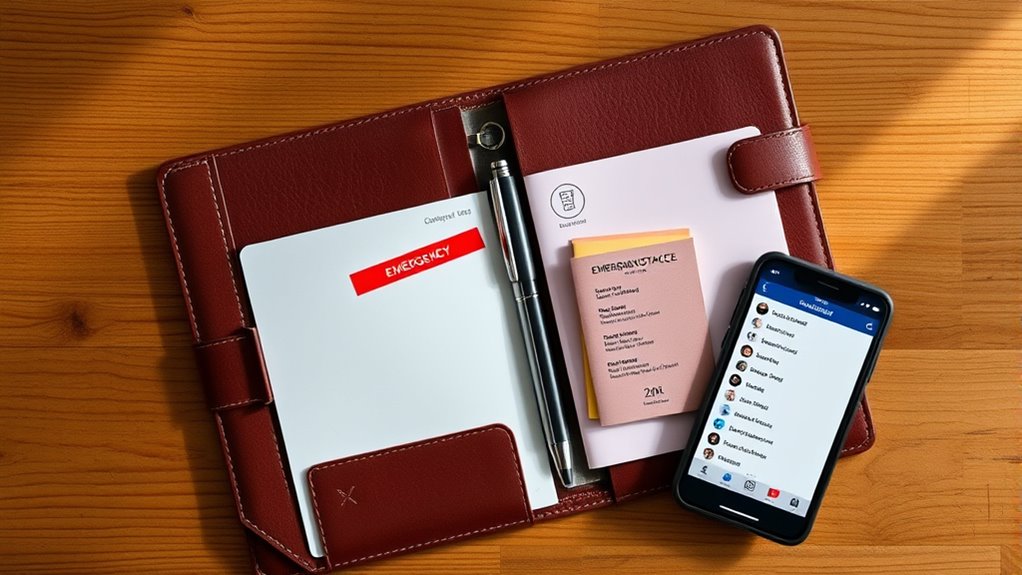
Preparing your emergency contacts and documents is a crucial step in ensuring you’re ready for unexpected situations. When emergencies strike, knowing who to call and having quick access to essential documents can make all the difference. Start by creating a comprehensive list of emergency contacts, including family members, close friends, neighbors, and local authorities. Keep this list updated regularly, especially if phone numbers or addresses change. It’s also essential to designate an out-of-town contact person, so you have someone who can relay information if local communication lines are down. Storing these contacts in multiple places—your phone, a printed copy, and perhaps a secure online account—ensures you can access them when needed.
Create and regularly update your emergency contacts list for quick access during crises.
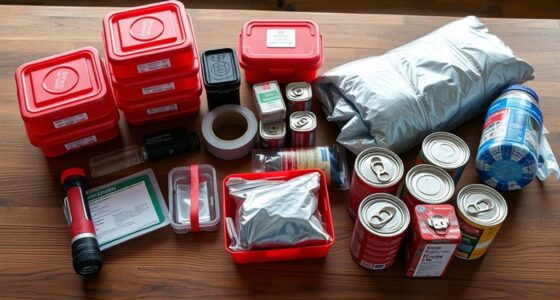
Next, focus on your evacuation plans. Knowing exactly how you’ll leave your home or workplace during a disaster helps prevent chaos and delays. Map out multiple routes to safe locations, such as shelters or relatives’ homes, in case one route becomes blocked. Share your evacuation plan with family members and practice it periodically so everyone knows their role. It’s also wise to keep a map of your area in your disaster kit, along with contact information, so you’re prepared even if technology fails. Your disaster kit should contain essentials like water, non-perishable food, first aid supplies, and important documents, all packed in a waterproof container for quick access.
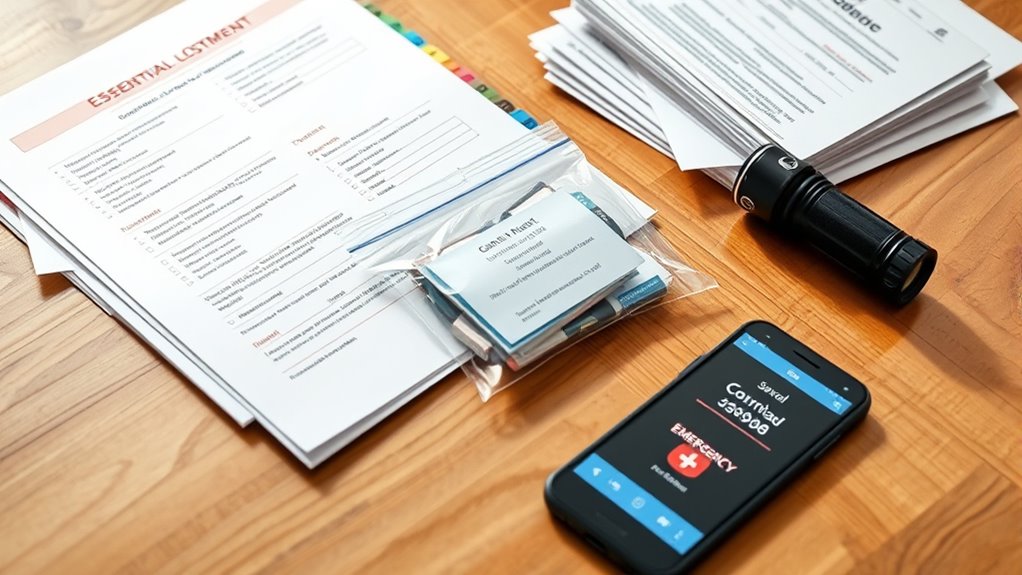
When it comes to documents, gather and organize vital records such as birth certificates, social security cards, insurance policies, medical records, and financial documents. Keep digital copies stored securely online or on a portable drive, so they’re accessible if physical copies are lost or damaged. Consider using a fireproof and waterproof safe to store these papers at home. Having these documents ready saves you time and stress during an emergency, especially if you need to prove your identity, insurance coverage, or health status quickly. Additionally, understanding the importance of home theater projectors and their features can help you in planning your home setup, ensuring your living space is both functional and comfortable in any situation.
Finally, review and update your emergency contacts, evacuation plans, and disaster kits regularly. Changes in your family, new contact numbers, or updates in your community’s emergency procedures mean you need to stay current. By staying organized and prepared, you ensure that when disaster strikes, you’ll be able to respond swiftly and confidently, minimizing risk and maximizing safety for yourself and your loved ones.
Frequently Asked Questions
How Often Should I Update My Emergency Contact List?
You should update your emergency contact list at least once a year to make certain all information remains current. Set regular updating reminders, such as annually or after any major life change like moving or changing jobs. Contact frequency varies depending on your circumstances, so stay attentive to any updates needed. Regular updates help ensure that, in an emergency, your contacts are accurate and reachable, providing peace of mind and quick response times.
What Electronic Formats Are Best for Storing Emergency Documents?
You should store your emergency documents in secure electronic formats like cloud storage, which makes access easy during emergencies. Choose services that offer strong encryption methods to protect your sensitive information from unauthorized access. Using encrypted PDFs or password-protected files adds extra security. Regularly update your documents and keep backups in multiple secure locations to guarantee you can access crucial information quickly when needed.
How Can I Ensure My Emergency Contacts Are Reachable During a Disaster?
Maintain your messaging by implementing a clear communication plan and conducting contact verification regularly. Share your emergency contacts across multiple channels—texts, calls, emails—to guarantee accessibility. Keep a printed list in a safe, accessible spot, and update it periodically. You can also utilize cloud-based storage for instant access. These proactive steps guarantee your contacts stay reachable during disasters, and your communication plan keeps everyone connected when it matters most.
Should I Include Digital Passwords in My Emergency Documents?
Yes, you should include digital passwords in your emergency documents, but only if you prioritize digital security and privacy concerns. Use a secure, encrypted password manager to store these details, and share access only with trusted contacts. Avoid writing passwords on paper or in easily accessible files. This way, you protect your private information while ensuring your emergency contacts can access your digital accounts if needed.
What Legal Considerations Exist for Sharing Emergency Information?
You need legal authorization to share emergency information, especially if it involves sensitive details like digital passwords, which raise privacy concerns. Make sure your emergency contacts are aware and consent to receive this information. Check local laws to verify you’re not violating privacy regulations. Sharing such details responsibly helps protect your privacy and ensures your loved ones can access important information quickly during emergencies.
Conclusion
Now that you’ve gathered your emergency contacts and documents, you’re building a safety net woven with care. Think of it as your personal safety lighthouse, guiding you and your loved ones through life’s storms. With these preparations in place, you’re anchoring peace of mind in solid ground. When chaos arises, you’ll stand confident, knowing your essential information is ready to light the way, turning uncertainty into a calm, navigable voyage.