

To revise your family emergency communication plan, regularly update contact details and test your procedures to guarantee they’re effective. Incorporate modern technology like smartphones, messaging apps, and satellite phones to stay connected even if networks are down. Establish clear communication channels, backup methods, and designated meeting points. Keep everyone familiar with the plan and continuously adapt it to new tools and circumstances. If you want to make sure your plan stays reliable, there’s more you should consider.
Key Takeaways
- Regularly review and update contact information to ensure accuracy and relevance.
- Incorporate new communication technologies and platforms for broader connectivity.
- Conduct family drills to test the effectiveness of the updated plan and identify gaps.
- Reassess communication methods and redundancy options to adapt to changing circumstances.
- Keep the plan aligned with current technology, contacts, and family members’ needs through ongoing revisions.
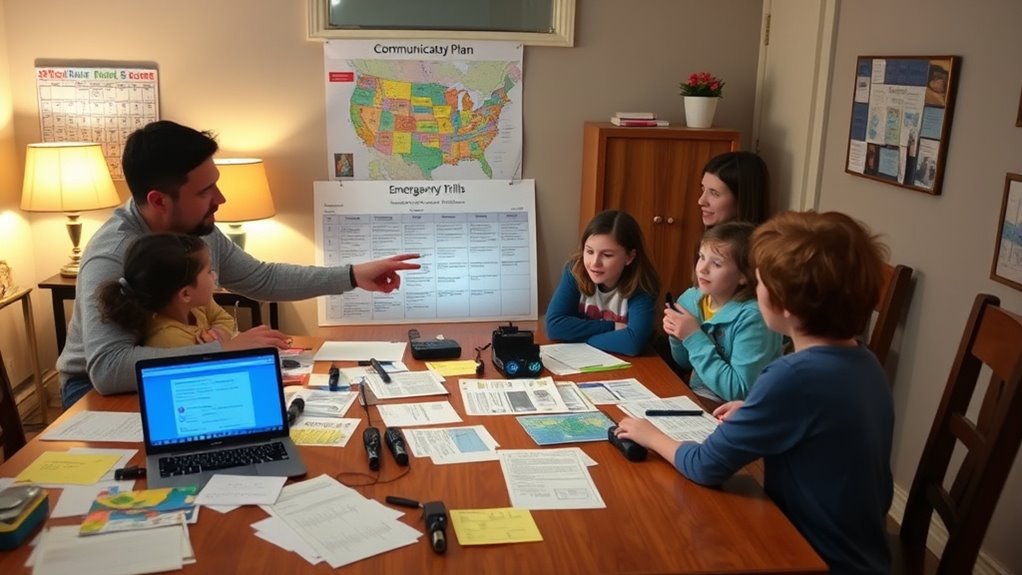
Have you reviewed your family emergency communication plan lately? Staying prepared requires more than just having a plan on paper; it means regularly updating and practicing it. One critical aspect is guaranteeing that your communication technology is current and reliable. Technology evolves rapidly, and what worked a few years ago may no longer be effective. For example, if your plan relies heavily on landlines or outdated cell phones, it might not be as dependable during a crisis. Consider integrating multiple forms of communication, such as smartphones, messaging apps, social media, or even satellite phones if you live in an area prone to power outages or network disruptions. The goal is to make sure your family can stay connected regardless of the circumstances.
Regularly update and test your family’s emergency communication plan to ensure reliable connectivity when it matters most.
Another vital element is reviewing and confirming your emergency contacts. Are the contact details still accurate? Have anyone’s numbers or email addresses changed? It’s easy to overlook these updates, but outdated information can cause delays when you need help the most. Make a habit of checking and updating emergency contacts regularly—at least every six months. Include contacts outside your immediate area, such as relatives, friends, or neighbors who can assist if your local network is overwhelmed or down. Also, ensure everyone in your family knows how to reach these contacts and understands their role in the plan.
When revising your plan, think about the communication channels you use. Does everyone know the primary methods to reach each other? Have you established a designated meeting point, both in your neighborhood and a remote location? It’s essential to create redundancy—using multiple methods like texts, calls, and social media—to increase the chances of successful communication during an emergency. Also, consider the accessibility of your communication technology for all family members, including children and older relatives. They should understand how to operate devices and know who to contact if they’re separated.
Additionally, understanding emergency communication technology options can improve your preparedness and ensure your plan remains effective as new tools become available. Lastly, test your updated plan periodically. Conduct family drills that include practicing the use of communication technology and reaching emergency contacts. This helps you identify any gaps or issues, so you can address them before a real emergency occurs. Regularly revising your family emergency communication plan keeps everyone informed, prepared, and confident in how to stay connected when it matters most. Remember, having an effective plan isn’t a one-time task; it’s an ongoing process that adapts to changing circumstances and technology advancements.
Frequently Asked Questions
How Often Should I Review Our Family Emergency Communication Plan?
You should review your family emergency communication plan at least once a year to make certain it stays current. Incorporate family plan updates whenever there are significant changes, like new contact info or schedules. Additionally, schedule emergency drills regularly to test and reinforce your plan, making adjustments based on those experiences. Regular reviews and drills help keep everyone prepared, confident, and ready to act swiftly during an actual emergency.
What Tools Are Most Reliable for Emergency Communication?
Think of reliable emergency communication tools like trusty lifeboats in a storm. Satellite phones are your best bet—they work even when cell towers fail, like a beacon in the night. Emergency apps are also essential; they update you instantly and can send alerts to loved ones. Combining these tools guarantees you’re prepared for most situations, giving you peace of mind when communication lines are at their most fragile.
How Do I Include Non-English Speakers in the Plan?
You should include multilingual resources and translation services in your emergency plan to support non-English speakers. Identify local translation services or apps that can quickly provide accurate information during emergencies. Create easy-to-understand materials in multiple languages, and make certain your communication methods can reach everyone. Practice using these resources regularly, so all family members know how to access important updates regardless of language barriers, keeping everyone informed and safe.
What Are the Costs Associated With Updating Communication Plans?
You should conduct a cost assessment to identify expenses involved in updating your communication plan, including translation services, new technology, and training. Budget planning helps you allocate funds effectively, ensuring you cover all necessary updates without overspending. Costs may vary depending on the plan’s complexity and language needs. By carefully evaluating these factors, you can create a realistic budget that guarantees your plan remains inclusive and effective during emergencies.
How Can I Ensure My Plan Works During a Power Outage?
To guarantee your plan works during a power outage, you should have backup power sources like solar chargers or generators. Keep emergency radios handy, especially battery-powered or hand-crank models, to stay connected when your devices lose power. Test these tools regularly to make sure they’re functioning properly. By preparing with backup power options and emergency radios, you’ll stay informed and connected, no matter what happens.
Conclusion
Now that you’ve revised your family emergency communication plan, you’re better prepared for chaos. It’s like having a map in a storm—calm amid the chaos. While no plan can prevent emergencies, knowing you’re ready brings peace of mind. So, stay connected, update regularly, and remember: in the unpredictable, preparation is your greatest comfort. Your family’s safety isn’t just a plan on paper—it’s the bond that keeps you grounded when everything else feels uncertain.