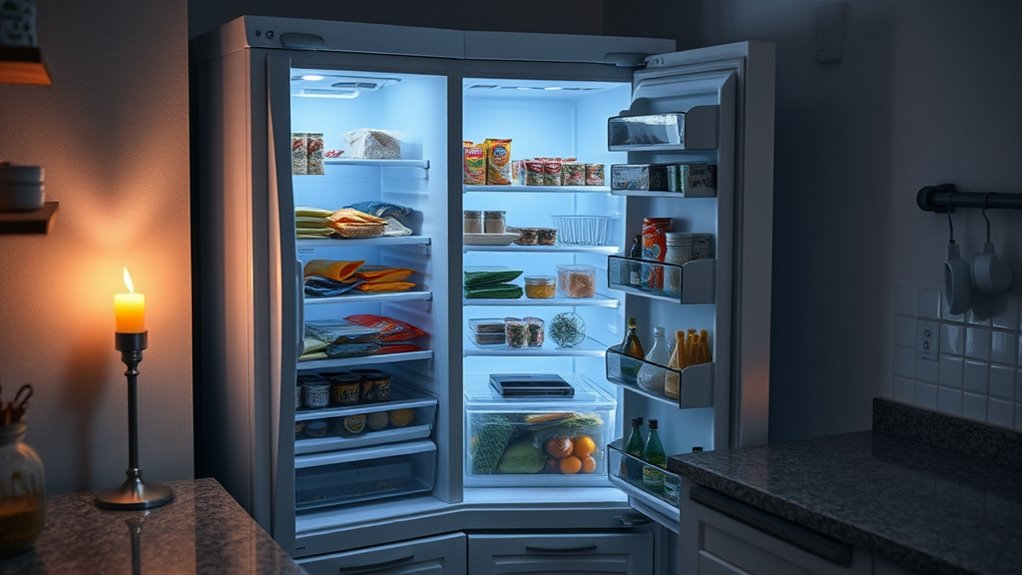

During outages, keep your fridge and freezer doors closed to maintain cold temperatures and prevent spoilage. Your fridge typically stays cold for about 4 hours, while a full freezer can keep food frozen for up to 48 hours if unopened. Use thermometers to monitor temperatures, and discard perishable foods if they rise above safe levels for more than two hours. For helpful tips on protecting your food during outages, explore the full guidelines ahead.
Key Takeaways
- Keep doors closed during outages to maintain cold temperatures and prolong food safety.
- Use a thermometer to monitor fridge and freezer temperatures; discard foods above safe thresholds for over 2 hours.
- Transfer perishables to coolers with ice packs if outages exceed safe holding times.
- Check frozen foods for ice crystals or if still frozen before refreezing or cooking.
- After power returns, inspect foods carefully and discard any stored above safe temperatures for over 2 hours.
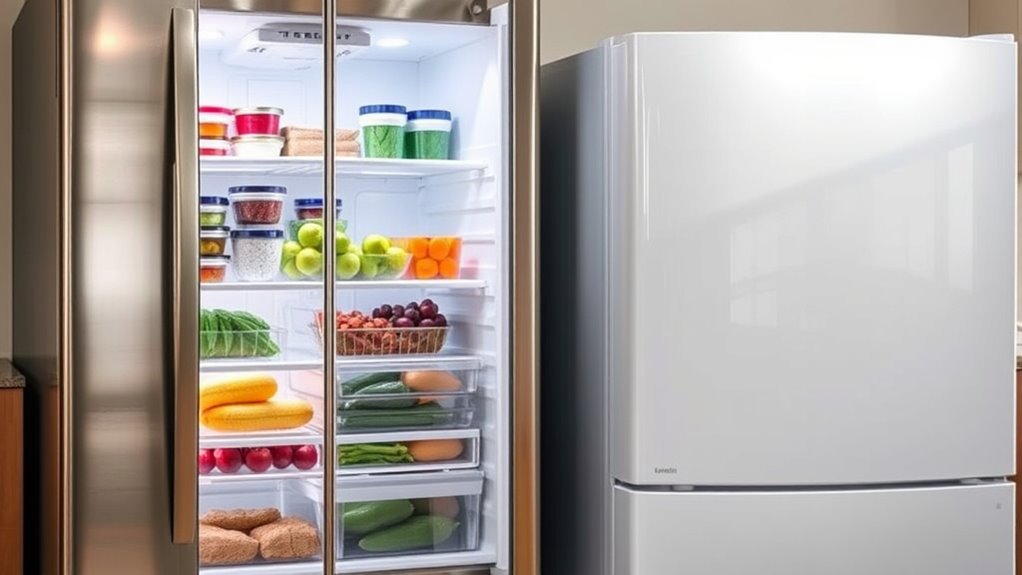
Have you ever wondered what you should do to keep your food safe during a power outage? It’s a common concern, especially when the outage lasts several hours or more. The key is understanding how to preserve your perishable foods and prevent spoilage or health risks. First, you need to keep your refrigerator and freezer doors closed as much as possible. Every time you open a door, cold air escapes, and your food warms up faster. If your power is out for less than four hours, your refrigerated items should stay cold enough to remain safe, especially if the door stays shut. However, if the outage extends beyond that, the temperature inside the fridge will start to rise, putting your food at risk.
Keep fridge and freezer doors closed during outages to prevent spoilage and ensure food safety.
For your freezer, a full, unopened unit can keep its temperature for about 48 hours, or 24 hours if half-full. If you anticipate the outage will last longer, consider transferring perishable items into a cooler with ice packs to help maintain a lower temperature. You can also use a thermometer to monitor the temperature inside your fridge and freezer. If the fridge’s temperature rises above 40°F (4°C), and the freezer’s temperature exceeds 0°F (-18°C), it’s time to evaluate which foods are safe to keep. Generally, if perishable foods like dairy, meats, and leftovers have been stored above safe temperatures for more than two hours, it’s safest to discard them to avoid the risk of foodborne illness.
Another useful tip is to keep your refrigerator and freezer organized. Grouping similar items together helps you quickly assess what’s still safe and what might need to be discarded. When the power is restored, check items carefully. Foods that have been above 40°F for more than two hours should be discarded, even if they look and smell okay, because bacteria can grow rapidly without visible signs. For frozen foods, if they still contain ice crystals or are still frozen solid, they’re safe to refreeze or cook. If they’ve thawed completely but are still cold, you can cook them thoroughly and then refrigerate or freeze leftovers.
In addition, consider investing in a portable generator or backup power source if outages are frequent in your area. This can help preserve your food and avoid unnecessary waste. Proper storage techniques and quick action are essential to minimize food loss and protect your health. Remember, the goal is to keep food at safe temperatures and minimize waste while avoiding health risks. By following these steps—keeping doors closed, monitoring temperatures, and acting swiftly—you can protect your food and your family’s health during power outages.
Frequently Asked Questions
How Can I Tell if Food Is Still Safe After a Power Outage?
You can tell if food is still safe after a power outage by checking its temperature and appearance. Use a thermometer to verify perishable items are below 40°F, and if they’re above that for more than two hours, discard them. Look for unusual odors, colors, or textures, and when in doubt, throw it out. When in doubt, it’s safer to discard questionable food rather than risk foodborne illness.
What Are the Best Ways to Keep My Fridge Cold During an Outage?
You can keep your fridge cold during an outage by opening it as little as possible, which conserves the cold air. Fill empty space with ice or frozen bottles to maintain low temperatures longer. Additionally, wrapping the fridge in blankets can help insulate it. Don’t forget to monitor the temperature with a thermometer, and move perishable items to a cooler with ice if the power outage lasts more than four hours to prevent spoilage.
Are There Specific Foods That Spoil Faster During Outages?
You should be aware that perishable foods like dairy, meat, seafood, cooked leftovers, and cut fruits or vegetables spoil faster during outages. These items require consistent refrigeration to prevent bacteria growth. When the power’s out, keep the fridge door closed as much as possible to maintain cold temperatures. If food has been above 40°F for over two hours, it’s safer to discard it to avoid foodborne illnesses.
How Long Can Freezer Contents Remain Frozen Without Power?
Freezer contents can typically stay frozen for about 48 hours if the door remains unopened, while a full freezer can hold its chill for up to 72 hours. To maximize freezing power, keep the door tightly sealed and avoid unnecessary opening. You’ll want to monitor the temperature, ensuring it stays below 40°F, and use ice or dry ice if you anticipate prolonged outages, ensuring your foods stay safe and solid.
Should I Keep the Fridge Door Open or Closed During an Outage?
You should keep the fridge door closed during an outage. This helps maintain the cold temperature inside, preventing spoilage and preserving your food longer. Opening the door allows warm air to enter, causing the temperature to rise faster. Only open it if absolutely necessary, such as to check the contents or transfer food to another cold source. Staying patient and keeping the door shut is your best strategy.
Conclusion
Remember, keeping your fridge and freezer safe during outages is like steering a ship through stormy seas—you need to stay alert and make smart decisions. By monitoring temperatures, keeping doors closed, and knowing when to discard spoiled food, you can protect your health and save your supplies. Stay vigilant and act quickly—your kitchen’s safety depends on it. With these tips, you’ll navigate power outages smoothly, like a captain guiding your home through rough waters.