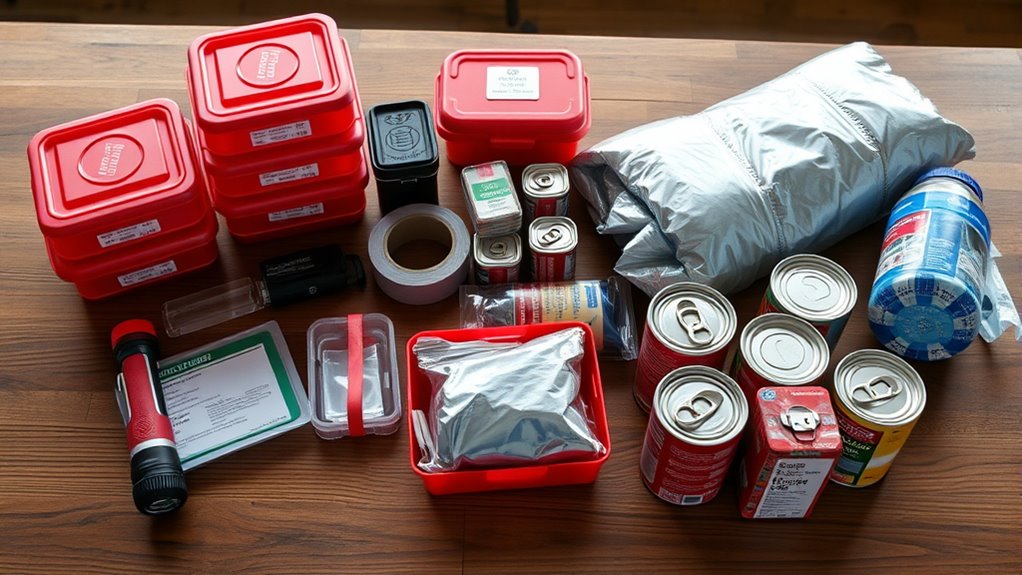

To create a household emergency kit, gather essential supplies like water, non-perishable food, a flashlight with extra batteries, a multi-tool, medications, important documents, and cash. Store everything in a waterproof container in an easily accessible spot, and check it regularly for expired items. Make sure everyone knows where it is and how to use it. With proper planning and gear, you’ll feel more confident and prepared when disaster strikes—keep going to learn more.
Key Takeaways
- Gather essential supplies like water, non-perishable food, flashlight, batteries, and personal items for at least three days.
- Store supplies in a waterproof, accessible container and keep it in a designated, easy-to-find location.
- Include communication tools such as a whistle, portable charger, and important documents in your kit.
- Regularly check and update your kit to replace expired items and ensure functionality.
- Practice emergency drills with your family to familiarize everyone with kit access and proper usage.

Have you ever thought about what you’d do if a disaster struck your home unexpectedly? It’s a sobering question, but one that highlights the significance of being prepared. The key to peace of mind is creating a household emergency kit, which requires careful planning and gathering essential survival gear. Emergency planning isn’t just about reacting when disaster hits; it’s about proactively assembling the tools and supplies that will keep you safe, comfortable, and capable of handling various emergencies. When you start putting your kit together, think of it as an investment in your family’s safety.
First, consider the survival gear you’ll need. This includes basics like water, non-perishable food, a flashlight, batteries, a first aid kit, and a multi-tool. Water is your top priority—aim for at least one gallon per person per day, enough for three days at minimum. Food should be easy to prepare or eat without cooking, such as energy bars, canned goods, and dried fruits. A reliable flashlight with extra batteries is vital for power outages, and a multi-tool can serve multiple purposes, from opening cans to making minor repairs. Also, include a whistle to signal for help and a portable phone charger or power bank to stay connected. Don’t forget personal items like essential medications, important documents, and some cash in small denominations. These supplies form the foundation of your survival gear and will be invaluable during an emergency. Additionally, understanding gaslighting tactics used in high-stress situations can help you stay calm and rational when faced with chaos and manipulation.
Emergency planning involves more than just gathering supplies; it’s about knowing how to use them and having a clear plan in place. Identify safe spots in your home, such as a basement or an interior room, where everyone can gather during a storm or quake. Establish communication plans with family members, including how to reach each other if cell networks go down. Make sure everyone knows the location of your emergency kit and how to access it quickly. Practice drills so that in real situations, responses become instinctive. Your kit should be easily accessible, stored in a waterproof container, and regularly checked to replace expired items. This ongoing process guarantees that when disaster strikes, your emergency planning and survival gear work together seamlessly, giving you confidence and control amid chaos.
In the end, creating a household emergency kit is about more than just ticking boxes; it’s about peace of mind. When you’re prepared, you won’t be caught off guard or overwhelmed. Instead, you’ll have the essentials at hand, ready to face whatever comes your way. Remember, the effort you put into assembling your survival gear and planning today could make all the difference in a crisis tomorrow.
Frequently Asked Questions
How Often Should I Update My Emergency Kit?
You should update your emergency kit at least once a year to guarantee kit maintenance and that all supplies are current. Regularly review your emergency kit checklist for expired items, damaged supplies, or new needs. Additionally, check your kit after any significant event, like a storm or power outage, to keep it ready. Staying proactive guarantees your emergency kit remains reliable and effective when you need it most.
What Items Are Essential for Children or Pets?
You should include child safety items like medications, diapers, and comfort toys, along with pet care essentials such as food, water, and a leash. Make certain your kit has enough supplies to keep children and pets safe and comfortable during emergencies. Remember to pack first aid supplies suitable for kids and pets, and keep their special needs in mind. Regularly check and update these items to maintain preparedness for any situation.
How Do I Store My Emergency Kit Safely?
You want your emergency kit safe yet accessible, so choose sturdy storage containers like waterproof bins or airtight boxes. Avoid flimsy or transparent containers that can break easily or reveal contents. Implement safety measures by keeping the kit in a cool, dry place away from children and pets, and make certain it’s clearly labeled. Proper storage protects your supplies, safeguarding your family’s preparedness when it matters most.
Should I Include Cash in My Kit?
Yes, you should include cash in your emergency kit. Cash considerations are vital because during emergencies, ATMs and banks might be unavailable. Having emergency funds in cash ensures you can buy essentials or pay for services when electronic payments aren’t an option. Keep small bills in a waterproof container, and update your cash stash periodically to make certain it’s accessible and sufficient for your needs during a crisis.
How Large Should My Emergency Kit Be?
Your emergency kit should be compact enough to store easily but large enough to hold essential supplies. Consider kit size considerations like your storage space and mobility needs. Use storage space tips such as stacking containers or utilizing under-bed storage to maximize space. Aim for a kit that’s portable, ideally fitting in a backpack or sturdy plastic bin, so you can grab it quickly during an emergency without feeling overwhelmed.
Conclusion
Now that you’ve assembled your emergency kit, remember it’s more than just supplies — it’s your safety anchor in turbulent times. Think of it as a lighthouse guiding you through storms, a symbol of resilience and preparedness. By staying ready, you’re not just protecting your home, but illuminating hope and strength for your loved ones. Keep it updated, stay vigilant, and let your kit be a beacon that always guides you back to safety.