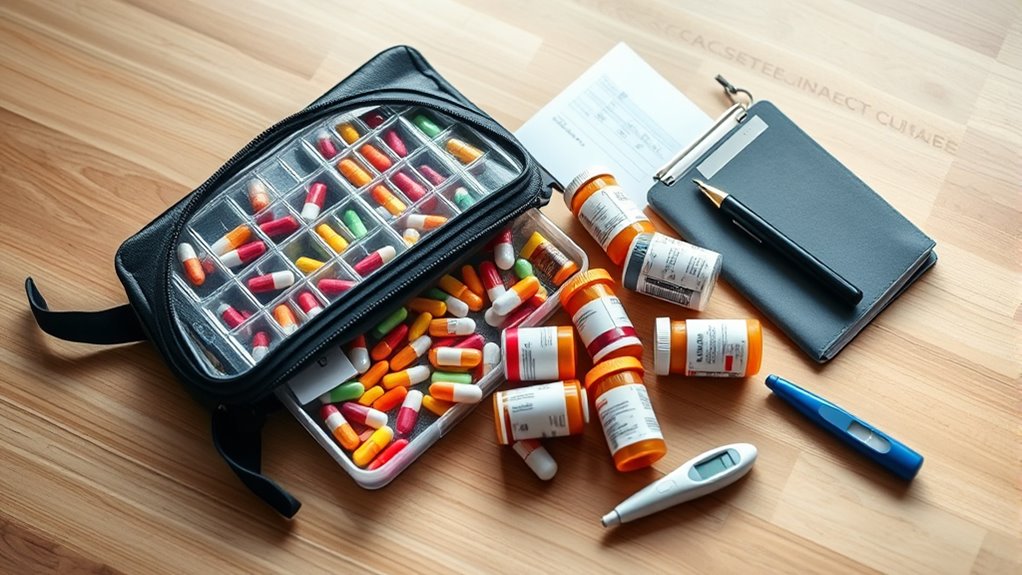

To prepare your medication and records go-bag, include a few days’ worth of prescription and over-the-counter meds in original containers, along with extra supplies for specialized meds like insulin or EpiPens. Carry important documents such as IDs, insurance cards, and medical records in waterproof folders, making digital copies as backup. Add a basic first aid kit, flashlight, snacks, and necessary medical devices. Keep everything organized and accessible—more tips to help you stay prepared await you below.

Turn the school run and nap time into listening time
- Thousands of audiobooks, podcasts and originals
- Listen on your phone, tablet or Echo — also offline
- Cancel anytime
Key Takeaways
- Pack enough prescription and OTC medications for several days, including special meds like insulin, in waterproof containers with dosage info.
- Include essential personal identification, health insurance cards, and medical records in waterproof, organized folders for quick access.
- Carry a small first aid kit, medical devices (like inhalers), and emergency supplies such as flashlights and non-perishable snacks.
- Regularly review and update the go-bag contents to reflect medication changes and new medical information.
- Store the go-bag in a designated, accessible location known to all household members for quick emergency response.
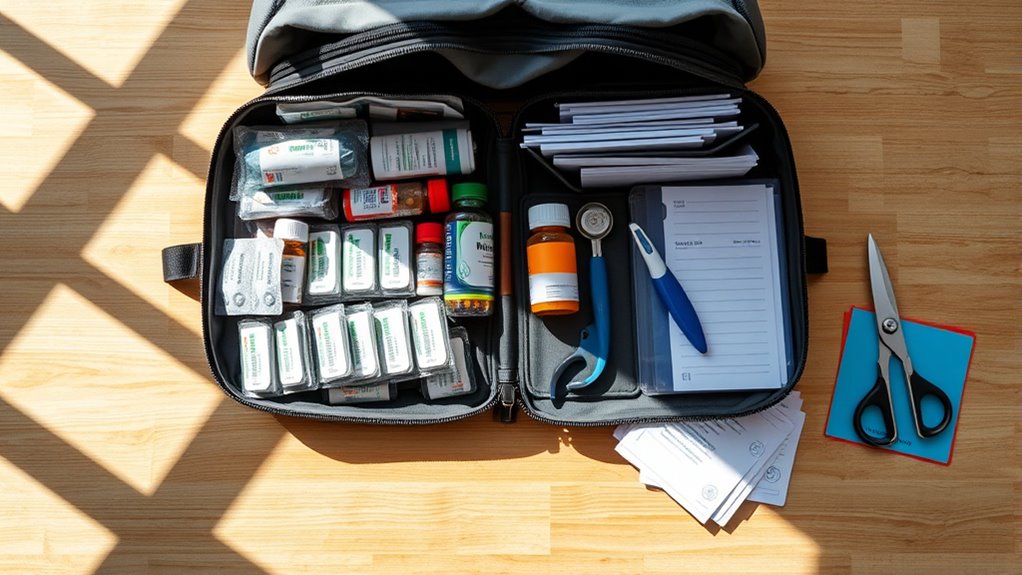
When emergencies strike, having a well-prepared medication and records go-bag can make all the difference. You want to be ready for anything, whether it’s a natural disaster, unexpected evacuation, or sudden health issue. Your goal is to guarantee that essential medications and critical records are easily accessible, so you don’t waste valuable time searching or risking missing important information. Start by gathering your prescription medications, making sure you have enough to last several days. Include any over-the-counter drugs you regularly take, like pain relievers, allergy medications, or antacids. Remember to pack medications in their original containers for easy identification, and consider including a list of dosages and prescribing information. This can be especially helpful if someone else needs to assist or if you need to seek medical attention in an unfamiliar setting.
In addition to medications, your go-bag should contain copies of important records. These might include identification documents such as driver’s licenses, passports, or state IDs, along with proof of address and health insurance cards. It’s wise to keep digital copies on a USB drive or cloud storage, but physical copies should be in a waterproof, easy-to-reach folder. Medical records are equally essential—bring a summary of your medical history, allergies, current treatments, and emergency contacts. If you have specific health conditions, like diabetes or heart disease, include relevant care plans or emergency instructions. Having these documents on hand can streamline treatment and guarantee healthcare providers understand your needs quickly. Tableware can be useful for meal preparations if you are stranded for an extended period.
You should also include a small first aid kit with essentials like bandages, antiseptic wipes, adhesive tapes, and scissors. If you’re on specialized medication, carry an extra supply, along with any necessary medical devices like inhalers, glucose meters, or EpiPens. Remember that some medications require refrigeration; plan accordingly by including a portable cooling pack if needed. Don’t forget other necessities like a flashlight, batteries, a whistle, and a multi-tool, as these can be critical during emergencies. Consider packing a small amount of cash and some non-perishable snacks in case you’re stranded away from resources.
Finally, review and update your go-bag regularly, especially as prescriptions change or your record needs evolve. Keep it in a designated, accessible spot known to all household members. By thoughtfully assembling your medication and records go-bag today, you guarantee a quicker, calmer response when disaster strikes, giving you peace of mind and better protection for yourself and your loved ones.
Frequently Asked Questions
How Often Should I Update My Emergency Medication Records?
You should update your emergency medication records every six months or whenever there’s a change in your medication, dosage, or healthcare provider. Regular updates ensure your records are accurate and current, which is vital in emergencies. Review your records during your routine health check-ups or when you refill prescriptions. Staying proactive helps emergency responders and caregivers provide the right treatment quickly and efficiently.
What Are the Best Waterproof Containers for Medication Storage?
Think of waterproof containers as your medication’s personal life raft. You want something sturdy, like a Pelican case or a waterproof SealLine bag, that keeps moisture out no matter the storm. I’ve seen folks use these for camping trips, and they trust them completely. Look for airtight seals, durable materials, and sizes that fit your meds comfortably. That way, your medication stays dry, safe, and ready when you need it most.
How Do I Handle Medications With Special Storage Requirements?
You should store medications with special requirements in dedicated, clearly labeled containers that meet their specific needs. Keep them at the recommended temperature, such as in a cool, dry place or refrigerated if needed. Use insulated bags for travel and avoid exposing them to direct sunlight or moisture. Regularly check expiration dates, and carry backup supplies if possible. Always follow your healthcare provider’s storage instructions for safety and effectiveness.
Should I Include Over-The-Counter Medicines in My Go-Bag?
Absolutely, include over-the-counter medicines in your go-bag. They provide quick relief for common crises like headaches, allergies, or stomach issues. Pack pain relievers, antacids, and allergy meds in small, sturdy containers. Remember, being prepared prevents panic. Prioritize practicality and peace of mind, ensuring you have essential essentials at your fingertips. A well-stocked stash of OTCs makes handling hassles hassle-free, helping you stay safe and serene during stressful situations.
What Legal Documents Should I Carry Alongside Medical Records?
You should carry essential legal documents like a valid ID, health insurance card, and any power of attorney or medical directives. These guarantee authorities or healthcare providers can verify your identity, access your medical history, or make critical decisions if you’re unable to communicate. Keep these documents in a waterproof, easily accessible folder within your go-bag. Double-check that all information is current to avoid delays or confusion during emergencies.
Conclusion
Now, as you pack your medication and records, you might find it’s oddly comforting how this simple task coincides with your daily routine. Maybe it’s just a coincidence, or maybe it’s a reminder that being prepared is part of your everyday life. Either way, you’ll feel more confident knowing you’ve got what you need, just in case. After all, life has a funny way of aligning moments — and this one’s about being ready for whatever comes next.
Cold & flu season Picks
humidifiers
As an affiliate, we earn on qualifying purchases.