
To design a net-zero energy home, you should focus on integrating renewable energy sources like solar panels and optimizing your home’s layout for energy efficiency. Prioritize airtight construction by sealing gaps and using quality insulation to reduce energy loss. Incorporate proper ventilation to control moisture and maintain indoor air quality without sacrificing energy savings. Combining these strategies creates a sustainable, self-sufficient home, and exploring further can help you master the key techniques for successful net-zero design.
Key Takeaways
- Incorporate sufficient solar panel capacity to generate on-site renewable energy matching household consumption.
- Design the home with optimal solar panel placement considering sun exposure and shading for maximum efficiency.
- Ensure airtight construction by sealing gaps and using high-quality insulation to reduce energy loss.
- Integrate efficient mechanical ventilation systems to maintain indoor air quality without compromising energy savings.
- Plan for effective architectural features that support renewable energy integration and overall energy performance.
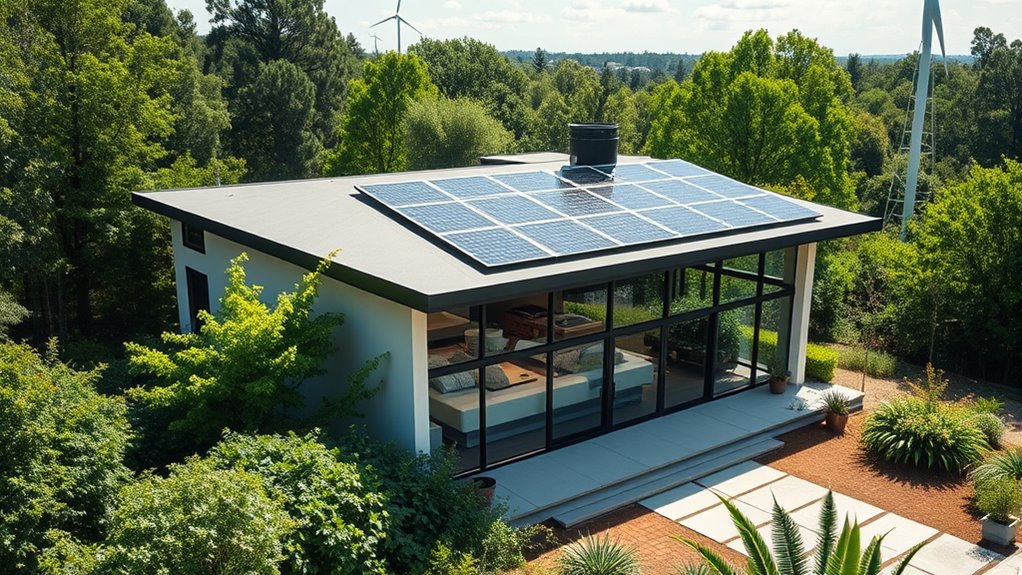
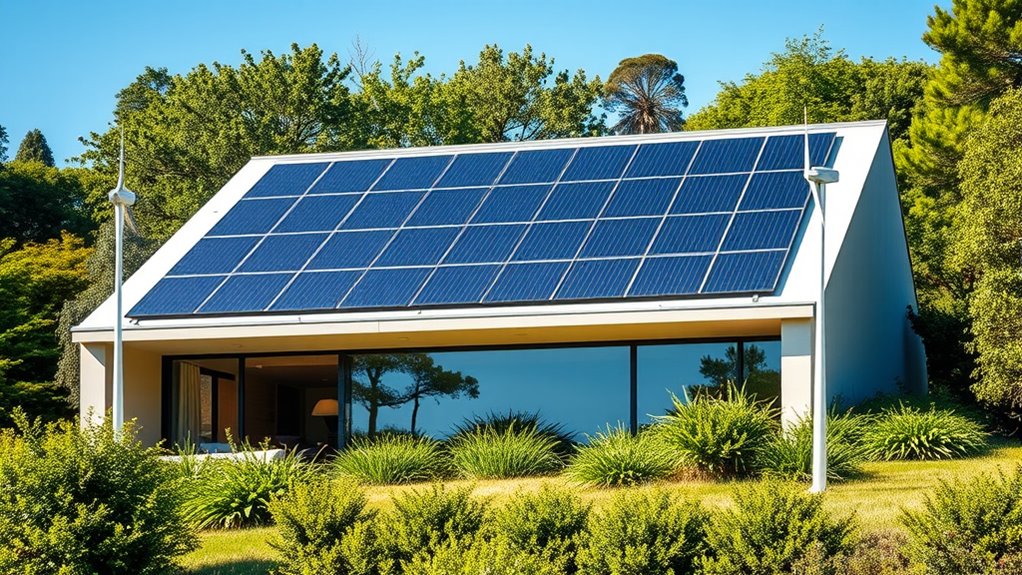
Have you ever wondered how homes can generate as much energy as they consume? Achieving this balance is the goal of designing net-zero energy homes, and it all starts with smart planning and innovative techniques. One of the key strategies is solar integration, which involves installing solar panels that capture sunlight and convert it into electricity. When you incorporate solar energy systems into your home’s design, you reduce reliance on the grid and create a renewable source of power that can offset your energy use. Proper placement of panels, considering sun exposure and shading, maximizes efficiency, ensuring you produce enough energy to meet your household’s needs throughout the year. Combining solar integration with a well-thought-out architectural plan allows your home to generate a significant portion of its energy on-site, bringing you closer to net-zero status.
Another critical component in designing a net-zero home is airtight construction. When your home is airtight, it prevents unwanted air leaks and drafts that can cause energy loss. This means less effort for your heating and cooling systems, making them more effective and reducing overall energy consumption. Airtight construction involves sealing gaps around windows, doors, and ducts, as well as using high-quality insulation materials. When your home is airtight, it maintains a consistent indoor temperature, which is essential for energy efficiency. It also enhances indoor air quality, since you can control ventilation with mechanical systems that filter air and regulate humidity. Properly engineered ventilation ensures fresh air without sacrificing energy savings. Additionally, understanding bad lemon juice can help you avoid moisture issues that might compromise your home’s airtight integrity. When you pay attention to these details, you’re not just building a house that consumes less energy—you’re creating a home that produces enough energy to power itself, reducing your carbon footprint and long-term costs. Achieving net-zero energy is a thoughtful process that involves integrating renewable energy sources like solar, alongside building practices focused on airtightness. By doing so, you set yourself on a path toward a more sustainable, cost-effective, and comfortable living environment.
Frequently Asked Questions
What Is the Initial Cost Difference for Net-Zero Energy Homes?
You’ll find that the initial cost for net-zero energy homes is higher, often by 10-30%, due to advanced insulation, solar panels, and energy-efficient systems. This cost comparison reflects upfront investment factors that can pay off over time through lower utility bills and incentives. While the upfront costs are higher, the long-term savings and environmental benefits make net-zero homes a smart, sustainable choice.
How Do Net-Zero Homes Perform During Extreme Weather Conditions?
During extreme weather, net-zero homes excel in thermal resilience and climate adaptability. You’ll find they maintain comfortable indoor temperatures because of superior insulation, airtight construction, and energy-efficient systems. Solar panels and energy storage help you adapt to fluctuating conditions, reducing reliance on external sources. This combination guarantees your home performs reliably, protecting you from severe weather impacts while supporting sustainable living.
What Maintenance Is Required for Renewable Energy Systems?
Think of your renewable energy system as a garden that needs regular tending. You’ll want to keep your solar panels clean and free of dust, dirt, and debris through routine solar panel maintenance, ensuring they soak up the sun’s energy efficiently. Don’t forget about battery upkeep, which involves checking connections and monitoring performance to keep your energy storage healthy. With consistent care, your system will thrive, powering your home sustainably for years to come.
Can Existing Homes Be Retrofitted to Achieve Net-Zero Status?
Yes, you can retrofit existing homes to achieve net-zero status, but you’ll face some retrofitting challenges like limited space and outdated infrastructure. Using the latest retrofit technology, you can upgrade insulation, install solar panels, and add energy-efficient systems. Careful planning helps overcome these challenges, making your home more sustainable. With the right approach, you’ll reduce energy consumption and move closer to net-zero energy, saving money and helping the environment.
Are There Government Incentives for Building Net-Zero Energy Homes?
Sure, governments love throwing money your way for building net-zero energy homes. You can snag government grants and tax incentives that make your eco-friendly dream more affordable. It’s almost like they’re paying you to save the planet—who knew saving the environment could be so profitable? So go ahead, embrace those incentives, and turn your home into a shining example of energy efficiency while your wallet stays happy.
Conclusion
As you craft a net-zero home, remember it’s more than just walls and roofs—it’s a beacon of hope, shining bright like a lighthouse guiding us toward sustainability. Your choices become the seed for a greener future, blossoming into a sanctuary that nurtures both people and planet. Embrace this journey with purpose, knowing that each step you take is a ripple in the pond, ultimately creating waves of positive change for generations to come.