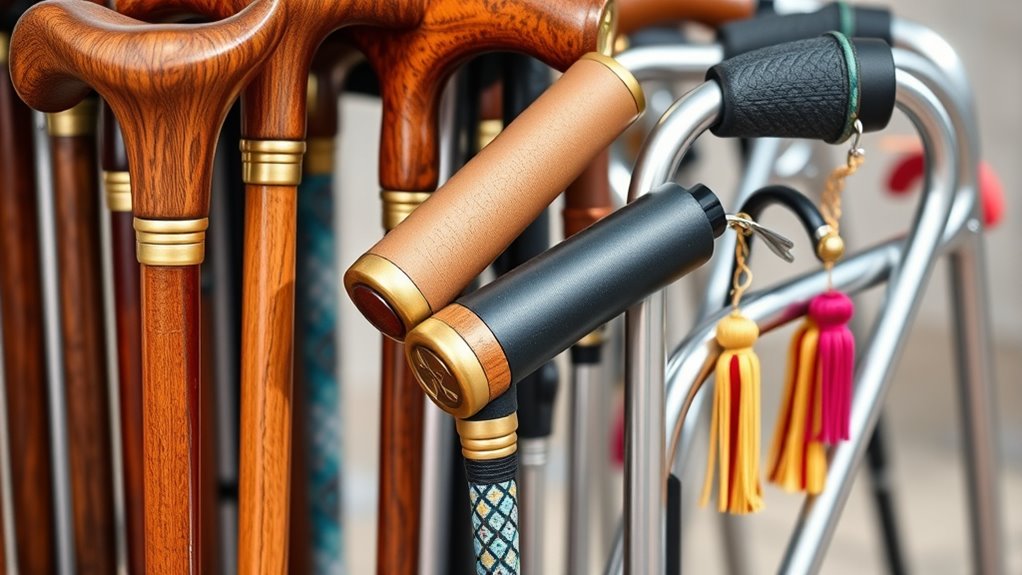

When choosing canes, walkers, and accessories, focus on safety, comfort, and your specific needs. Look for stable, durable devices with adjustable height, slip-resistant tips, and ergonomic handles. Consider helpful extras like baskets or locks, and make certain the frame is lightweight for easy handling. Testing different options can boost confidence and support. To discover more tips on selecting the best mobility aids and accessories, keep exploring how to make your daily routines safer and more comfortable.
Key Takeaways
- Assess individual mobility needs and challenges to select appropriate devices that enhance safety and independence.
- Prioritize safety features such as stability, slip-resistant tips, and adjustable height for secure use.
- Consider accessories like baskets or trays to improve functionality and ease of carrying items.
- Ensure devices are lightweight, ergonomic, and comfortable for extended use.
- Test different options to find the best fit for stability, comfort, and user confidence.

Are you unsure how to choose the right cane, walker, or accessory to meet your mobility needs? Making the right choice isn’t just about picking the first option you see; it’s about understanding how different aids can improve your daily life. The benefits of mobility aids go beyond simple support—they can boost your confidence, enhance independence, and reduce the risk of falls. When selecting your device, it’s essential to consider safety features to guarantee you get the most secure and comfortable option.
Mobility aids come with various benefits that can markedly impact your quality of life. They help you move more freely, allowing you to participate in activities you enjoy without fear of losing balance or overexerting yourself. Properly chosen aids can also alleviate pain caused by joint or muscle strain, making daily routines less exhausting. For many, these aids serve as an indispensable bridge toward maintaining independence, preventing the need for full-time assistance. They’re not just tools—they’re empowering devices that restore your sense of control over your mobility.
Mobility aids enhance independence, reduce fatigue, and empower you to enjoy life with confidence and safety.
When considering safety features, pay attention to stability and durability. For example, canes should have slip-resistant tips to prevent falls and be adjustable in height to match your stature perfectly. Walkers, on the other hand, benefit from features like non-slip feet, lightweight frames for easy maneuverability, and ergonomic grips for comfort. Some models even include brakes or locking mechanisms to provide extra control, especially on uneven surfaces. Accessories like baskets or trays can be helpful but should be securely attached and designed to distribute weight evenly, so they don’t compromise your balance.
Another essential safety feature to consider is ease of use. You want a device that’s intuitive and simple to operate, especially if you have limited strength or dexterity. Folding or collapsible designs are convenient for storage and transport, making it easier to incorporate your mobility aid into your daily routine. Comfort is equally important; look for padded handles and ergonomic designs that won’t cause discomfort during extended use. Additionally, headphones can be used to listen to music or hear instructions clearly, which can support your safety and enjoyment while moving. Always test the device if possible—ensure it feels stable, comfortable, and supportive before making your final choice.
Ultimately, selecting the right cane, walker, or accessory involves balancing benefits and safety features tailored to your specific needs. Take the time to assess your mobility challenges, consult with healthcare providers if needed, and test different options. Doing so guarantees that you choose a device that not only supports your movement but also enhances your confidence and safety every day.
Frequently Asked Questions
How Do I Determine the Correct Height for My Mobility Aid?
You determine the correct height for your mobility aid by standing upright with your arms relaxed at your sides. Your elbow should bend slightly, about 15-20 degrees. Use a device with ergonomic handle design and adjustable height mechanisms to customize it. Adjust the aid so the handle aligns with your wrist or forearm, ensuring comfort and stability. Proper height minimizes strain and enhances safety during use.
What Materials Are Best for Lightweight yet Durable Canes?
Imagine you’re shopping for a cane and want it to be lightweight yet sturdy. Aluminum is your best bet, offering durability without adding weight. Look for an ergonomic grip for comfort and a slip-resistant tip for safety. For example, Sarah chose an aluminum cane with a cushioned grip and rubber tip, making her walks safer and easier. These materials balance strength and weight, enhancing your mobility and confidence.
Are There Specific Accessories for Different Types of Walkers?
Yes, there are specific accessories designed for different types of walkers. You can personalize your walker with options like cup holders, storage bags, or baskets, which enhance convenience. Aesthetic enhancements, such as decorative covers or colorful grips, allow you to express your style. Make certain to select accessories compatible with your walker type to guarantee proper fit and safety, while also adding a touch of personality and practicality.
How Can I Ensure My Cane or Walker Is Properly Fitted?
To make certain your cane or walker fits properly, start by checking the cane grip comfort; it should feel secure without causing discomfort. For walkers, adjust the height so your elbows are slightly bent when holding the handles. Also, consider walker storage options to keep essentials accessible without overloading. Proper fitting improves stability and comfort, so take the time to make adjustments and test the fit before regular use.
What Safety Features Should I Look for in Mobility Accessories?
Think of your mobility accessories as your safety shield. Look for fall prevention features like anti-slip grips, which keep you steady on slippery surfaces. Verify the device has sturdy brakes or locking mechanisms for stability. Reflecting on the wisdom of Hercules, prioritize durability and secure features that prevent accidents. These safety features help you move confidently, reducing risks and keeping you safe during daily activities.
Conclusion
Choosing the right cane, walker, or accessory is like finding the perfect pair of shoes; it should support you comfortably and boost your confidence. When I helped my neighbor pick her walker, she finally felt steady enough to walk her dog again—like a sail catching the wind. Remember, the right aid isn’t just about mobility; it’s about reclaiming your independence and enjoying every step. Trust your instincts, and you’ll find what keeps you moving forward.