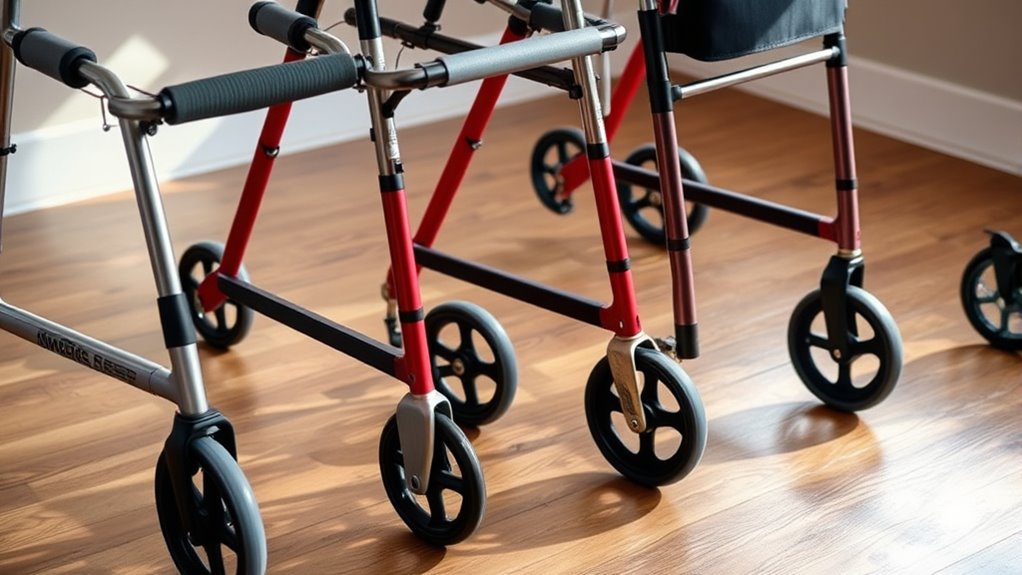

When choosing walking aids or rollators, focus on ergonomic handles that reduce hand strain and fit comfortably, as well as lightweight designs made from strong materials like aluminum for easy handling. Make sure the height is adjustable to match your stature, promoting proper posture and reducing discomfort. Look for models with added comfort features, and consider terrain needs. More tips can help you find the perfect fit for your mobility and lifestyle.
Key Takeaways
- Prioritize ergonomic, contoured handles with cushioned grips to enhance comfort and control during use.
- Choose lightweight models with durable materials like aluminum for easier maneuverability and transport.
- Ensure handle height is adjustable to match user stature, promoting proper posture and reducing strain.
- Verify regulatory compliance (e.g., IRS standards) for safety, insurance coverage, and additional benefits.
- Consider terrain needs and comfort features such as wheel size, padding, and seat cushions for optimal support.
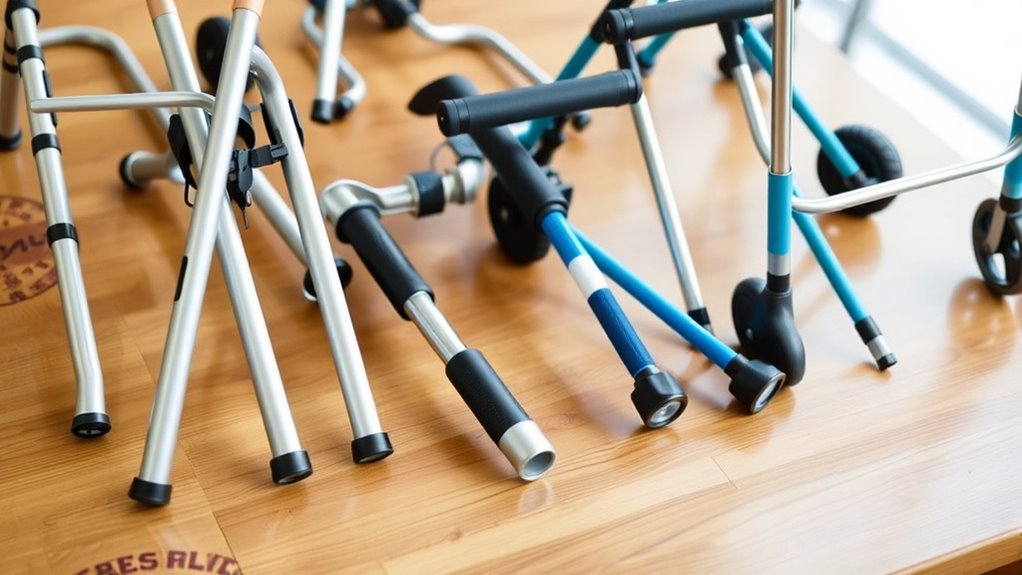
When selecting walking aids and rollators, it’s important to take into account your specific mobility needs, lifestyle, and comfort. Your choice should enhance your independence without causing unnecessary strain or discomfort. One of the first factors to consider is the design of the handle or grip. An ergonomic grip is essential because it reduces pressure on your hands and wrists, especially if you plan to use the aid for extended periods. Look for models with contoured, cushioned handles that fit naturally in your hand, providing better control and minimizing fatigue. This not only improves safety but also makes walking more comfortable, encouraging you to stay active.
Choose ergonomic, contoured handles for comfort and better control during extended use.
Lightweight design is another crucial aspect. A walking aid or rollator that’s easy to lift, carry, or maneuver can significantly improve your experience. If you find yourself frequently transporting your device—say, taking it in and out of the car or moving it between rooms—a lightweight model will save you effort and reduce the risk of injury. Despite being easy to carry, many lightweight options are still sturdy and durable enough to support your weight safely. Materials like aluminum are often used to keep the weight down without sacrificing strength. When choosing a lightweight rollator, also check that it offers stability and a solid frame, so you feel secure as you walk.
Balance and height adjustability are additional considerations. An adjustable handle height ensures that you can set the device to match your body’s stature, which is vital for maintaining proper posture and reducing strain. Proper alignment of your body while walking minimizes the risk of discomfort or injury, and an ergonomic grip combined with adjustable height makes this easier to achieve.
Additionally, opting for models with IRS-compliant features can ensure that your device meets regulatory standards and may offer potential benefits such as tax advantages or insurance coverage, making your investment more worthwhile. Comfort extends beyond just the handles. Think about the overall build of the aid—padding, grips, and even the cushion on the seat if it’s a rollator. If you have specific conditions such as arthritis or limited hand strength, choosing a device with an ergonomic grip will help you operate it more effectively. Also, consider the size and type of wheels; larger wheels typically handle uneven terrain better, but they might add weight, so find a balance that suits your lifestyle.
Frequently Asked Questions
How Do I Determine the Correct Height for My Walking Aid?
You determine the correct height for your walking aid by standing upright with your arms relaxed at your sides. Adjust the ergonomic grip or handles to align with your wrist crease or wrist level, ensuring your elbows are slightly bent. Use a model with adjustable height features for a perfect fit. This way, you’ll enjoy better stability and comfort, reducing strain and making walking easier and safer.
Are Foldable Rollators More Durable Than Fixed Models?
Ever wonder if foldable rollators can keep up with fixed models? They often aren’t as durable, mainly because of material differences like lighter frames and hinges designed for convenience. While foldables offer portability and ease of storage, fixed models tend to withstand more wear and tear over time. If durability is your priority, you might prefer a fixed rollator, but if portability matters most, a foldable could be the right choice.
Can I Use a Walking Aid Outdoors on Uneven Terrain?
Yes, you can use a walking aid outdoors on uneven terrain, but choose one designed for outdoor use to guarantee better walking stability. Look for models with sturdy wheels, a wider base, and suspension features that handle rough surfaces. These features help you maintain balance and prevent falls. Always test your aid on different terrains to ensure it provides the support and stability you need for safe outdoor adventures.
What Maintenance Is Required for Rollators?
Think of your rollator as a trusty garden tool that needs care to stay sharp. You should regularly clean it with a damp cloth to remove dirt and debris, ensuring smooth operation. Check the brakes and wheels often, and keep the batteries charged if your model is electric. Proper maintenance keeps your rollator running smoothly, so you can confidently navigate your day, just like tending a well-kept garden.
Are There Specific Walking Aids for Users With Balance Issues?
If you have balance issues, look for assistive device options designed for enhanced stability. Many walking aids feature balance support features like wider bases, anti-tip wheels, and ergonomic handles to help maintain your balance. These options provide extra security, making mobility safer and easier. Always choose a device that offers adequate support suited to your specific needs, and consult with a healthcare professional for personalized recommendations.
Conclusion
Choosing the right walking aid or rollator can transform your daily routine, making mobility easier and safer. When you find the perfect fit, it’s like discovering a new rhythm in your life—more independence, less worry. The right choice isn’t just about support; it’s about reclaiming confidence and freedom. So, take your time, trust your instincts, and remember—sometimes, the smallest choice can lead to the biggest change.