To prevent falls, start by removing trip hazards like loose rugs and clutter, and guarantee your home is well-lit. Strengthen your muscles and improve balance with simple exercises such as standing on one foot or heel-to-toe walking. Wear non-slip shoes and keep your vision sharp with regular checkups. Use assistive devices if needed, and review medications for side effects. Staying aware of these easy steps can make a big difference in safety—explore more tips to stay steady.
Key Takeaways
- Remove loose rugs and secure carpets to prevent tripping hazards.
- Install grab bars and ensure proper lighting in key areas like bathrooms and stairways.
- Practice balance exercises, such as heel-to-toe walking and standing on one foot regularly.
- Wear well-fitting, non-slip footwear to improve stability and prevent slips.
- Review medications with healthcare providers to minimize side effects like dizziness.

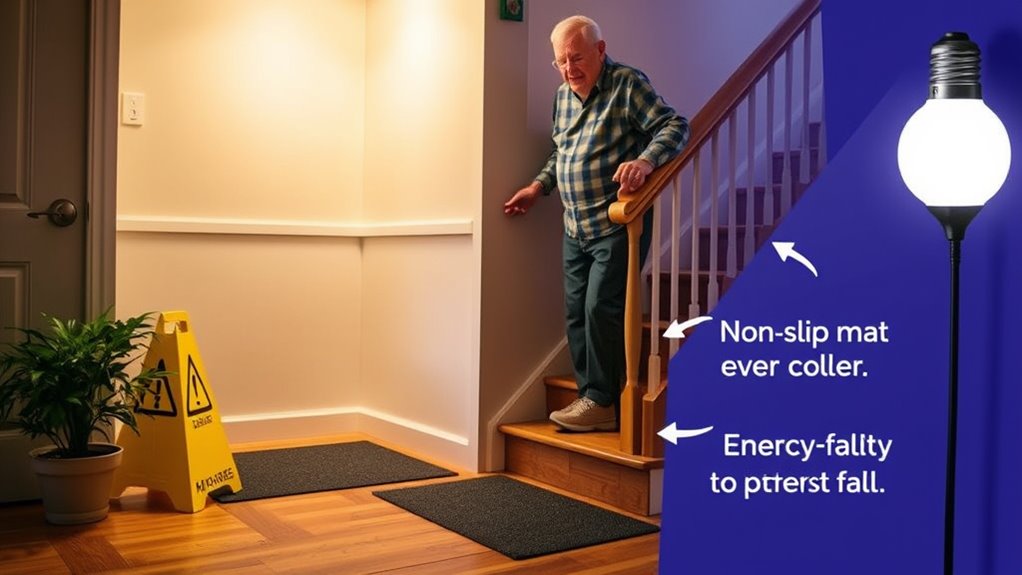
Falls can happen unexpectedly, but many are preventable with simple steps. One of the most effective ways to reduce your risk is by focusing on home safety. Start by making your living space safer: remove loose rugs, clear clutter from walkways, and install grab bars in the bathroom. Good lighting is essential, so ensure all areas are well-lit, especially stairways and hallways. Secure loose cords and carpets to prevent tripping hazards. These small changes create a safer environment, giving you confidence to move around freely without fear of falling.
Making your home safer with clear walkways, good lighting, and secure rugs helps prevent falls.
In addition to modifying your home, incorporating balance exercises into your routine can markedly improve your stability. Balance exercises strengthen the muscles that support your joints and enhance your coordination. Simple activities like standing on one foot, heel-to-toe walking, or practicing yoga poses can make a noticeable difference. You don’t need fancy equipment—just dedicate a few minutes daily to these exercises. As your balance improves, you’ll notice increased confidence in everyday movements, reducing the likelihood of falls.
It’s also important to regularly review your footwear. Wear shoes with non-slip soles that fit well and support your arches. Avoid high heels or loose slippers that can cause you to trip. Taking care of your vision is equally vital; schedule regular eye checkups and update your glasses if needed. Clear vision helps you navigate your environment safely, especially in unfamiliar or dimly lit areas.
Another key strategy is being mindful of your medication. Some medicines have side effects like dizziness or drowsiness, which can increase your fall risk. Talk with your healthcare provider about any medications you’re taking and ask if they could contribute to balance issues. Staying hydrated and maintaining a healthy diet also play roles in preserving your strength and alertness, further reducing your chances of falling. Additionally, understanding security systems and safety devices can help prevent falls by alerting you to hazards or emergencies in your home.
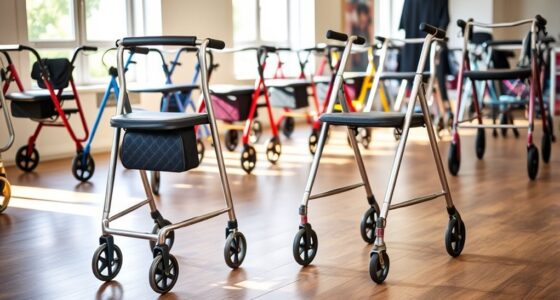
Finally, don’t hesitate to seek help if you feel unsteady or have difficulty moving around. Using assistive devices like canes or walkers can provide additional support. Remember, fall prevention isn’t a one-time effort but a combination of making your environment safer, strengthening your body, and staying proactive about your health. By implementing these simple strategies, you’re taking important steps to stay safe and independent in your daily life.
Frequently Asked Questions
How Can I Improve My Balance at Home?
You can improve your balance at home by doing regular balance exercises like standing on one leg or heel-to-toe walks. Incorporate home modifications, such as removing loose rugs, adding grab bars, and ensuring good lighting. These changes make your space safer and easier to navigate. Consistently practicing balance exercises and making simple adjustments create a safer environment, helping you stay steady and reduce fall risks in your daily routine.
Are There Specific Exercises to Strengthen My Legs?
Want to strengthen your legs effectively? You should try leg strengthening and balance exercises like squats, lunges, and calf raises. These exercises target key muscles that support stability and improve your overall balance. Are you making the most of your workout routine? Incorporate these moves regularly, and you’ll notice increased strength and confidence on your feet. Remember, consistent effort is key to reducing fall risk and staying balanced at home.
What Should I Do After a Fall to Prevent Future Ones?
After a fall, you should see a healthcare professional for a medical assessment to identify any injuries or underlying issues. It’s also important to request a medication review, as certain medications can increase fall risk. Following their advice, you may need physical therapy or home modifications. Taking these steps helps prevent future falls and keeps you safe. Always consult your doctor promptly after a fall for proper guidance.
How Often Should I Review My Home for Fall Hazards?
Imagine yourself as a vigilant lighthouse keeper, constantly scanning the horizon. You should review your home for fall hazards at least every three to six months through regular home inspections and hazard assessments. This routine helps you catch new dangers, like loose rugs or cluttered walkways, before they cause a fall. Staying proactive guarantees your environment remains safe, allowing you to navigate your home confidently and securely.
Are There Assistive Devices That Can Help Prevent Falls?
Yes, assistive devices like grab bars, handrails, and walk-in showers can substantially help prevent falls. Assistive technology such as canes, walkers, and stair lifts also enhance stability and safety. You should assess your needs and consult with a healthcare professional to choose the right fall prevention devices. Using these devices consistently can reduce your risk of falling and help you maintain independence at home.
Conclusion
By following these six simple strategies, you can reduce your risk of falls and stay safer each day. Remember, an ounce of prevention is worth a pound of cure—small steps today can prevent big accidents tomorrow. Stay mindful of your surroundings, keep active, and make safety a priority. When you take care of yourself, you’re building a strong foundation to enjoy life confidently and comfortably. After all, a stitch in time saves nine.